
 İkizderi
 What is a nail apron is one of the first questions anyone buying a tool apron asks. That pocketed piece of leather you see on a craftsman’s waist is not just a way to carry things; used properly, it speeds up the work, improves safety, and reduces the fatigue you feel at the end of the day. In this guide we explain what a nail apron is, what it does, which parts it is made of, who uses it, and what to check before you buy one.
The Short Answer: What Is a Nail Apron?
A nail apron is a pocketed, compartmented work apron used to carry nails, screws, a hammer, and hand tools on the waist. It is usually made of leather, fastens with a waist belt, and lets the wearer reach their tools in a single movement without bending down.
The most important part of that definition is the last clause: a nail apron’s real purpose is not carrying but speeding up access. A carpenter reaches for a nail, a pencil, or a tape measure hundreds of times a day. When each of those movements saves a few seconds, the difference in time and energy by the end of the day is significant.
What Does a Nail Apron Do?
A nail apron saves time by keeping tools within reach, improves safety on the job, and removes the need to bend down constantly. These three benefits work together and show up directly in productivity.
- Saves time: Searching for tools is the biggest time thief of a working day.
- Improves safety: Nails and sharp tools stay in pockets, not on the floor or in your hand.
- Protects the back: Constantly bending to pick up tools causes back pain over time.
- Creates order: Every tool has a fixed place; you find it without looking.
- Protects your clothes: A leather apron keeps your clothing from wearing out.
An apron’s real benefit shows in the busiest moments of the job. A nail in your pocket while you are working up a ladder is far more valuable than one you have to climb down to fetch.
What Parts Is a Nail Apron Made Of?
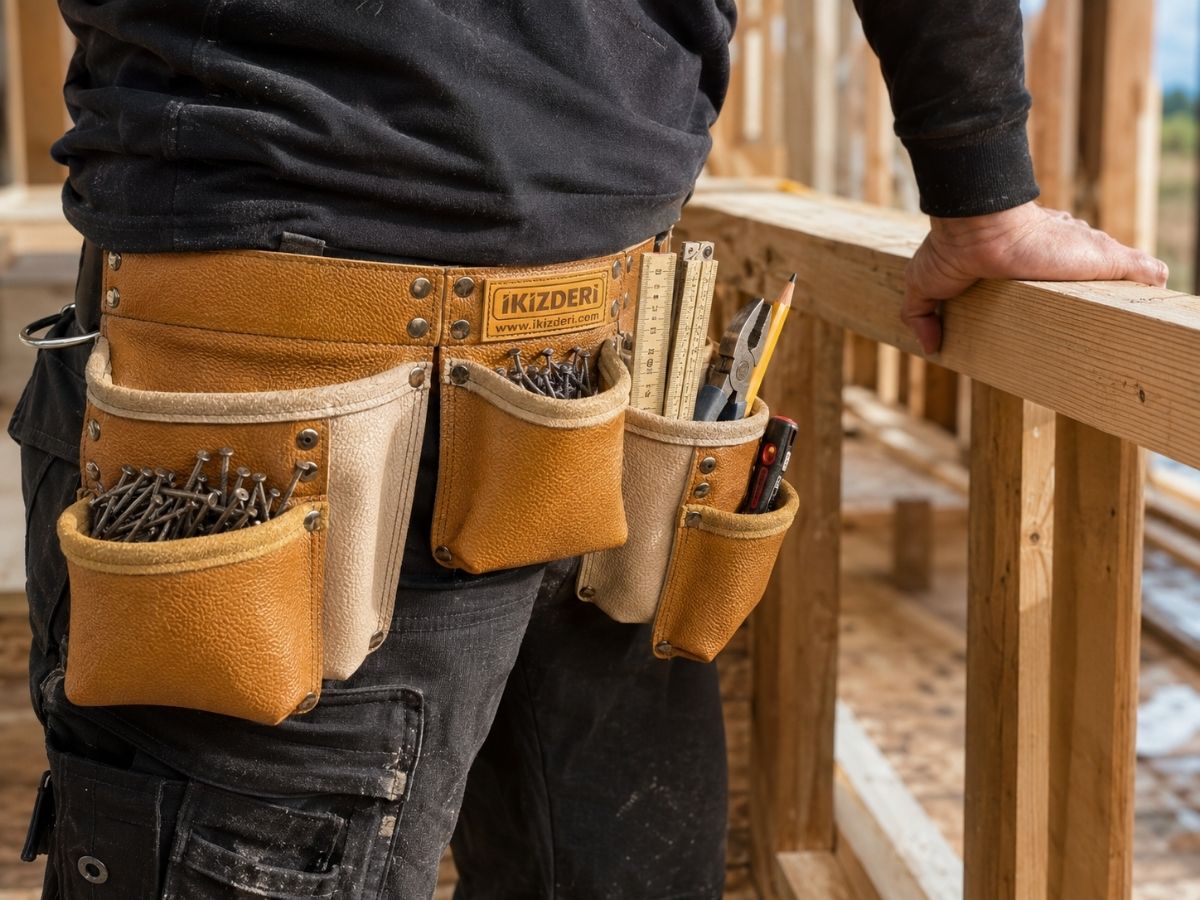
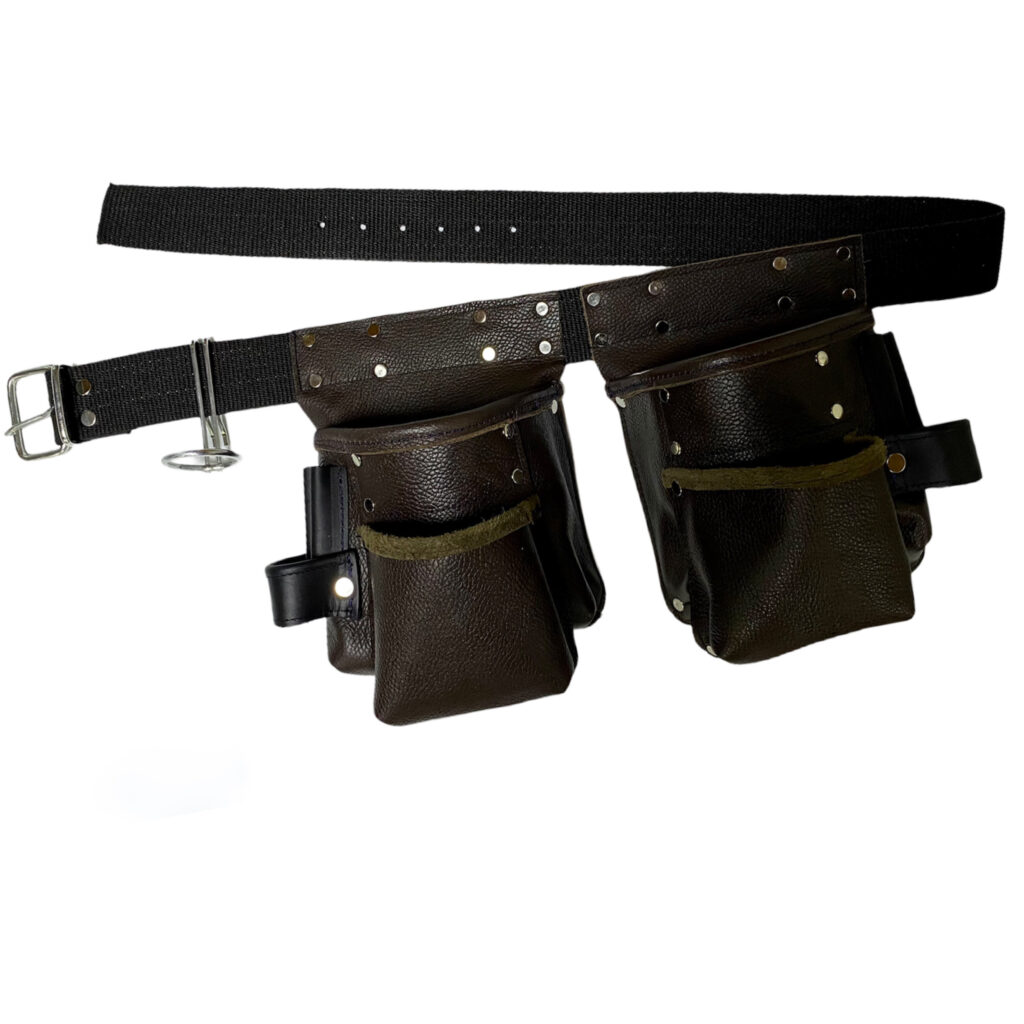
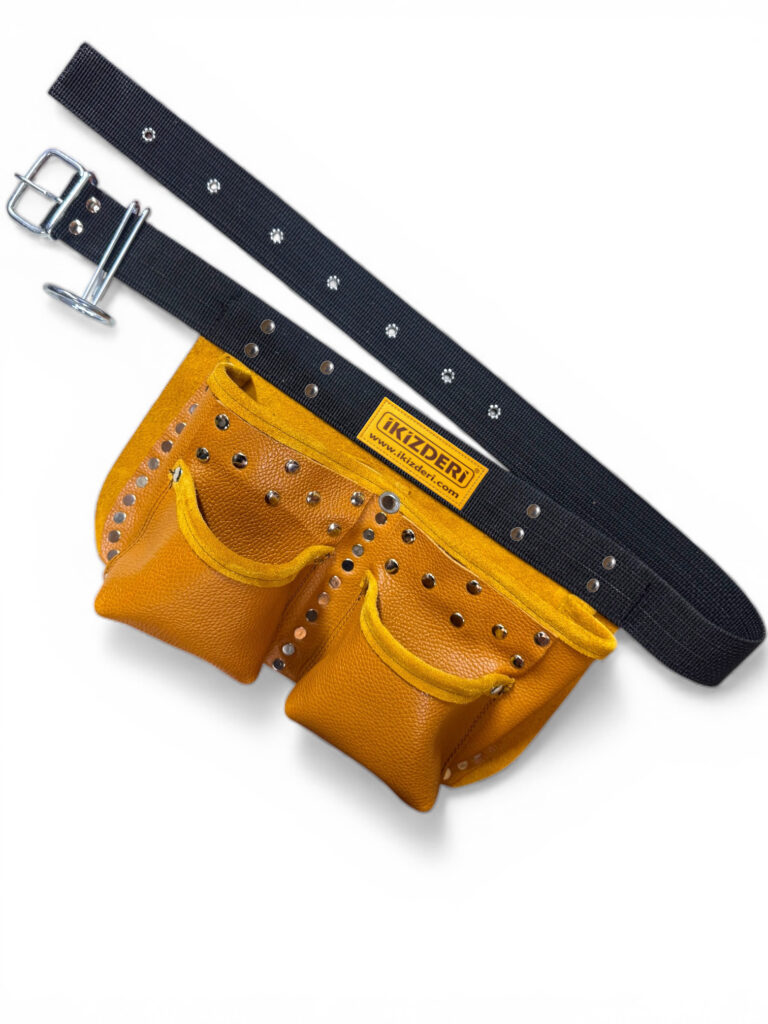
A nail apron is essentially made up of a waist belt, a main body, pockets, compartments, tool loops, and rivets. Each part has a specific job.
- Waist belt: Carries the whole weight of the apron; its width and strength determine comfort.
- Buckle: Lets the belt sit on the waist and be adjusted.
- Main body: The leather surface that carries the pockets and protects the body.
- Large pockets: Used for consumables such as nails, screws, and plugs.
- Small compartments: For slim tools such as pencils, tape measures, and utility knives.
- Hammer holder: Keeps a heavy hammer hanging securely on the waist.
- Rivets: Lock the load-bearing corners with metal and prevent tearing.
The quality of these parts directly determines the apron’s life. The strength of the rivets and stitching is especially critical; we cover this in detail in our why rivets and hand stitching matter guide.
Who Uses a Nail Apron?
A nail apron is used by almost every trade that works with its hands and carries tools all day. The most common users are carpenters, construction workers, electricians, and plumbers.
- Carpenters: Must keep nails, hammer, and chisels within reach at all times.
- Construction and renovation workers: Move around on site and must carry their tools.
- Electricians: Keeping small tools organized is critical for them.
- Plumbers: Want to carry long, heavy tools securely.
- Furniture fitters: Keep screws and plugs within reach.
- Hobby woodworkers: Want order and comfort in the workshop.
In short, anyone whose work is made easier by carrying tools on the waist is the audience for this equipment. We cover how the need changes by trade in our separate trade guides.
As the trade changes, so does what is expected of the apron. A carpenter wants wide pockets for nails and a hammer, while an electrician looks for many slim compartments to separate small tools. For a plumber the most critical feature is pocket depth, because the tools they carry are long and heavy. So there is no single “best nail apron”; the best one is the one that fits your work.
What Is the Difference Between a Nail Apron and a Tool Belt?
A nail apron also covers the front of the body, with pockets spread over a wide surface; a tool belt is a carrying system worn only on the waist, with its pockets gathered on the belt itself.
| Criterion | Nail Apron | Tool Belt |
|---|---|---|
| Coverage | Waist and front of the body | Waist only |
| Protection | Protects clothing and body | Offers no protection |
| Tool capacity | Medium-high | High |
| Freedom of movement | Medium | High |
| Best environment | Workshop, at the bench | Site, ladders, moving work |
The choice between them depends on how you work. If you work at a fixed bench an apron suits you; if you are constantly on the move a belt feels better. You can compare models among our leather tool belt options.
What Types of Nail Aprons Are There?
Nail aprons fall into three basic types: waist aprons, bib (strapped) aprons, and half aprons. The difference lies in how much of the body they cover and how they distribute the weight.
- Waist apron: Fastens at the waist only; light, with high freedom of movement.
- Bib (strapped) apron: Shoulder straps shift the weight from the waist to the shoulders; more comfortable under heavy loads.
- Half apron: Has fewer pockets; suits light work and hobby use.
If you carry heavy tools, a strapped model noticeably relieves your lower back. Because most of the load is transferred to the shoulders, the fatigue you feel at the end of the day is reduced.
What Materials Are Nail Aprons Made From?
Nail aprons are most commonly made from genuine leather, canvas fabric, and synthetic materials. The difference between the three shows up in durability.
Genuine leather withstands the pressure of heavy, sharp tools for years, while canvas is light but wears out quickly at the pocket openings. Synthetic materials are cheap but crack and tear in a short time. You can find a detailed comparison in our leather vs canvas nail apron guide.
Why Should a Nail Apron Be Leather?
Leather is preferred because it is the material that best withstands the friction, weight, and impact of nails and sharp tools. Fabric gets punctured under these conditions in a short time.
Sharp-pointed items go in and out of a nail apron’s pockets constantly. Fabric cannot take that friction for long; leather, thanks to its fiber structure, handles the pressure for years. Leather is also safer than fabric against heat and sparks.
We explain how many years a quality leather apron lasts, and what determines its life, in our how long does a leather work apron last guide.
How Many Pockets Should a Nail Apron Have?
The number of pockets depends on the tools you carry; for most craftsmen 3-5 compartments are enough. What matters more than the number is the depth and layout of the pockets.
Too many pockets make the apron heavy and make finding a tool harder. Too few cause different materials to get mixed together. We explain how to work out the right number in our how many pockets a nail apron needs guide.
What Does a Nail Apron Do for Safety?
A nail apron reduces the risk of injury by keeping sharp and pointed tools fixed in specific pockets. It also stops tools from falling and getting lost.
A nail or utility knife that is not kept in a pocket is a risk both to the user and to the people around them. A hammer falling while you are working at height can cause a serious accident. A well-designed apron keeps every tool in its own compartment and largely removes that risk.
Another safety advantage of leather is its resistance to sparks and heat. In environments where welding, grinding, or cutting is done, a fabric apron can catch fire while a leather apron behaves far more safely.
Pocket depth is a safety matter too. A chisel or utility knife sitting in a shallow pocket can slip out when you bend over. A deep enough pocket takes in at least half of the tool and removes that risk.
Where Did the Nail Apron Come From?
The nail apron is a traditional piece of craft equipment that emerged because carrying tools by hand in carpentry and construction is impractical. Its basic logic has not changed in centuries: keep the tool close to where you will use it.
Leather has been the material of choice for this need from the beginning, because it is both durable and molds to the body. Although today’s models are more advanced in pocket layout and ergonomics, the apron’s core function is what it always was.
Leather craft is a deep-rooted tradition in Türkiye. At İkizderi we have been carrying on that tradition by hand for more than ten years in our workshop in Gerede, Bolu.
Is a Nail Apron the Same as a Craftsman’s Apron?
No. A nail apron is a pocketed product designed to carry tools; “craftsman’s apron” is a broad term covering many trades, mostly focused on protection. Every nail apron is a craftsman’s apron, but not every craftsman’s apron is a nail apron.
On a welder’s apron, for example, a wide spark-resistant surface matters more than pockets. On a barber’s apron, a slim build and a smart appearance come first. On a nail apron, the whole point is the pocket layout and load capacity. We compare apron types by trade in our craftsman apron types guide.
How Much Weight Can a Nail Apron Carry?
A quality leather nail apron easily handles the weight of the nails, hammer, and hand tools carried in daily use. The limit is set by the leather’s thickness, the placement of the rivets, and the width of the waist belt.
But there is also a comfort limit. Stuffing the pockets full makes the apron slide down and puts pressure on the lower back. This is why most craftsmen prefer to carry only the tools needed for that day’s job.
Distributing the weight evenly matters at least as much as the total weight. Piling all the heavy tools on one side strains the back at a single point and increases fatigue by the end of the day.
Does a Nail Apron Cause Back Pain?
A correctly fitted and evenly loaded nail apron does not cause back pain; on the contrary, it protects the back by removing the need to bend down constantly. Pain comes from a badly adjusted belt and an unbalanced load.
A narrow waist belt concentrates all the weight along a thin line and presses into that area. A wide belt spreads the load over a larger surface. In the same way, distributing heavy tools evenly on both sides prevents one-sided strain.
For craftsmen carrying very heavy loads, strapped models bring noticeable relief by shifting much of the weight from the waist to the shoulders.
Can a Tool Bag Replace a Nail Apron?
A tool bag is good for moving many tools from place to place, but it does not give you instant access while you work. The two are not alternatives but complements.
A craftsman working at different addresses carries all their tools in a bag and transfers the ones needed for that job to their waist. Reaching into the bag during the work itself wastes time. The most efficient method is to use both together. We cover this comparison in detail in our leather tool bag vs tool belt guide.
What to Check Before Buying a Nail Apron
Check five things: leather quality, stitch strength, rivets, pocket depth, and the width of the waist belt. These five criteria determine both the comfort and the life of the product.
- Leather quality: Should be full-grain genuine leather; avoid thin surfaces that feel like plastic.
- Stitching: Should be dense, taut, and regular; loose stitching opens up quickly.
- Rivets: Stainless-steel rivets should be present at pocket corners and the belt attachment.
- Pocket depth: Deep enough to take in at least half of the tool.
- Waist belt: Should be wide and adjustable; a narrow belt presses on a single point.
These five points are a quick checklist. We explain step by step how to narrow the choice down to your work, and which criterion should come first for you, in our how to choose a nail apron guide. You can review models that meet the criteria among our leather nail apron models.
How Do You Use a Nail Apron?
A nail apron is worn so it sits on the waist, the belt is tightened, and the tools are placed in the pockets by how often they are used. A badly fitted apron both sags and tires the back.
A belt that is too loose lets the apron slide down, while one that is too tight causes discomfort at the waist. We cover the correct fitting and adjustment steps, along with how to balance the weight, in a separate guide.
How the tools are placed in the pockets is a separate matter; putting the tool you use most in the pocket nearest your dominant hand directly increases the time you save during the day. We explain that layout step by step in our how to organize a nail apron guide.
Is a New Nail Apron Stiff at First?
Yes. A nail apron made of thick genuine leather feels stiff in the first days and softens to your body after a few weeks of use. That stiffness is not a flaw but a natural property of thick leather.
A new leather apron takes on the shape of your waist and your movements as you use it. In the first weeks the pocket openings may feel a little tight; as tools go in and out, they open up and become easier to use. Leather that feels thin and soft from day one is usually a sign of thin or synthetic material.
You do not need to force the apron to speed up this break-in. Regular use, plus leather cream every few months, softens the leather naturally.
How Do You Store and Care for a Nail Apron?
A leather nail apron should be stored hanging, in a dry and airy place. Leather left folded in a damp environment develops mold and permanent marks.
Emptying sawdust and dust from the pockets after use extends the leather’s life and keeps your tools clean. Applying leather cream every few months prevents the leather from drying out and cracking. You can find every care step in our how to care for a leather nail apron guide.
We explain different nail types and which to use in our types of nails guide.
Conclusion: Why the Nail Apron Is Indispensable
A nail apron is a pocketed work apron used to carry nails and hand tools on the waist; it saves time, improves safety, and protects the back. Made from the right material with the right workmanship, it lasts for years.
What makes this equipment indispensable is a very simple idea: keep the tool close to where you will use it. That idea has not changed in centuries and still does more to make a craftsman’s day easier than anything else. A quality apron speeds up your work from day one, and over the years becomes a habit of your own.
You can choose the model that best fits your work from the leather nail apron models and all İkizderi leather work equipment we make entirely by hand in our workshop in Gerede, Bolu.