
 İkizderi
 How many pockets does a nail apron need? The answer depends on how many tools you carry and the type of work you do. Too few compartments mix your tools together, while too many create unnecessary weight and clutter. The right number of compartments increases your productivity by providing both organization and quick access. In this guide we explain what determines the number of compartments in a nail apron, how many are ideal for each trade and type of use, and what to watch out for when choosing. By the end, you will be able to clearly determine the number of compartments that best suits your work.
The Short Answer: How Many Pockets Does a Nail Apron Need?
For most craftsmen, the ideal nail apron has 2 to 4 compartments; for heavy users carrying many small parts and tools, 5 or more compartments are suitable. The right number varies with the variety of tools you carry and your work pace.
The basic rule is this: enough compartments to carry the tools you use often without mixing them is sufficient; more than that is usually unnecessary. Two compartments are enough for someone carrying few tools, while five or more make sense for a craftsman carrying many materials of different sizes. Below we examine each compartment range and who it suits, one by one.
Another important point when choosing the number of compartments is the size variety of your tools. If you carry only nails, even one large compartment may be enough; but if you carry nails, screws, plugs, tape measure, and cutting tools together, you need more than one compartment to separate them. So the question is not just “how many tools” but also “how many different types of tools” you carry. Clarifying this distinction is the shortest path to the right number of compartments.
What Determines the Number of Compartments in a Nail Apron?
The number of compartments in a nail apron is determined by the variety of tools carried, the work pace, and the working area. These three factors reveal how many compartments you really need.
- Tool variety: If you carry many tools of different sizes and types, you need more compartments.
- Work pace: If you switch tools quickly and constantly, organized compartments save time.
- Working area: If you work in tight spaces or at height, having every tool on your waist matters.
When you compare these factors with your own work, the number of compartments you need becomes clear. Remember, the goal is not to have the most compartments, but to achieve the layout that best suits your work.
Who Is a 1-2 Compartment Nail Apron For?
A 1-2 compartment nail apron suits craftsmen who carry few tools and want a light, practical solution. If simplicity and lightness are the priority, this layout is enough.
Single or double compartment aprons are usually used to carry nails and a few basic hand tools. Because they are light, they do not tire the waist when worn for long periods. They are ideal for simple repairs, assembly, and hobby use. However, this layout is insufficient for those who carry a wide variety of tools; everything mixes in the same compartment and access becomes difficult. So a 1-2 compartment apron is the choice of those who work “few but focused.”
Who Is a 3-4 Compartment Nail Apron For?
A 3-4 compartment nail apron is the most balanced option for most professional craftsmen; it offers both enough organization and a reasonable weight. This range comfortably covers most of daily use.
Three or four compartments allow you to carry nails, screws, a hammer, a tape measure, and a few hand tools separately. This way tools do not mix, and each stays in its place. For carpenters, electricians, and general repair craftsmen, this layout is often the most efficient. It neither creates too much weight nor falls short. If you cannot decide what to buy, a 3-4 compartment model is a safe and balanced start.
Who Is a 5+ Compartment Nail Apron For?
A nail apron with 5 or more compartments suits heavy professionals who carry many different tools and small parts. In jobs that require maximum organization and quick access, this layout is an advantage.
Five or more compartments let you organize nails, screws, plugs of different sizes, and various hand tools separately. In intensive construction, furniture, and large-scale work, this layout is ideal for not losing time searching. However, these aprons can get heavy when full, so it is important to use them with a wide, supportive waist belt. A multi-compartment apron provides great convenience for those who really carry many tools; but for someone carrying few tools, it is an unnecessary burden.
Are More Compartments Always Better?
No; a multi-compartment apron is not always better, because unused compartments create unnecessary weight and clutter. The ideal is not the most compartments, but the number of compartments that best suits your work.
Many people think “the more pockets, the better”; but in reality, every compartment you do not use is a burden carried for nothing. Also, too many compartments can make it harder to remember which pocket a tool is in. An efficient apron is one that has as many compartments as you need. So when choosing the number of compartments, aim for “enough and organized,” not “more.” The right number neither tires the waist nor keeps you from finding each tool quickly.
What Is the Ideal Number of Compartments by Trade?
The ideal number of compartments varies by trade: 2-3 for an electrician, 3-5 for a carpenter, and 4-6 for a builder is usually the most efficient. The nature of the work determines the layout needed.
| Trade | Ideal Compartments | Why |
|---|---|---|
| Electrician | 2-3 | Few small hand tools |
| General repair / assembly | 2-4 | Basic tool variety |
| Carpenter | 3-5 | Wide variety of tools and nails |
| Builder | 4-6 | Heavy and numerous materials |
| Furniture maker | 4-6 | Detail tools and fittings |
These values are a starting point; you can prefer one compartment fewer or more according to your own working style. You can find the models that suit your trade among our leather nail apron models.
Is Pocket Size and Depth More Important Than the Number of Compartments?
Yes; pocket size and depth are often more decisive than the number of compartments, because a pocket of the wrong size either drops the tool or makes it hard to reach. A few correctly sized pockets are more useful than many wrongly sized ones.
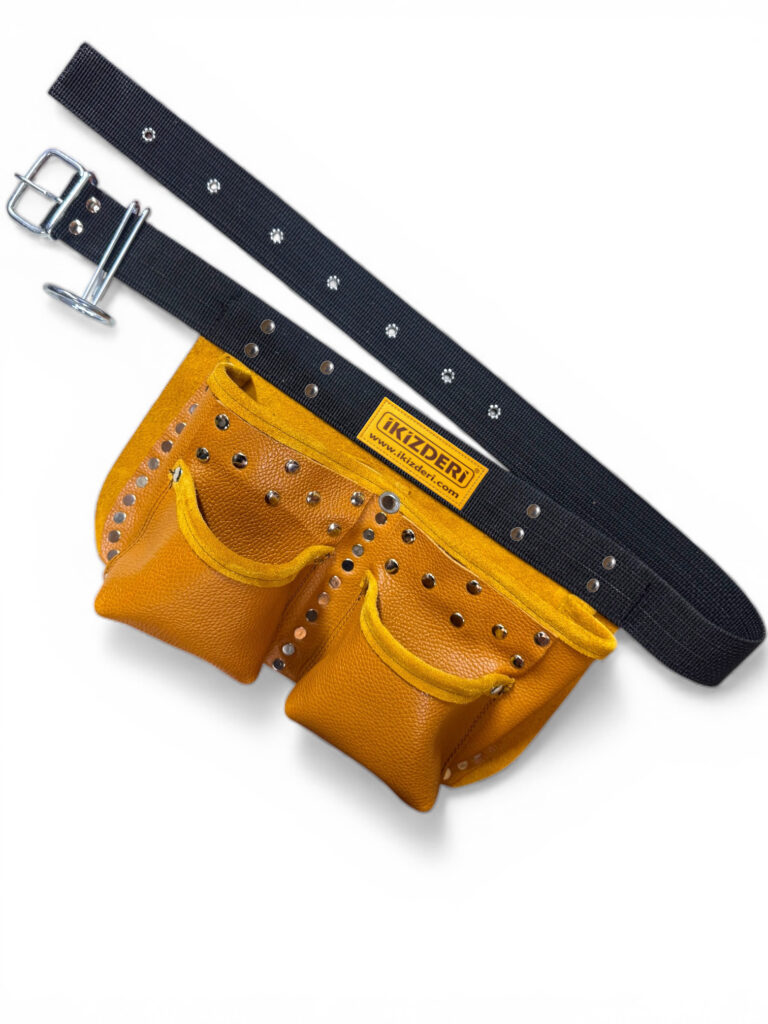
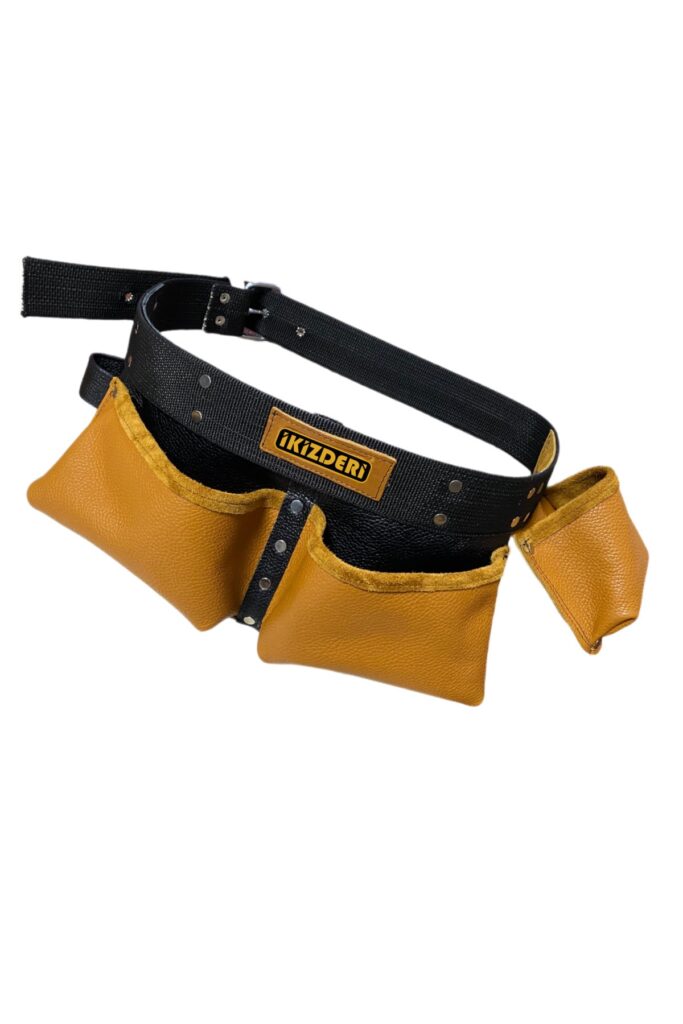
Deep, wide pockets are ideal for large tools, and shallow, narrow pockets for small parts. For example, a long tape measure or chisel will not stay in a shallow pocket; small screws get lost at the bottom of a very large pocket. So when choosing an apron, look not only at how many compartments it has, but also at their size and depth. A well-designed apron balances pockets of different sizes.
A good apron usually combines small, medium, and large pockets, so every size of tool finds its place. Also, having narrow slots inside some pockets for a pencil, chisel, or screwdriver increases organization even more. So the ideal apron is not the “many-pocketed” one, but the one with “correctly sized and smartly placed pockets.” When evaluating a model, paying attention to the variety and internal layout of the pockets makes it easier to make the right choice.
How Should You Organize the Compartments?
When organizing the compartments, after choosing the right number of compartments, you can place tools as in our how to organize a nail apron guide, keeping the tools you use often in easily accessed front pockets and those you rarely use in the back compartments is the most efficient method. Correct placement is as important as the number of compartments.
When you organize your tools by frequency of use and by hand, you do not lose time searching. Nails should be in one compartment, measuring tools in another, and cutting tools in a separate place. This way you work both safely and quickly. When the compartment layout is set up correctly, even an apron with few compartments can be very efficient. When the right number of compartments meets the right placement, the apron reaches its full potential.
Tips for Choosing the Right Number of Compartments
To choose the right number of compartments, first count the tools you carry daily, then group them and think of one compartment for each group. This simple method clearly shows the number of compartments you need.
- List your tools: Write down all the tools you carry on your waist in a workday.
- Group them: Gather similar tools (nails, measuring tools, cutters) together.
- Determine the number of groups: Each logical group corresponds to one compartment.
- Consider the size: Choose a pocket depth suitable for the largest tool in each group.
- Leave some margin: One extra compartment can make sense in case your need grows.
When you apply these steps, you decide based on your real need, not on guesswork. Choosing the right number of compartments is also an important part of deciding which nail apron to buy; for general selection criteria, you can also take a look at our how to choose a nail apron guide.
Few vs. Many Compartments: Pros and Cons
Few-compartment aprons offer lightness and simplicity, while multi-compartment aprons provide organization and capacity; the right choice comes from balancing these pros and cons with your own work. Each layout has its own advantage.
- Few-compartment pros: Light, simple, less tiring when worn for long periods.
- Few-compartment cons: Cannot carry a wide variety of tools; everything can mix.
- Multi-compartment pros: Maximum organization, quick access, high capacity.
- Multi-compartment cons: Gets heavy when full; unused compartments are dead weight.
As you can see, “more compartments” is not always a gain. Think about your own workday: how many different tool groups do you really need to carry separately? The answer to this question leads you to the right balance. Most craftsmen find a middle layout, not one of the extremes, the most efficient.
How Does the Number of Compartments Affect the Apron’s Weight?
As the number of compartments increases, the apron’s empty and full weight also increases; so in multi-compartment aprons, a wide waist belt is essential for comfort. Weight is a decisive factor in long-term use.
Each extra compartment adds both its own weight and the weight of the tools placed in it. A full apron with five or six compartments puts noticeably more load on your waist than a two-compartment one. To balance this load, a wide, soft, supportive waist belt is needed. Otherwise, the capacity advantage gives way to back and waist fatigue. So when choosing a multi-compartment apron, give the belt quality at least as much importance as the number of compartments.
Does Nail Apron Price Change with the Number of Compartments?
Usually, as the number of compartments increases, the price rises somewhat because more material and workmanship are used. However, the number of compartments is not the only factor determining price; leather quality and workmanship matter just as much.
More compartments mean more leather, stitching, and rivets, which increases the cost. Still, between two different aprons, a few-compartment but quality model can be more expensive than a multi-compartment but cheap one. So when evaluating price, look not only at the number of compartments but also at the material and workmanship quality. Instead of paying for more compartments than you need, investing in a quality apron with as many compartments as you need is smarter.
For a heavier tool load, a wide belt is more comfortable — our bandolier belt leather aprons spread the weight across the waist.
Conclusion: The Right Number of Compartments Boosts Efficiency
How many compartments your nail apron needs depends on the number of tools you carry and your trade; 2-4 compartments for most craftsmen, and 5 or more for heavy users. The goal is not the most compartments, but the layout that best suits your work.
The right number of compartments provides quick access to your tools, does not tire your waist, and increases your productivity. When deciding, remember this simple question: “How many different tool groups do I carry on my waist every day?” Its answer gives you almost exactly the number of compartments you need. You can find fully handmade genuine leather models with the compartment layout that best suits your need among the İkizderi leather work equipment and choose the apron that fits your work best.