
 İkizderi
 Leather tool bag vs tool belt is a question that puzzles every craftsman trying to decide how to carry their tools. Both keep tools organized, but they differ significantly in carrying style, comfort, and use. A tool belt keeps your tools on your waist, while a tool bag holds them together in a portable form. In this guide we compare the leather tool bag and tool belt in every respect, and explain clearly which job and which craftsman needs which one more.
The Short Answer: Tool Bag or Tool Belt?
A tool belt is more suitable for craftsmen who move constantly and want instant access to their tools from the waist; a tool bag is more suitable for those who want to carry many tools together and change work sites. The choice depends on how and where you use your tools.
A tool belt provides quick access to the tools on your waist while your hands are free, which is ideal for those working on a ladder, on scaffolding, or constantly on the move. A tool bag lets you carry tools together and protected, which is practical for service craftsmen traveling to different addresses. Below we compare the two in every respect.
It is more accurate to think of these two solutions not as rivals but as complementary tools. One handles “carrying while working,” the other “moving from place to place.” So most experienced craftsmen focus less on “which is better” and more on “which for which job.” That is the right approach, because what determines the decision is not the product itself but your working style.
What Is a Leather Tool Belt and What Are Its Advantages?
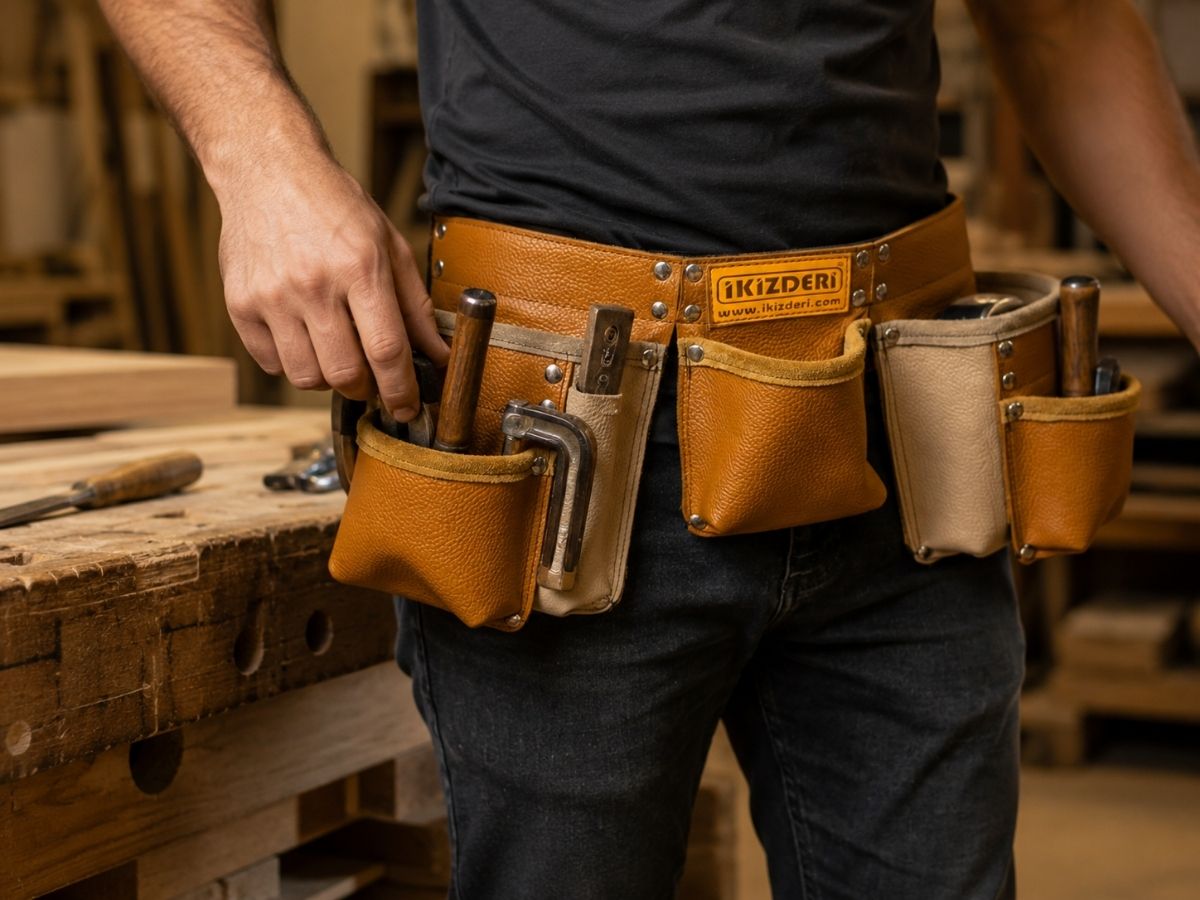
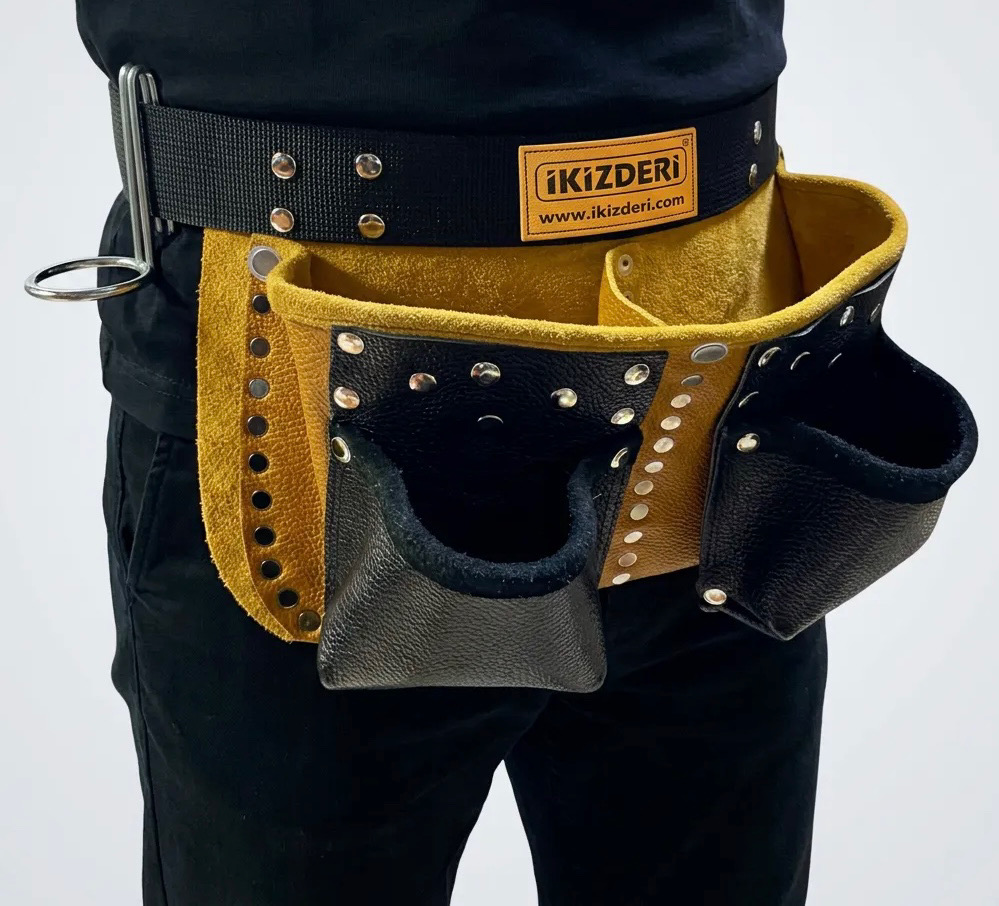
A leather tool belt is a carrying solution that holds tools in pockets attached to the waist, keeping the hands free while working. Its biggest advantage is providing instant, two-handed access to tools.
- Quick access: Because the tools are on your waist, you reach them without bending or searching.
- Free hands: You can use both hands while working.
- Freedom of movement: You work comfortably on ladders, scaffolding, and in tight spaces.
- Balance: Because the load is spread around the waist, it keeps balance while moving.
A leather tool belt is indispensable especially for craftsmen who move constantly and change positions. You can review various leather tool belt models. However, its carrying capacity is more limited than a bag’s; it can fall short when many large tools need to be carried.
The greatest strength of a tool belt is that it does not interrupt the work pace. The tool you need is already on your waist; you reach it without bending, walking, or searching. This saves serious time in repetitive work. For example, for a craftsman constantly driving nails, the difference between taking a nail from the waist and turning to a bag can add up to hours over a day. This is why the belt stands out in work requiring speed and continuity.
What Is a Leather Tool Bag and What Are Its Advantages?
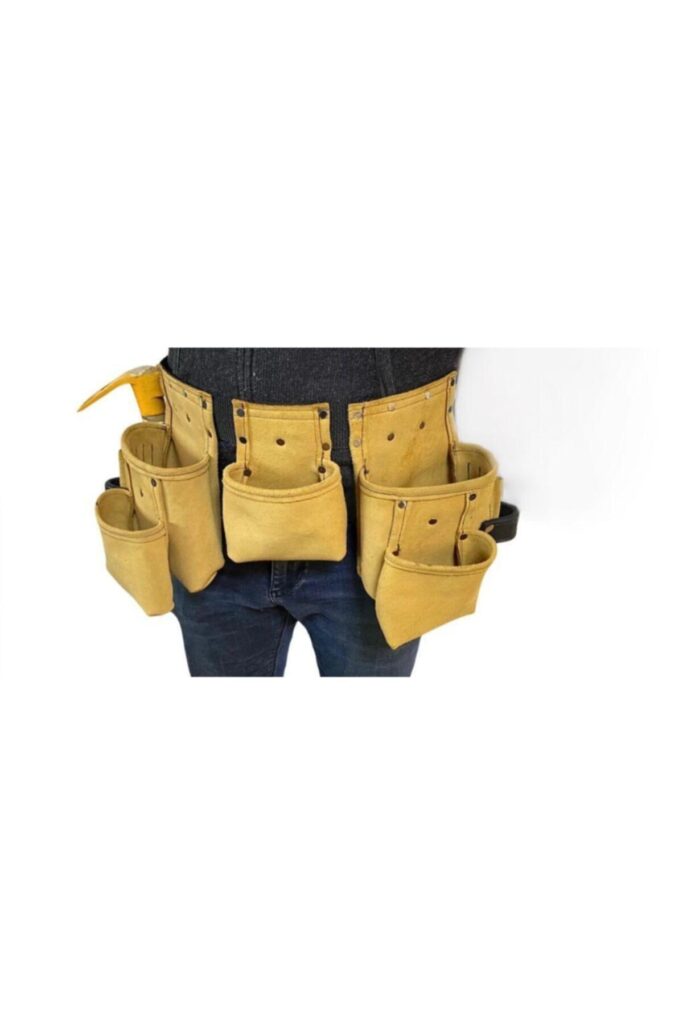
A leather tool bag is a solution designed to keep many tools together, protected, and portable. Its biggest advantage is its high carrying capacity and easy portability.
- High capacity: Carries many and large tools together.
- Portability: Easily taken from one place to another.
- Protection: Protects tools from dust, impact, and dirt.
- Organization: Tools stay organized and together even when not in use.
A leather tool bag is ideal for craftsmen who change work sites, go on service calls, or carry a wide variety of tools. You can review different leather tool bag models. However, when working with a bag, you need to stop and turn to the bag to reach tools; this can create time loss in work that constantly switches tools.
The real strength of a bag is that it offers organization and protection together. All your tools stay in a closed container, protected from dust and moisture, and stay together without scattering when the job is done. This is important especially for craftsmen carrying expensive or delicate tools. Also, a bag provides a safe and organized solution when carrying tools from a vehicle to the work site. So a bag offers a convenience the belt cannot when it comes to carrying and storage.
What Are the Differences Between a Tool Bag and a Tool Belt?
The main difference between a tool bag and a tool belt is the carrying style: the belt keeps tools on the waist for instant access, while the bag gathers them in a portable container. The table below lets you compare the two solutions at a glance.
| Feature | Leather Tool Belt | Leather Tool Bag |
|---|---|---|
| Access | Instant, from the waist | By turning to the bag |
| Hands | Free | May be full while carrying |
| Capacity | Medium | High |
| Portability | Worn on the waist | Easily carried |
| Movement | Very free | Better at a fixed spot |
| Protection | Open pockets | Closed, protected |
Which Is More Practical?
A tool belt is more practical in work that constantly switches tools and moves, while a tool bag is more practical when you need to carry many tools from one place to another. Practicality varies with the flow of your work.
For a craftsman working on a ladder while doing ceiling work, having tools on the waist is a great convenience; a bag would be cumbersome here. On the other hand, for a service craftsman who goes to a home for repairs and needs dozens of different tools, a bag is the most practical way to carry them all together. So what is “more practical” depends on how your work moves you. Thinking about your own workday gives the right answer.
Which Is Suitable for Which Job?
A tool belt suits fixed or mobile assembly work, while a tool bag suits work that requires transport and many tools. The nature of the work determines the right solution.
- Carpenter (workshop): Usually a nail apron or tool belt; quick access in fixed work.
- Electrician / plumber (service): Often a tool bag; carrying tools to different addresses.
- Builder: A tool belt; free work while moving and at height.
- Repair / maintenance technician: A tool bag; many tools and portability.
These matches are not strict rules but general tendencies. Many craftsmen use both together depending on the type of work. To get to know different craftsman aprons and carrying solutions, you can also take a look at our types of craftsman aprons guide.
Carrying Capacity: Which Carries More Tools?
In terms of carrying capacity, a tool bag carries more and larger tools than a tool belt. This is because a bag is not limited by the weight the waist can carry.
A tool belt is limited by the weight you can put on your waist; beyond a certain point it becomes both uncomfortable and tiring. A tool bag, carried in the hand or on the shoulder, can hold far more tools. But this capacity advantage has a cost: carrying the bag occupies one of your hands and slows access to tools. So “many tools” alone is not enough to choose a bag; how often and how quickly you need to reach those tools also matters.
Does It Make Sense to Use a Tool Bag and Tool Belt Together?
Yes; many professional craftsmen use a tool bag and tool belt together, treating the bag as storage and the belt as the active work area. This dual system provides both capacity and access advantages.
In this method, you carry all your tools in the tool bag and transfer the tools you will use at the moment to your belt. This way only the tools you need are on your waist; the rest wait in the bag, organized and protected. This system is quite efficient especially for craftsmen who use a wide variety of tools but do not need them all at once. The belt comes into play while working, the bag while carrying; the two complement each other.
What Should You Check When Choosing a Leather Tool Bag?
When choosing a leather tool bag, pay attention to the quality of the leather, the strength of the carrying handles, the internal compartment layout, and the durability of the stitching. These four points determine both the bag’s lifespan and its comfort of use.
- Leather quality: Full-grain genuine leather provides long life under heavy tool load.
- Carrying handles: The handles should be strong and riveted; this is the most worn spot.
- Internal layout: Compartments that keep tools separate ease organization and access.
- Stitching quality: Tight, strong stitching prevents tearing at the base and edges.
In a bag carrying heavy tools, reinforced base and handles are especially important, because all the load rests on these points. A quality leather tool bag provides both protection and organization for years.
When Belt, When Bag? Example Scenarios
To clarify the right choice, it helps to look at a few real scenarios, because even the same craftsman may need a different solution for different jobs. The examples below make your decision easier.
- Roof or ceiling work: A tool belt is ideal because hands must be free on a ladder.
- Home repair service: A tool bag is practical because many tools go to different addresses.
- Furniture making in a workshop: A nail apron or belt is enough because work is at a fixed spot.
- Large construction site: Storing in a bag and working with a belt, using both together, is the most efficient.
As you can see, there is no single right answer; the right solution changes with the requirements of the job at hand. By comparing your own typical workday with these scenarios, you can easily determine the carrying style that suits you best. Many professionals eventually acquire both solutions and choose according to the job.
Disadvantages of a Tool Belt and a Tool Bag
The main disadvantage of a tool belt is its limited capacity and the load on the waist when used full; the main disadvantage of a tool bag is that it cannot provide instant access while working. Each has a trade-off.
The pockets of a tool belt are usually open, which speeds access but falls behind a bag in protecting tools from dust, moisture, and dropping. A full tool bag, meanwhile, can be heavy and occupies one hand while carrying, and is hard to keep with you at height or in tight spaces. So the belt’s advantage is at the moment of active work, and the bag’s advantage is in carrying. Knowing these trade-offs helps you choose the right one for your work.
Price: Is a Tool Bag or Tool Belt More Economical?
Price varies with the size, material, and workmanship of each; but usually a large, multi-compartment leather tool bag can be more expensive than a tool belt. The amount of material and capacity directly affect the price.
A larger bag with more leather is naturally more costly. But in both products, the real determinant is material quality: genuine leather is more expensive than synthetic but far longer-lived. It is best to invest in whatever your need is; a belt for mobile work, a bag for work requiring transport, pays for itself many times over the long run. When evaluating price, also factor in how many years you will use the product.
If your budget is limited, it is wise to start with the solution you need most in your work. For most craftsmen, this is a tool belt that provides freedom of movement. As your work grows and your carrying need increases, you can add a tool bag as a second step. This gradual approach lets you reach the right gear without a large one-time expense.
Conclusion: The Right Carrying Solution for Your Work
The answer to tool bag vs tool belt depends on how your work moves you: a tool belt stands out for movement and quick access, a tool bag for capacity and portability. For most craftsmen, the most efficient solution is to use both together.
Whichever solution you choose, material quality determines the product’s life. You can review the fully handmade genuine leather İkizderi leather work equipment and confidently choose the carrying solution — belt or bag — that best suits your work.