
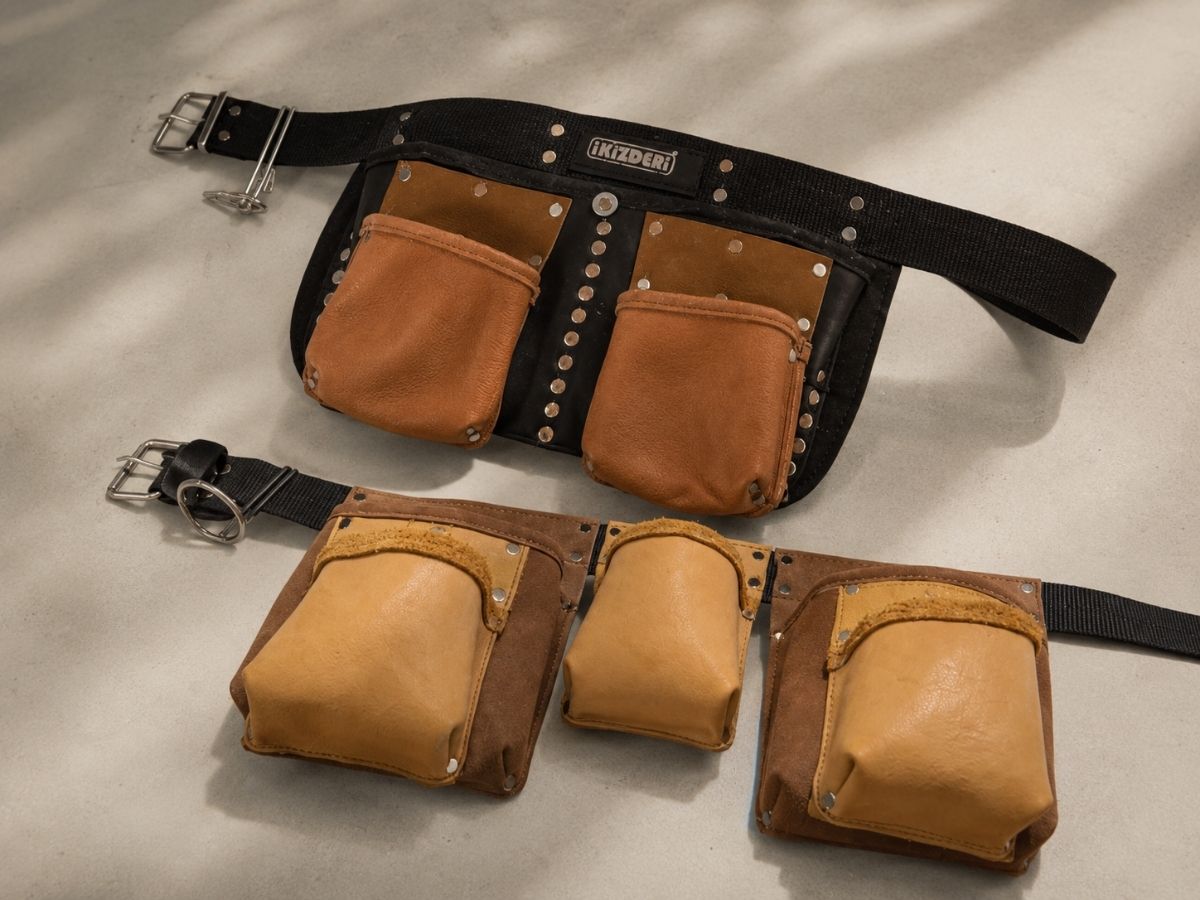
 İkizderi
 Leather vs. canvas nail apron is the choice almost every craftsman hesitates over when looking for a durable work apron. Both are widely used, but they differ significantly in durability, lifespan, comfort, and price. In this guide we compare leather and canvas nail aprons from every angle, and explain clearly which job, which craftsman, and which budget suits each. By the end, you will be able to make the right choice for your own use with confidence. The leather vs canvas nail apron question comes down to one thing above all: how long the material survives the tools you carry.
The Short Answer: Leather or Canvas — Which Is Better?
For heavy, long-term, professional use a leather nail apron is better; for light, budget, low-intensity work a canvas apron is more suitable. Leather resists impact, friction, and moisture for years, while canvas is lighter and cheaper but shorter-lived. So the choice depends on how intensively you work and what you expect from the product.
To sum up briefly: leather is an investment, while canvas is a starter solution. For a craftsman who carries tools every day and works professionally, the durability and lifespan of leather make a difference. For someone who occasionally does repairs, the lightness and low price of canvas may be enough. Below, we compare the two materials point by point to make your decision easier.
What Is a Leather Nail Apron and What Are Its Advantages?
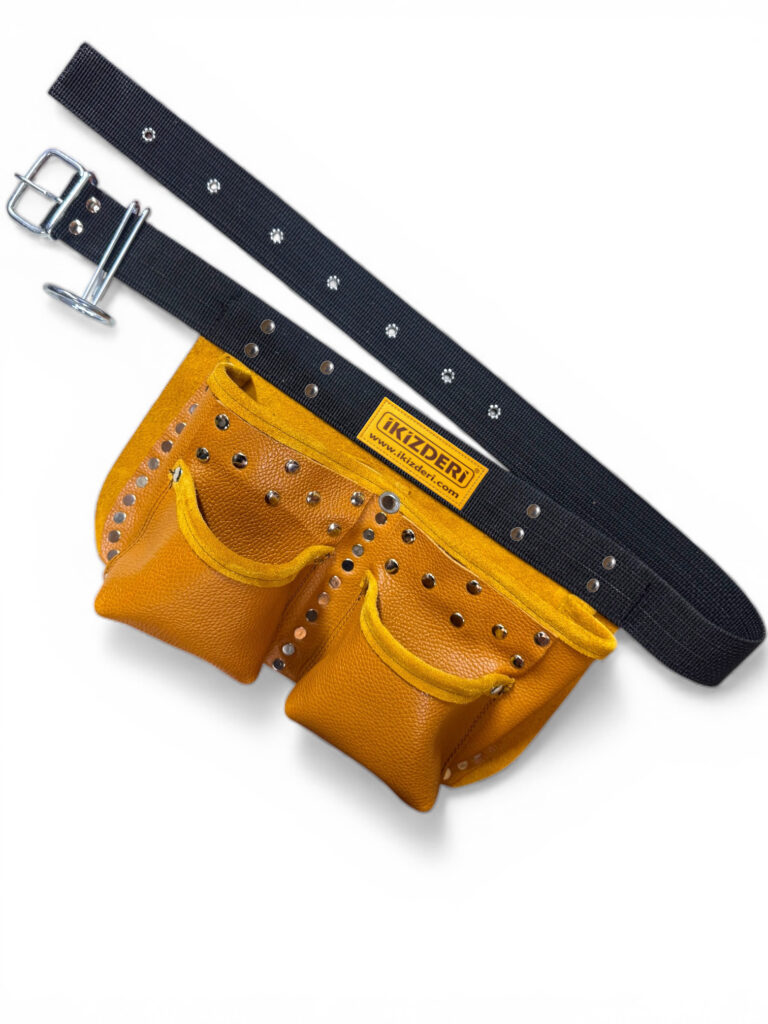
A leather nail apron is a durable work apron made from genuine leather, designed to carry nails and hand tools. Its biggest advantage is its lifespan: with proper care it lasts more than ten years. It resists the pressure of hard tools, sharp edges, and moisture.
The standout qualities of a leather apron are:
- Long life: Used for years without wearing out, and gains a beautiful patina over time.
- Durability: Withstands the pressure of heavy tools like nails, chisels, and pliers.
- Heat and moisture resistance: Safer than canvas against sparks and moisture.
- Professional look: Gives a master-craftsman appearance.
Leather quality also depends on the type of hide used. Full-grain genuine leather is preferred in work aprons because it is the top, strongest layer; thin or split leathers do not offer the same durability. So when buying a leather apron, it is important to make sure the material is genuine, thick leather; if in doubt, you can use our guide on how to tell if leather is real.
At İkizderi, we make our leather nail apron models from full-grain genuine leather with stainless-steel rivets and hand-stitching; the goal is for the product to be used for generations.
What Is a Canvas Nail Apron and What Are Its Advantages?
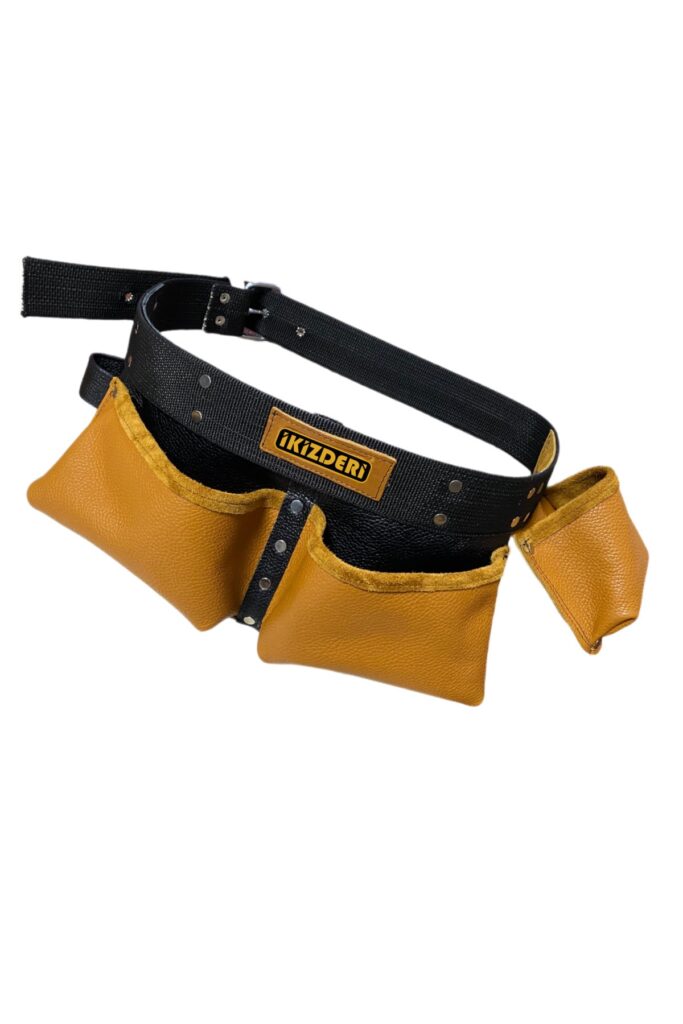
A canvas nail apron is a light, economical work apron made from tightly woven cotton canvas fabric. Its biggest advantage is its lightness and affordable price. It breathes in hot environments and is comfortable for short-term work.
The standout qualities of a canvas apron are:
- Lightness: Tires the shoulders and back less when worn for long periods.
- Affordable price: Cheaper than leather at first purchase.
- Breathability: Keeps you cool in hot weather and closed workshops.
- Washability: Some models can be machine washed.
However, canvas wears out over time under friction and heavy load; it frays at the seams and is far shorter-lived than leather.
A canvas apron is a sensible option for beginners or those who do occasional repair work, thanks to its low upfront cost. Its lightness is also an advantage for some craftsmen who work on their feet and move a lot. Even so, these advantages give way to rapid wear in heavy, continuous use. In other words, canvas is a good solution when used for the right job, but it is not as reliable as leather in tough conditions.
What Are the Differences Between Leather and Canvas Aprons?
The main difference between leather and canvas aprons is durability and lifespan: leather lasts more than ten years while canvas usually wears out in three to five. The table below lets you compare the two materials at a glance.
| Feature | Leather Nail Apron | Canvas Apron |
|---|---|---|
| Durability | Very high | Medium |
| Lifespan | 10 years and more | Usually 3-5 years |
| Weight | Heavier | Light |
| Heat / sparks | Resistant | Weak |
| Moisture resistance | High | Low (absorbs) |
| Care | Occasional leather conditioner | Easy, washable |
| Price | High, economical long-term | Cheap, replaced often |
| Over time | Patina, improves | Fades, wears out |
Which One Is More Durable?
In durability, the leather nail apron is clearly ahead. Genuine leather can be used for ten to twenty years with proper care, while a canvas apron often wears out within three to five years under heavy use. This is because leather’s fiber structure is far more resistant to friction and puncturing than canvas.
Especially in a product that carries hard materials like nails, screws, and chisels, canvas fabric eventually tears at the pocket openings. In leather, stainless-steel rivets and hand-stitching reinforce these areas; the product keeps its form for years.
Which Is Suitable for Which Trade?
Leather suits busy, heavy-working carpenters, builders, and installers; canvas suits light, short-term, or hobby work. The choice depends on the pace of the work and the weight of the tools carried.
- Carpenter and furniture maker: Heavy tools and constant use → leather.
- Construction and renovation worker: Tough conditions, dust, impact → leather.
- Electrician and plumber: Medium intensity → leather or sturdy canvas.
- Hobby and home repair: Occasional use → canvas may be enough.
When deciding which material is right for a trade, the work environment matters as much as the weight of the tools. In dusty, damp, or spark-filled environments, leather almost always stands out. In a clean, indoor, low-intensity workshop, canvas can be an acceptable solution. Making your decision based on your daily reality rather than price alone will satisfy you in the long run.
You can find the model that best suits your work by reviewing our leather master apron range designed for different trades.
Price: Is Leather or Canvas More Economical?
A canvas apron is cheaper at first purchase, but in the long run a leather nail apron is more economical. That is because canvas needs replacing every few years, while a leather apron is bought once and used for decades.
A simple calculation: the total cost of a cheap canvas apron replaced three times in five years approaches, or exceeds, that of one quality leather apron bought once. What’s more, a leather apron looks better every year. So although leather seems more expensive at the start, it is a genuine investment.
You should also add the cost of lost time to this calculation. Replacing a frequently worn apron, and researching and buying the right product again and again, is also a cost. A leather apron you can buy once and use with confidence for years protects both your wallet and your time. In professional use, this difference clearly shows itself within a few years.
What Is the Difference in Care Between Leather and Canvas?
A canvas apron is usually cleaned by machine or hand washing; a leather apron is wiped with a damp cloth and nourished every few months with a leather conditioner. Canvas is easier to care for but short-lived; leather takes a little effort but rewards you with a very long life.
Never machine wash a leather apron or dry it on a heat source; this permanently cracks the leather. With proper care, a leather apron keeps its original strength for years. With canvas, although frequent washing seems practical, each wash wears the fabric a little more and fades its color. So easy care does not extend canvas’s life; it only keeps it clean.
What Are the Disadvantages of a Leather Nail Apron?
The main disadvantages of a leather nail apron are its higher upfront price, its extra weight compared to canvas, and its need for regular care. These are points that should be known honestly; however, for most professionals these disadvantages are small next to the long life leather provides.
Leather is more expensive than canvas at first and heavier than a canvas apron. It can also stiffen over time if left wet or never cared for. Even so, a leather conditioner applied every few months prevents this entirely. In short, leather’s disadvantages are easily managed with proper use and simple care.
What Are the Disadvantages of a Canvas Apron?
The biggest disadvantages of a canvas apron are its short life, low heat and moisture resistance, and rapid wear under heavy tools. Canvas is light and cheap but cannot provide the protection leather offers in tough conditions.
Canvas fabric first thins and then tears at the pocket openings under the constant pressure of hard tools like nails and chisels. Because it absorbs moisture, it gets heavy in wet environments and takes a long time to dry. It is also weak against sparks and heat, so it is not recommended for work like welding or grinding. Therefore canvas is suited to light work rather than heavy, long-term use.
Why Is a Leather Apron So Long-Lasting?
The reason for a leather apron’s long life is the natural fiber structure of genuine leather, tightly interlocked. These fibers resist friction, pulling, and puncturing; this is why leather, unlike textile fabrics, does not easily wear out or come apart.
Canvas fabric is made of woven threads, and under pressure these threads gradually open up. In leather there is no such weave; the material is one piece and dense. Add reinforced load points with stainless-steel rivets and master hand-stitching, and the product can be used for decades without falling apart. This is exactly what makes leather a true lifetime product.
Canvas Types: Raw Canvas vs. Waxed Canvas
Not every canvas is the same; waxed canvas is more durable and more water-resistant than raw canvas. If you are going to buy a canvas apron, knowing the difference between these two types helps you set the right expectation.
- Raw canvas: Light and cheap, but absorbs water and wears out faster.
- Waxed canvas: The surface is waxed to make it water-resistant; it is longer-lived but still cannot match leather.
Waxed canvas is the best of the canvas options; still, it has limits such as wear at the seams and the wax fading over time. So even the highest quality canvas cannot provide the lifespan genuine leather offers in durability.
Which Is Better in Water, Moisture, and Tough Conditions?
In tough conditions with heavy water, moisture, sparks, and dust, a leather nail apron performs far better than canvas. Leather resists water to a degree and is cleaned by wiping; canvas absorbs moisture, gets heavy, and dirties quickly.
In construction, renovation, and outdoor work, dust and moisture are unavoidable. In these environments leather both cleans more easily and keeps its structure. A canvas apron, on the other hand, must be washed often, and each wash wears it a little more. So in tough, variable conditions, leather is both a cleaner and a more durable choice in the long run.
In addition, in jobs with a risk of sparks or hot parts, leather is far safer than canvas. Canvas fabric can easily catch fire or be punctured, while leather withstands brief heat contact. This makes leather not only more durable but also a safer choice, especially in metalworking, grinding, and similar work.
If you wonder how long leather lasts, our how long does a leather work apron last guide has all the details.
If you are curious about leather types, our faux leather vs genuine leather guide is also worth a read.
Conclusion: Which One Is Right for You?
If long life, durability, and professional use are your priority, the leather nail apron is right for you; if lightness, low upfront cost, and occasional use are your priority, the canvas apron is the right choice. For a craftsman who carries heavy tools every day, leather is both more economical and more comfortable in the long run.
When deciding, just ask yourself one question: how often and in how tough conditions will you use this apron? If the answer is “every day and in heavy work,” leather is definitely the smarter investment. If the answer is “occasionally and in light work,” canvas can also do the job. For most professional craftsmen, though, the balance tips toward leather with its durability and lifespan.
If you want a lifetime, genuine leather solution, you can review the fully handmade İkizderi leather work equipment and choose the model that best suits your work with confidence.