
 İkizderi
 Choosing a tool apron for plumbers directly makes a plumber’s daily work easier — or harder. The tools plumbers carry differ from a carpenter’s or electrician’s; pipe wrenches, pincers, PTFE tape, and various fittings must stay organized in a long, heavy, and moisture-prone working environment. In this guide we explain what the right tool apron for plumbers should be like — the importance of deep pockets, moisture resistance, and material advantages.
The Short Answer: What Should a Plumber’s Tool Apron Be Like?
A good plumber’s tool apron should have deep pockets, 3-4 compartments, be made of moisture-resistant genuine leather, and have a sturdy waist belt. Because plumbers carry long, heavy tools, pocket depth is even more critical than the number of compartments.
Plumbing work often involves water, moisture, and tight spaces. So the apron must be both moisture-resistant and deep enough to hold long tools safely. Below we examine all the features of an apron that meets these needs.
A plumber’s apron faces one of the toughest sets of conditions of any trade: heavy metal tools, constant moisture, and cramped work areas. This triple combination wears out an ordinary apron quickly. This is why material quality and pocket design become even more decisive in plumbing than in other trades.
What Features Should a Plumber’s Apron Have?
The main features to look for in a plumber’s apron are deep pockets, moisture-resistant material, a sturdy waist belt, and reinforced pocket bases. These four features define the apron best suited to the nature of plumbing work.
- Deep pockets: Essential so pipe wrenches and long tools do not fall out.
- Moisture-resistant leather: Provides long life in an environment where water is common.
- Sturdy waist belt: Carries the load of heavy metal tools in balance.
- Reinforced pocket base: Withstands the pressure of heavy wrenches.
An apron with these features lets a plumber work comfortably in tight and damp spaces. An apron with shallow pockets or weak construction quickly loses its function in plumbing work.
Which Tools Do Plumbers Carry?
Plumbers usually carry a pipe wrench, adjustable wrench, pliers, pincers, PTFE tape, a spirit level, a chisel, and various fittings. Most of these tools are long and heavy, which requires deep and sturdy pockets.
- Pipe wrench / adjustable wrench: Plumbing’s most basic and heaviest tools.
- Pliers and pincers: Used for gripping and tightening.
- PTFE tape: A consumable used constantly for sealing.
- Spirit level: Needed to set pipe slope correctly.
- Fittings: Small parts such as couplings, elbows, and gaskets.
The weight and length of these tools separate a plumber’s apron from other trades’. While an electrician works with small tools, a plumber carries heavy, bulky metal tools on the waist.
Also, the fittings a plumber carries are very varied: couplings, elbows, gaskets, and screws of different sizes may be needed at once. A separate, shallow compartment is essential so these small parts do not mix; otherwise they get lost among heavy wrenches. A good plumber’s apron combines deep pockets for heavy tools with organized compartments for small parts.
Why Is Pocket Depth Critical in a Plumber’s Apron?
Pocket depth is critical in a plumber’s apron because long tools like a pipe wrench do not stay in a shallow pocket and fall out while bending. A heavy metal tool falling can cause both damage and injury.
Plumbers often bend, crouch, and get into tight spaces. In these positions shallow pockets let tools out. Deep pockets take at least half the tool inside and prevent it from falling. Also, a reinforced pocket base prevents tearing under the pressure of heavy metal tools. So for a plumber, correct pocket depth is often even more important than the number of compartments.
Another important point is the width of the pocket opening. The opening must be wide enough for bulky tools like a pipe wrench to go in and out easily. A too-narrow opening makes you force the tool out each time and eventually tears the pocket. The right balance of depth and width is the most important design detail of a plumber’s apron.
Why Does Moisture Resistance Matter in a Plumber’s Apron?
Because plumbing work is intertwined with water and moisture, it is important that the apron is made of a moisture-resistant material and dried correctly when it gets wet. Genuine leather, with proper care, lasts for years in damp environments.
A canvas apron absorbs water, gets heavy, and molds when left damp. Leather resists water to a degree and is easily cleaned by wiping. But leather too must be dried correctly when wet; leather dried on a heat source cracks. You can find all the steps for rescuing a wet leather apron and protecting it from moisture in our what to do when leather gets wet guide. A water-repellent wax is especially useful for plumbers.
Should a Plumber’s Apron Be Leather or Canvas?
In a plumber’s apron, genuine leather is far more resistant to both heavy metal tools and moisture than canvas. Canvas tears quickly under the pressure of heavy wrenches and gets heavy by absorbing water.
Heavy, hard-edged tools like a pipe wrench abrade canvas fabric over time and tear it at the pocket openings. Genuine leather withstands this pressure for years. You can find a detailed evaluation in our leather vs canvas nail apron guide. In heavy, damp work like plumbing, leather is by far the more sensible choice.
How Many Compartments Should a Plumber’s Apron Have?
Usually 3-4 compartments are enough in a plumber’s apron; what matters is not the number but the depth and strength of those compartments. A few deep compartments for long tools are more useful than many shallow ones.
Three or four compartments are enough to keep heavy wrenches in one and small fittings in another. A shallow, small pocket is useful for consumables such as PTFE tape and gaskets. To evaluate the number of compartments suited to your need, take a look at our how many pockets a nail apron needs guide.
Tool Belt or Bag for a Plumber?
For plumbers doing service work a tool bag is more suitable, and for those working on a fixed site a tool belt. Most plumbers find using both together the most efficient.
A plumber traveling to different addresses carries many heavy tools in a bag and transfers the ones needed for the current job to the belt on their waist. A plumber working on a site prefers to keep tools on the waist. Our leather tool bag vs tool belt guide helps you make the right decision.
How to Organize a Plumber’s Apron?
In a plumber’s apron, heavy wrenches should be placed so as not to upset balance, and small fittings kept in a separate, shallow compartment. Weight distribution is especially important in a plumber’s apron.
Piling heavy tools like a pipe wrench on one side strains the waist at a single point and upsets balance. Distributing these tools evenly on both sides increases comfort all day. Small parts such as PTFE tape, gaskets, and couplings should stay in a separate compartment so they do not mix. You can find all the details of building an efficient tool layout in our how to organize a nail apron guide.
Also, wiping wet tools before putting them in a pocket prevents both rust stains and moisture buildup inside the pocket. This small habit significantly extends the apron’s life in work that constantly contacts water, like plumbing. Order and care are two elements that complete each other in a plumber’s apron.
A well-organized plumber’s apron also speeds up work in tight spaces, where reaching into the wrong pocket wastes time and patience. When every tool has a fixed place, you find what you need even without looking.
What to Check When Choosing a Plumber’s Apron?
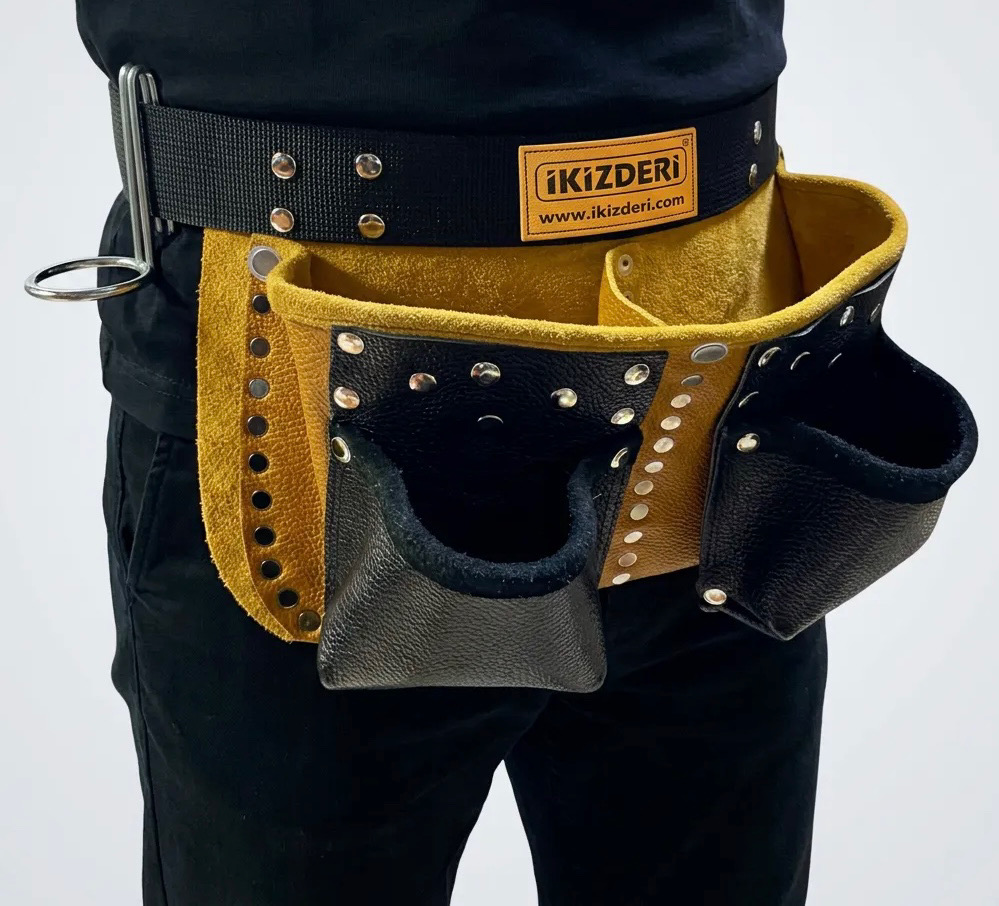
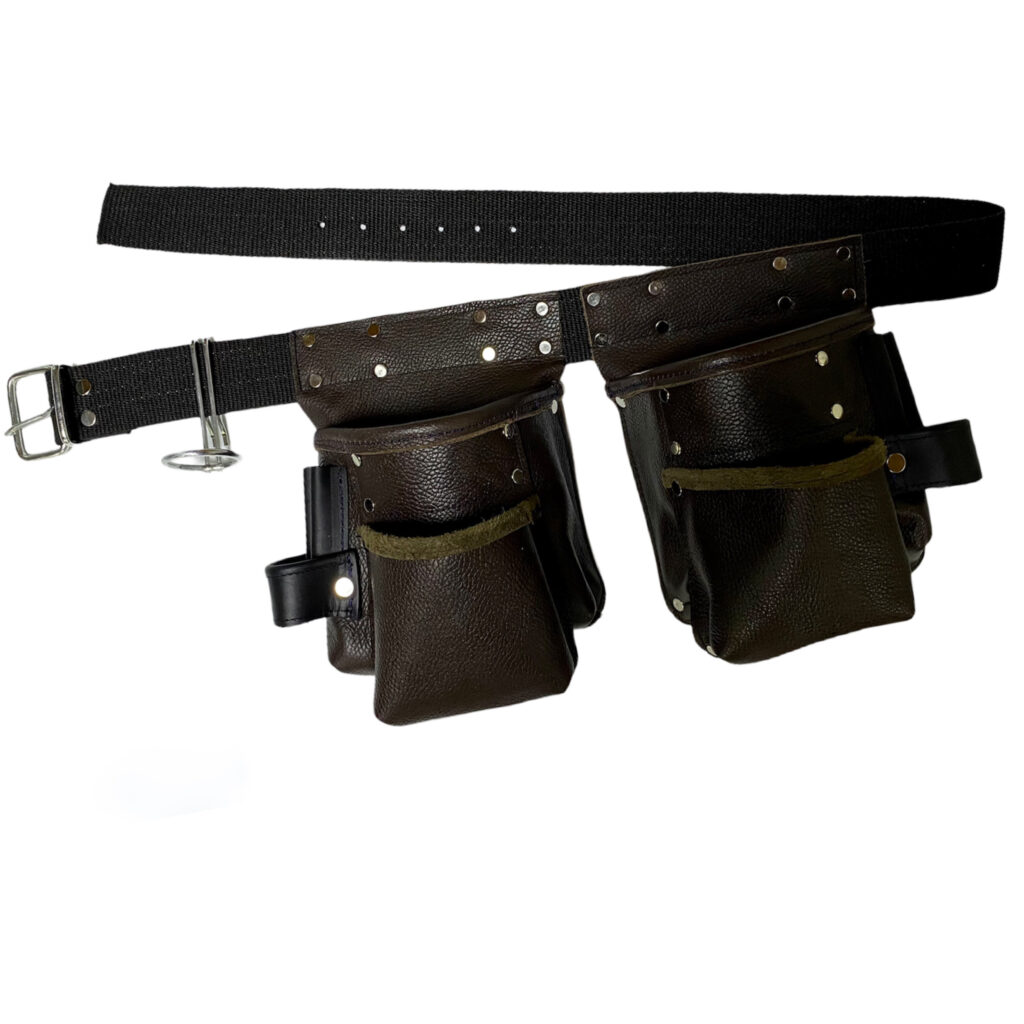
When choosing a plumber’s apron, check the pocket depth, material, strength of the pocket base, and waist belt. These four points determine the apron’s performance in plumbing work.
- Pocket depth: Deep enough to take at least half of long tools.
- Material: Full-grain genuine leather resistant to moisture and heavy metal.
- Pocket base: Reinforced with rivets, withstanding the pressure of heavy wrenches.
- Waist belt: Wide and sturdy; must carry the load of heavy metal tools in balance.
You can find models meeting these criteria among our leather tool belt options and leather tool apron range.
Recommendations for Plumbers Working in Tight Spaces
For plumbers working in tight spaces, under cabinets, or in bathrooms, a slim, snug apron without protrusions should be preferred. A bulky apron catches on things in tight spaces and restricts movement.
A significant part of plumbing work is done in cramped areas such as under sinks, in boiler rooms, or inside walls. In these environments, an apron with very wide, protruding pockets constantly catches on things. A model that sits well on the waist, balanced and without much protrusion, is far more comfortable in such work.
Rust and Stain Problems in a Plumber’s Apron
Wet metal tools can leave rust stains on leather; these stains are easily cleaned with early action. Because metal and water go together in plumbing, rust is a common problem.
Putting a wet pipe wrench directly into a pocket leaves brown rust marks on the leather over time. The easiest way to prevent this is to wipe tools with a dry cloth before putting them in the pocket. Stains that do form can be largely removed by gently wiping with a lightly damp cloth and then conditioning. Regularly emptying moisture from the pockets also prevents both rust and mold.
Water Plumber vs. Gas Fitter: What’s Different?
Water plumbers are exposed to moisture more, while gas fitters carry more precise measuring and sealing tools. Both trades need a deep-pocketed, sturdy apron.
In water plumbing, wetting and moisture are unavoidable, so moisture-resistant leather and a correct drying habit are critical. In gas fitting, leak checking and precise connections come to the fore, requiring organized compartments for small parts and measuring tools. Still, the basic need in both is the same: deep, sturdy pockets to carry heavy wrenches.
Which Apron Should a Beginner Plumber Choose?
For a beginner plumber, a leather tool belt with deep pockets, 3 compartments, and a sturdy waist belt is the most balanced choice. There is no need for a multi-compartment or very expensive model at the start.
A new plumber understands better which pocket layout they need as they get to know the work. So a versatile, mid-level model is a sensible start. A quality genuine leather apron lasts for years even in a damp, tough plumbing environment, while a cheap model tears quickly.
How to Care for a Plumber’s Apron?
A plumber’s leather apron should be dried away from heat when wet, wiped with a damp cloth, and nourished every few months with leather cream. An apron working in a damp environment wears quickly without regular care.
Water and moisture take away the leather’s natural oil, so plumbers’ aprons should be conditioned a little more often than in other trades. Cleaning rust stains from metal tools early also prevents permanent marks. You can find all care details in our how to care for a leather nail apron guide.
Finally, remember this: plumbing is one of the trades that strains equipment the most. When heavy wrenches, constant moisture, and tight spaces come together, a low-quality apron cannot last even a few months. A quality genuine leather apron withstands all of these conditions and stays with you for years. So for plumbers, an apron is not an expense but a direct investment in the productivity of the work.
Leather vs Canvas for a Plumber’s Apron
Plumbing combines moisture with heavy metal tools, which makes the material choice critical. The table below compares the two under those conditions.
| Criterion | Genuine Leather | Canvas Fabric |
|---|---|---|
| Moisture resistance | High (wipes clean) | Low (absorbs water, gets heavy) |
| Pressure from a pipe wrench | Lasts for years | Tears at the pocket opening |
| Risk of mould | Low (if dried properly) | High (if left damp) |
| Rust stains | Wipe off | Soak into the fabric |
| Lifespan | Long | Short |
In wet, heavy work like plumbing, leather is by far the more sensible choice over canvas.
For construction workers in similarly tough conditions, see our leather apron for construction workers guide.
Conclusion: The Right Leather Apron for Plumbers
The right apron for plumbers is a model with deep pockets, 3-4 compartments, made of genuine leather resistant to moisture and heavy metal. Pocket depth and base strength are the two most critical details in plumbing work.
To find the model that best suits your work, you can review the fully handmade genuine leather İkizderi leather work equipment and choose an apron you can use with confidence in plumbing work for years.