
 İkizderi
 A carpenter apron is the cornerstone of both productivity and comfort in woodworking. A carpenter carries a hammer, chisel, tape measure, and many nails all day; keeping these tools organized, safe, and quickly accessible directly affects the quality of the work. In this guide we explain what the right leather apron for carpenters should be like — the features to look for, the ideal number of compartments, the importance of the hammer loop, and the material advantages. By the end, you will be able to confidently choose the carpenter apron that best suits your workshop.
The Short Answer: What Should a Carpenter Apron Be Like?
A good carpenter apron should have 3-5 compartments, a hammer loop, be made of full-grain genuine leather, and have a wide waist belt. Because carpenters carry a wide variety of heavy tools, both capacity and durability come first.
Unlike electrical work, carpentry requires heavy tools and plenty of nails. So a carpenter’s apron should have more compartments and a sturdier structure than an electrician’s. Below we examine all the features of an apron that meets these needs.
A carpenter’s apron stays on the waist for most of the day and is constantly under load. A pocket full of nails, a sharp chisel, and a heavy hammer are carried at the same time; this means no compromise on material or workmanship. A cheap apron can tear at the pocket openings within a few months. This is why carpentry is one of the trades where a leather apron truly makes a difference.
What Features Should a Carpenter Apron Have?
The main features to look for in a carpenter apron are enough compartments, a hammer loop, durable leather, and a supportive waist belt. These four features define the apron best suited to the nature of woodworking.
- Enough compartments: Nails, screws, and various hand tools must stay separate.
- Hammer loop: Lets the hammer be hung and taken in one motion.
- Durable leather: Resists heavy tools and sharp points for years.
- Supportive waist belt: Distributes the weight of a full apron evenly.
An apron with these features lets a carpenter work comfortably and efficiently all day. Woodworking is long and repetitive; your apron must withstand that pace.
The quality of the waist belt is critical, especially in a full carpenter’s apron. An apron loaded with nails and heavy tools digs into the waist when carried with a narrow or weak belt and causes serious fatigue by the end of the day. A wide, soft, supportive belt spreads this load across the whole waist. In very heavy use, a suspender belt transfers part of the load to the shoulders, protecting back health.
Which Tools Do Carpenters Carry?
Carpenters usually carry a hammer, tape measure, chisel, square, marking pencil, screwdriver, pliers, and many nails. The variety of these tools requires more than one compartment in the apron.
Some of these tools are heavy (the hammer), some are sharp (the chisel, utility knife), and some are small and numerous (nails, screws). Each group should have its own compartment so that both order and safety are maintained. You can find the full list and features of the basic tools a carpenter should carry in our essential hand tools for woodworkers guide.
Tool variety is the most basic element that separates a carpenter’s apron from an electrician’s or plumber’s. While an electrician works with small, light tools, a carpenter carries heavy, bulky, and sharp tools at the same time. This triple combination demands both sturdiness and a smart compartment layout from the apron.
How Many Compartments Should a Carpenter Apron Have?
Usually 3-5 compartments are ideal in a carpenter apron, because the variety of tools carried is high and nails should be separated by size. An apron with few compartments often falls short for a carpenter.
Three to five compartments are enough to carry the hammer, measuring tools, cutters, and nails of different sizes separately. In intensive, large-scale work this number can go up to six; but in that case a suspender-belt model should be preferred. To evaluate the number of compartments suited to your need, take a look at our how many pockets a nail apron needs guide.
Why Is the Hammer Loop Important?
The hammer loop is one of the most critical details of a carpenter apron because it lets the hammer be hung and taken in one motion. The hammer is the carpenter’s most frequently used tool; quick access to it means productivity.
Putting the hammer in a pocket both strains the pocket and makes it harder to take out each time. A hammer loop holds the hammer at a fixed point; you reach out and take it in one motion, and hang it back in one motion when done. Having the loop on the dominant side makes this movement natural and smooth.
The strength of the loop is as important as its position. Because the hammer’s weight constantly rests on this point, the loop must be reinforced with rivets and sewn to durable leather. A weak loop can break within a few months and cost the apron its most critical function.
Should a Carpenter Apron Be Leather or Canvas?
In a carpenter apron, genuine leather is far more durable than canvas, because it resists the heavy hammer, sharp chisel, and constant nail pressure for years. Canvas wears out quickly in heavy work like carpentry.
The nails and sharp tools carpenters carry eventually pierce canvas fabric and tear it at the pocket openings. Genuine leather withstands this pressure and keeps its form for years. You can find a detailed evaluation in our leather vs canvas nail apron guide comparing the two materials. In heavy carpentry, leather is by far the more sensible choice.
Why Is Leather Better in Sawdust and Dusty Environments?
Because leather does not absorb sawdust and dust like canvas, it is much easier to clean in woodworking. A leather apron cleaned by wiping provides great practicality in a workshop environment.
In a carpentry shop, sawdust and dust are unavoidable. A canvas apron absorbs this dust, gets dirty over time, and must be washed often; each wash wears the fabric a little more. A leather apron, on the other hand, is easily cleaned with a damp cloth. Leather is also more resistant to wood sanding and sharp sawdust particles. This practicality noticeably eases daily life for a busy carpenter.
Waist Apron or Bib Apron for a Carpenter?
For carpenters working at a fixed spot in a workshop, a bib apron provides extra protection, while a waist apron is more practical in mobile work. The choice depends on your working environment.
A bib apron protects clothing from sawdust and dust over a wider area and offers extra pocket space on the chest; this is advantageous for those working at a bench in a workshop. A waist apron is lighter and provides freedom of movement; it is more suitable for carpenters working on site or in assembly. You can find all apron types and which job they suit in our types of craftsman aprons guide.
How to Organize a Carpenter Apron?
In a carpenter apron, the hammer should be in the loop on the dominant side, the tape measure in the top front pocket, and nails in compartments the non-dominant hand can reach. The right order lets you reach tools by reflex.
Keeping nails in separate compartments by size lets you find the right nail without looking. Cutters like the chisel and utility knife should stay in a separate pocket with the blade protected. You can find all the details of building an efficient tool layout in our how to organize a nail apron guide.
In carpentry the same movements repeat many times a day: take the nail, grip the hammer, drive it. The few seconds saved each time in this cycle turn into a serious productivity difference by the end of the day. An organized apron makes this cycle uninterrupted and keeps the work flowing.
What to Check When Choosing a Carpenter Apron?
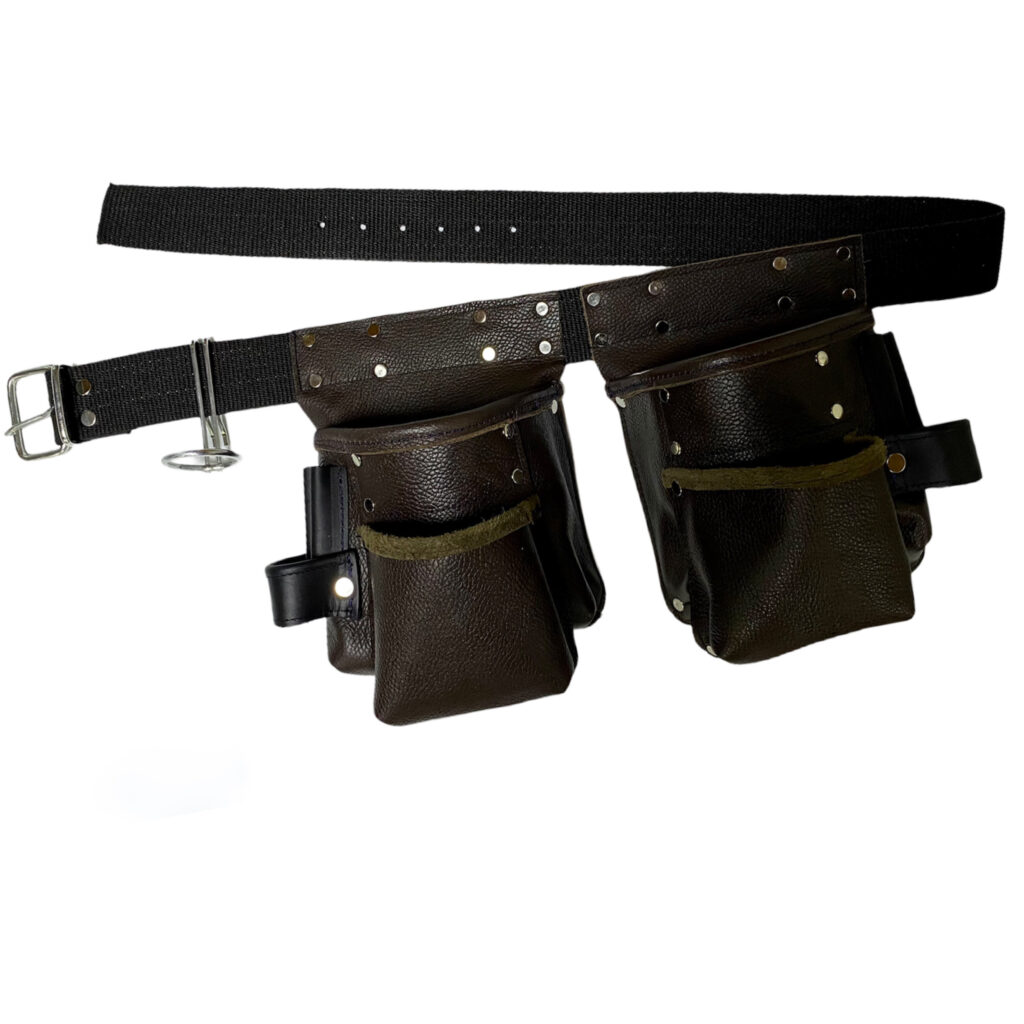
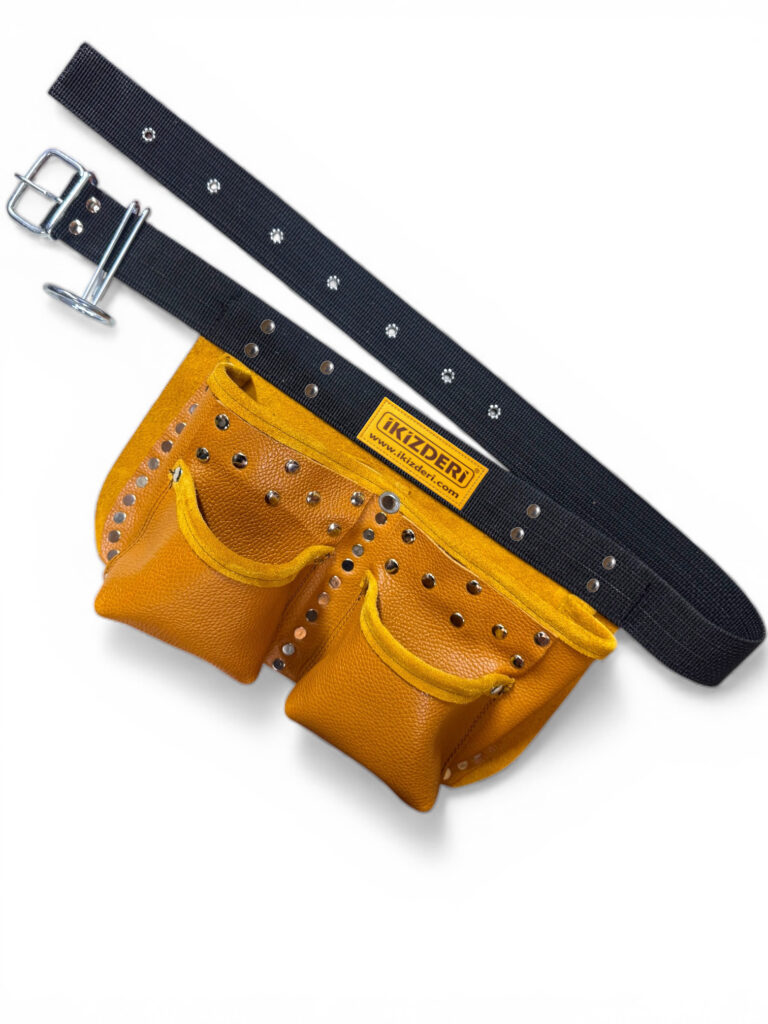
When choosing a carpenter apron, check the material, number of compartments, hammer loop, and waist belt. These four points determine the apron’s performance in woodworking.
- Material: Full-grain genuine leather; the most durable against heavy tools and nail pressure.
- Compartments: 3-5, by tool variety and nail sizes.
- Hammer loop: On the dominant side, sturdy and riveted.
- Waist belt: Wide, supportive, and adjustable; must carry the weight of a full apron.
You can find models meeting these criteria among our leather nail apron models and leather master apron range.
How Should the Nail Compartment Be in a Carpenter Apron?
In a carpenter apron, nail compartments should keep nails of different sizes separate and be on the side the non-dominant hand can easily reach. Carrying nails is the most frequently repeated movement in carpentry.
Filling nails into a single compartment means searching for the right size every time. Compartments separated by size let you take the right nail without looking. The mouth of the nail compartments should be wide enough for your hand to enter comfortably. Also, the base of these compartments should be sturdy and reinforced with rivets, because the weight and sharp points of nails strain this area the most.
How Does an Apron Protect in Woodworking?
A leather carpenter apron acts as a barrier protecting both clothing and body against sawdust, splinters, and sharp tool points. In woodworking, protection is as important as comfort.
Flying sawdust and small splinters stick to clothing while working wood and can irritate the skin over time. A leather apron forms a solid barrier against these particles. It also makes it harder for sharp tools like a chisel or utility knife to slip in a pocket and touch the body. Against sanding and saw dust, leather provides far more effective protection than canvas.
Workshop Carpenter vs. Site Carpenter: Different Needs
A workshop carpenter prioritizes capacity and protection because they work at a fixed spot, while a site carpenter seeks freedom of movement and lightness. These two working styles require different apron choices.
A carpenter working at a bench in a workshop can comfortably work with a multi-compartment or even a bib apron; weight is not a big problem there. A carpenter working on site or in assembly, moving constantly, prefers a lighter, more balanced apron. For site carpenters carrying heavy tools, suspender-belt models provide comfort by spreading the waist load to the shoulders.
Which Apron Should a Beginner Carpenter Choose?
For a beginner carpenter, a leather apron with 3-4 compartments, a hammer loop, and an adjustable waist belt is the most balanced choice. There is no need for a multi-compartment, expensive model at the start.
A new carpenter understands better which compartment layout they need as they get to know the work. So a versatile, mid-level model is a sensible start. A quality genuine leather apron is still usable years later, while a cheap model wears out quickly and must be replaced.
How to Care for a Carpenter Apron?
A leather carpenter apron is cleaned by emptying the sawdust from the pockets and wiping with a damp cloth, and nourished every few months with leather cream. Sawdust buildup both disturbs order and abrades the leather over time.
Emptying the pockets and shaking off sawdust after each job protects both the order and the leather’s life. Because leather hardens and cracks when it dries, a colorless leather cream should be applied every few months. You can find all care details in our how to care for a leather nail apron guide.
Carpenter Apron Types: Which One Suits You?
Aprons made for carpenters differ by how you work. The table below compares the three main types.
| Type | Advantage | Best Use |
|---|---|---|
| Waist apron | Light, high freedom of movement | Fitting work, moving around on site |
| Bib (strapped) apron | Spreads weight to the shoulders, protects the body | Bench work, heavy tools |
| Half apron | Simple and light, few pockets | Hobby and light woodworking |
For a carpenter carrying heavy tools, a strapped model noticeably reduces end-of-day fatigue. For lighter work, a waist model is more practical.
Carpenters carrying a heavy hammer and chisels may prefer a palaska (bandolier) belt leather apron for firmer, more balanced carrying.
For those working on building sites, our construction apron guide is also worth a read.
For those working with concrete formwork, our formwork apron guide is also worth a read.
See which trade should choose which leather apron in our who uses a leather work apron guide.
Conclusion: The Right Leather Apron for Carpenters
The right apron for carpenters is a model with 3-5 compartments, a hammer loop, made of full-grain genuine leather, and with a supportive waist belt. Leather is the most durable material against heavy tools and sawdust-filled environments.
The right apron is not just an accessory in woodworking; it is the foundation of productivity and comfort. You can review the fully handmade genuine leather İkizderi leather work equipment and choose a carpenter apron you can use in your workshop for years.