
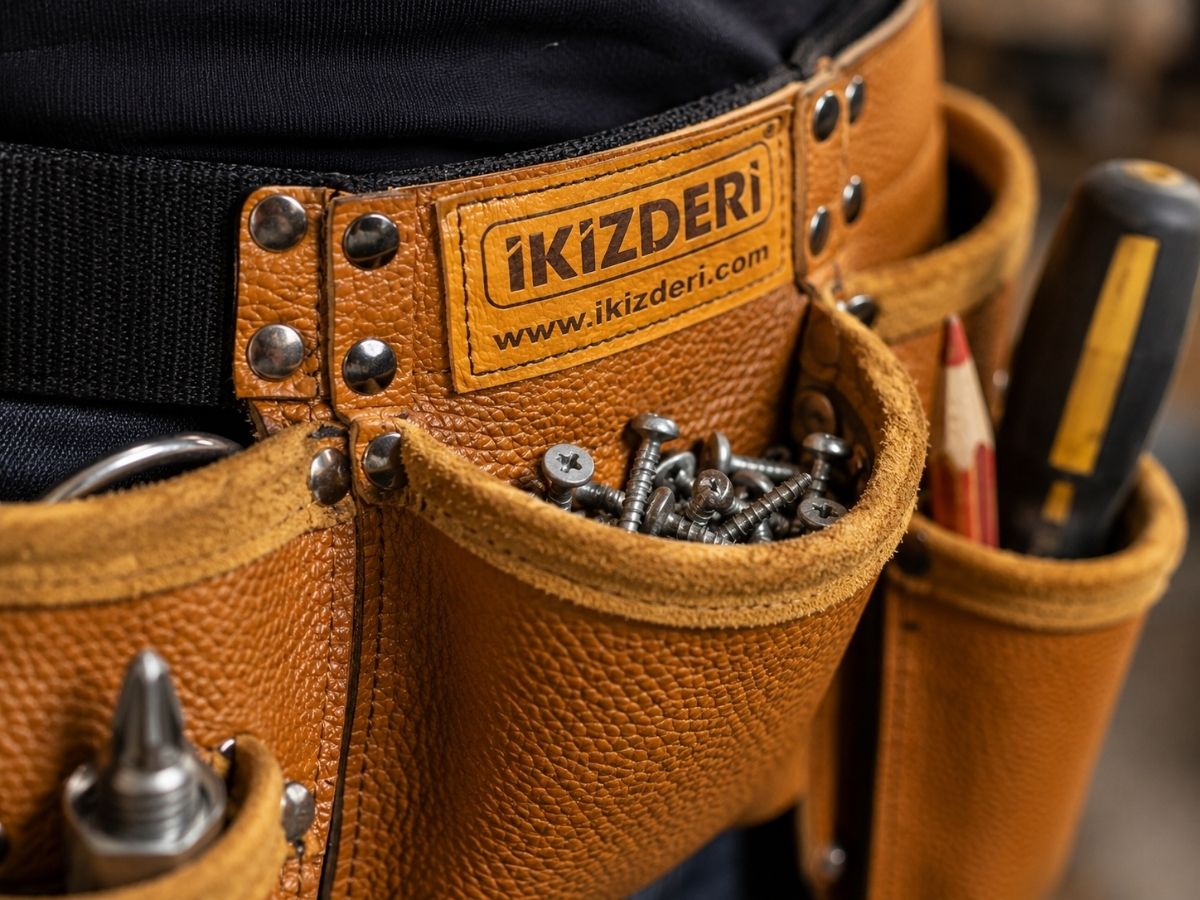
 İkizderi
 How a handmade leather apron is made is a story of long, careful work that usually stays invisible. From selecting the leather to cutting, from hand-stitching to riveting, every stage passes one by one through the craftsman’s hands. In this guide, starting from İkizderi’s workshop in Gerede, Bolu, we explain the production process of a handmade leather apron step by step. By the end, you will understand far better why the leather apron in your hands is so valuable.
The Short Answer: How Is a Handmade Leather Apron Made?
A handmade leather apron is made in six basic stages: leather selection, patterning and cutting, pocket preparation, hand-stitching, riveting, and final inspection. Every stage relies not on a machine but on the craftsman’s hand and eye.
While most of these steps are done quickly by machines in mass production, in handmade production each apron is worked one by one. This gives every product a unique, near-flawless workmanship. Below we examine these six stages one by one.
Understanding this process also explains why a leather apron’s price is not only about material. Behind an apron there is an eye that selects the right leather, a hand that cuts from the right place, and the patience to check every stitch. The reward for this labor is a product that lasts for decades. This is why a handmade apron, though it looks expensive at first glance, is really a long-term investment.
Gerede, Bolu: The Home of Leather Craftsmanship
İkizderi aprons are made in our workshop in Gerede, Bolu, with more than ten years of experience. Gerede is a region known for leather craftsmanship in Türkiye, and this tradition has been carried on for generations.
In the workshop, each apron is worked from start to finish under one craftsman’s responsibility. This is a very different approach from mass-production lines: here quality, not speed, comes first. The eye and hand precision a craftsman gains over years produces a result no machine can fully imitate. This is why a handmade apron is not just a product but also a story of craftsmanship.
Carrying on this tradition also means keeping a culture alive. Leather craft is knowledge passed from master to apprentice; it is learned by hand, not from books. The intuition a craftsman gains over years tells them which leather to use where and how taut a stitch should be. This intuition is the invisible but most valuable part of production.
The Stages of Making a Handmade Leather Apron
A handmade leather apron goes through six basic stages, from leather selection to final inspection. The steps below show how an apron comes to life in the workshop.
- Leather Selection: Full-grain genuine leather is inspected one by one for thickness and texture.
- Patterning and Cutting: The pattern is laid on the leather and the pieces are cut by hand.
- Pocket Preparation: Pockets are shaped, edges corrected, and positions marked.
- Hand-Stitching: The pieces are joined by the craftsman with tight, taut stitches.
- Riveting: Load-bearing corners are reinforced with stainless-steel rivets.
- Final Inspection: Every apron is checked one by one for stitching, rivets, and edges.
Each of these six stages directly affects the apron’s lifespan. Carelessness at one step becomes the product’s weak point years later; this is why handmade production is never rushed.
How Is the Leather Selected?
In handmade production, leather is selected by inspecting it one by one for thickness, texture, and flawlessness. Choosing the right leather is the most critical first step of production.
Not every piece of leather is the same quality; even on the same hide, thickness and strength vary by area. The craftsman chooses the most durable areas for a work apron and eliminates weak spots. This care in selection is often skipped in mass production; yet the apron’s ability to last for years depends on it. If you wonder how to recognize genuine leather, take a look at our how to tell if leather is real guide.
Why Is the Cutting Done by Hand?
When cutting is done by hand, the craftsman sees the leather’s natural texture and weak points and cuts each piece from the right place. Machine cutting is fast but cannot make this distinction.
Leather is a natural material; it can have grain marks, thickness differences, and small flaws. While placing the pattern, the craftsman considers these details and reserves the strongest areas for load-bearing pieces. For example, the thickest, strongest leather is used for the pocket base and belt attachment. This conscious choice reinforces the apron’s most strained points from the very start.
What Is Tanning? The Stage Before Production
Tanning is the process of turning a raw animal hide into a durable, usable material; an apron’s production actually begins here. Untanned leather spoils quickly and cannot be used.
Thanks to this process, leather is protected against rot, gains flexibility, and reaches a structure that can last for years. Tanning quality directly affects the leather’s life and texture; well-tanned leather is both soft and strong. In work apron production, thick, well-tanned cowhide is preferred. The craftsman first evaluates the leather arriving at the workshop from this angle, because a good apron cannot come from poorly tanned leather.
How Is the Pattern Prepared and Used?
The pattern is the template that sets the measurements of every piece of the apron; it is laid on the leather to mark the cutting lines. The right pattern ensures the pieces join flawlessly.
There is a separate pattern set for each model: main body, pockets, belt attachment, and support pieces. While laying the pattern on the leather, the craftsman considers both using the material efficiently and reserving the strongest areas for load points. A wrongly placed pattern leads to both wasted leather and a weak product. So patterning is a stage that requires far more experience than it appears.
How Is Hand-Stitching Done?
Hand-stitching is done by the craftsman with tight, taut loops that bind the pieces firmly together. Stitching is an apron’s most strained connection point.
The density, evenness, and tightness of the stitching keep the apron from falling apart under load. Sparse or loose stitching starts coming apart within months. In hand-stitching, the craftsman advances by checking every loop; this is not always possible with machine stitching.
Hand-stitching also has a structural advantage: because each loop is made separately, one broken stitch does not unravel the whole seam. In machine stitching, a single broken thread can open a long line of stitches. This is why hand-stitched leather goods stay reliable even after years of heavy use.
How Can You Tell a Handmade Leather Apron?
A handmade leather apron is recognized by stitches that are neat but not identical, carefully burnished edges, and small natural differences. These details are the mark of the human hand.
Machine stitching is mathematically perfect and uniform; in hand-stitching, the loops are regular but carry small, natural variations. Burnished, smooth edges are also a sign of careful hand workmanship. Rivets placed neatly at the right points are another mark of craftsmanship. Looking at these details when you hold an apron tells you whether it is truly handmade.
How Does the Riveting Stage Work?
Riveting is the reinforcement of load-bearing pocket corners and connection points with stainless-steel rivets. Rivets take on the pressure that stitching alone cannot carry.
In a nail apron, the most strained area is the pocket corners; heavy tools and nails apply constant pressure there. A rivet fixes these areas with a metal support and prevents tearing. Using stainless steel prevents rust and breakage in damp environments. Placing the rivets at the right points and in the right number depends entirely on the craftsman’s experience.
Edge Burnishing and Finishing
Edge burnishing is the process of smoothing and polishing the cut leather edges; it provides both aesthetics and durability. An unfinished edge frays and wears over time.
After cutting, the craftsman smooths the edges with sandpaper and then burnishes and compresses them. This process prevents the edges from absorbing water and opening up. A well-burnished edge stays smooth and sound even years later, while an unburnished one soon frays. This detail, unnoticed by most users, directly affects the product’s life.
Which Tools Are Used in Handmade Production?
In handmade leather production, traditional hand tools such as a knife, awl, stitching needle, rivet setter, punch, and burnisher are used. These tools are like an extension of the craftsman’s hand.
- Leather knife: A sharp knife is essential for a clean, even cut.
- Awl and stitching needle: Used to open stitch holes and make the loops.
- Rivet setter: Fixes rivets with the right pressure.
- Punch: Used for pocket and belt holes.
- Burnisher: Smooths and polishes the edges.
All these tools are under the craftsman’s control; none is automatic. Every movement is guided by the craftsman’s eye and hand.
Why Are Small Differences Normal in Handmade Products?
Small color and texture differences are normal in handmade products; these are not flaws but the signature of natural leather and hand craftsmanship. No two pieces of leather are exactly the same.
Natural leather has grain marks, tone differences, and small surface texture variations. While these differences are covered with dye in mass production, in handmade products they are often preserved, because these marks are proof that the leather is real. A slight tone difference between two aprons of the same model shows not that the product is flawed but that it is real and natural.
How Is Quality Control Done in Handmade Production?
In handmade production, quality control is done by reviewing every apron one by one for stitching, rivets, edges, and pocket layout. It is one-to-one inspection, not sampling.
In mass production, a few products from each batch are usually sampled for checking; in handmade production, each product is examined separately. The craftsman checks the stitches, tests the strength of the rivets, and reviews the evenness of the edges. A piece found faulty is remade from scratch. This care means that whichever model you buy, you meet the same guarantee of craftsmanship, which is the foundation of trust in the brand.
How Long Does It Take to Make a Handmade Apron?
A handmade leather apron requires several hours of intensive labor depending on the model and number of compartments; every stage passes one by one through the craftsman’s hands. Operations that take minutes in mass production are done here slowly and with care.
This time is not only “making” time; leather selection, patterning, and final inspection are also part of this labor. The number of aprons a craftsman can produce in a day is limited, because as speed increases, quality falls. This is why handmade products are made in smaller numbers and at higher quality than mass-produced ones. Every apron leaving a craftsman’s hands carries the labor and attention of that day, which makes each one unique.
Why Does a Handmade Apron Last Longer?
A handmade apron lasts far longer than a mass-produced one because it is worked with care at every stage, from material selection to stitching. Weak points are eliminated and reinforced from the start.
In mass production, speed is the priority, which sometimes means compromising on material and workmanship. In handmade production, each apron is checked individually, load points are reinforced, and faulty pieces are eliminated. You can find in detail how many years a leather apron lasts and what determines its life in our how long does a leather work apron last guide.
When all these stages come together, what emerges is not just a work apron but a product shaped by the craftsman’s knowledge, patience, and labor. This wholeness is exactly what makes handmade production valuable.
Production Stages: What Is Critical at Each Step?
At every stage of handmade production the craftsman watches a different critical point. The table below sums them up.
| Stage | Critical Point | What Happens If Skipped |
|---|---|---|
| Leather selection | Eliminating weak areas | The pocket base sags and tears over time |
| Patterning and cutting | Placing strong areas at load points | The product stays weak exactly where it is strained most |
| Pocket preparation | Setting the pocket depth correctly | Tools do not stay in the pocket and fall out |
| Hand-stitching | Dense, taut loops | The seam starts opening within months |
| Riveting | Setting the rivet at the right point | The pocket corner tears under pressure |
| Final inspection | Checking every product one by one | A faulty product reaches the user |
As the table shows, carelessness at one stage surfaces years later as the product’s weak point. That is exactly why handmade production is never rushed.
Conclusion: Behind Every Apron There Is a Craftsman
A handmade leather apron is made through the stages of leather selection, cutting, pocket preparation, hand-stitching, riveting, and final inspection. Every step is shaped by a craftsman’s experience and labor.
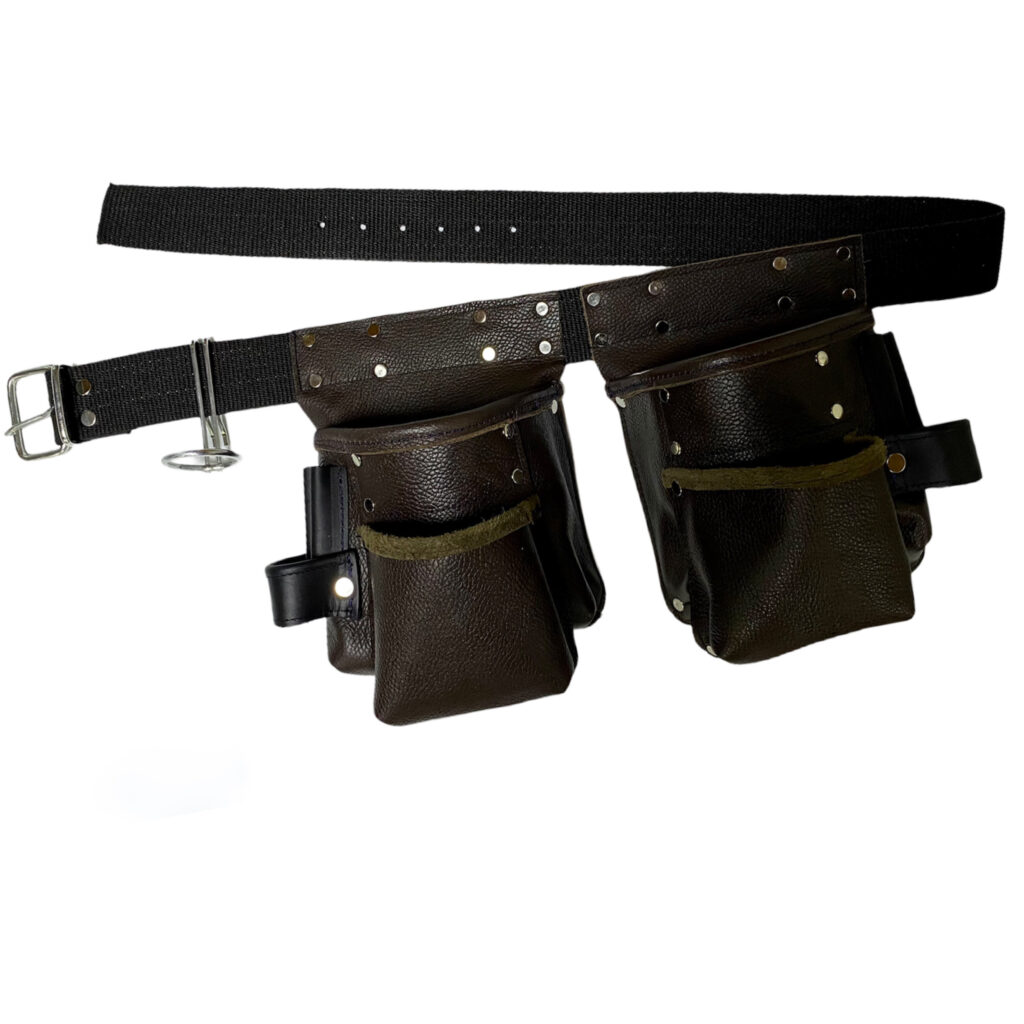
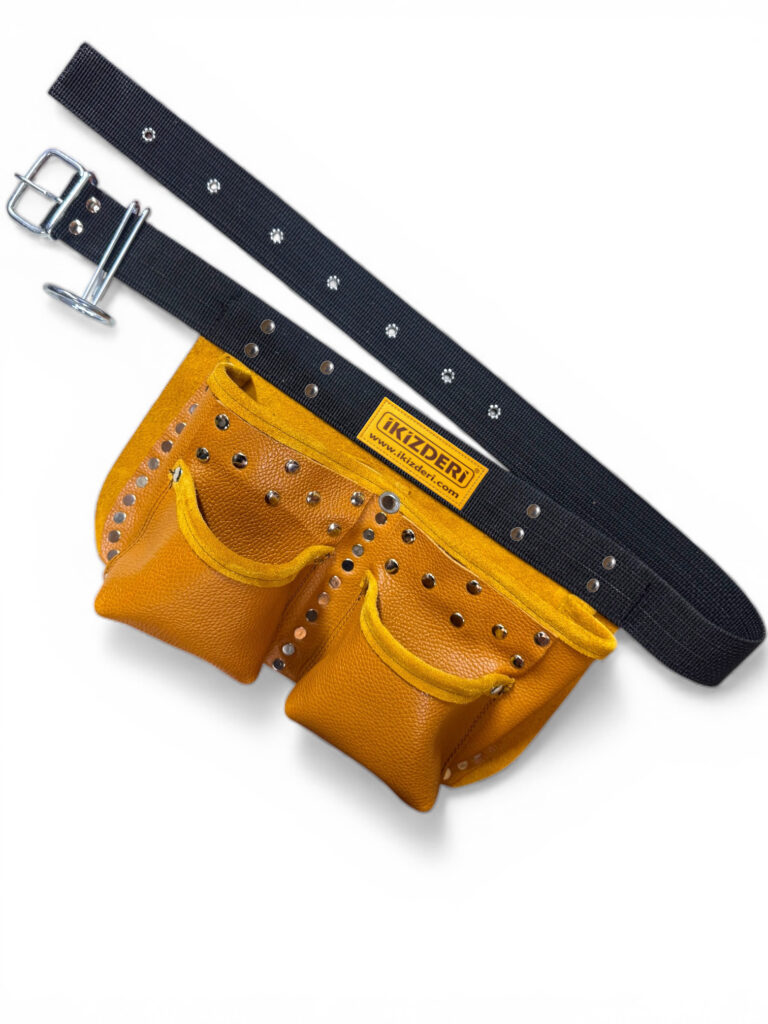
At İkizderi, we make every apron by hand, one by one, in our workshop in Gerede, Bolu. You can see the result of this labor in our leather nail apron models and all İkizderi leather work equipment, and experience a lifetime piece of craftsmanship yourself.