
 İkizderi
 What to do when your leather tool belt gets wet is a question every craftsman faces sooner or later, whether from rain, sweat, or an accidental splash. The good news is that a leather tool belt getting wet is not a disaster on its own; the real damage comes from drying it wrong. In this guide we explain, step by step, how to save a wet leather tool belt, what to avoid, how to remove water stains, and how to protect leather from moisture. When you follow the right steps, a wet leather belt returns to its old condition without any permanent damage.
The Short Answer: What to Do When a Leather Tool Belt Gets Wet?
A wet leather tool belt should first be freed of excess water with a soft cloth, then dried on its own in an airy place at room temperature, away from heat and sun, and conditioned with a coat of colorless leather cream once it is completely dry. These three steps prevent the wetting from causing permanent damage to the leather.
The most critical point is this: never try to dry the leather quickly with heat (a hairdryer, radiator, or direct sun). Sudden heat shrinks the fibers of wet leather and causes cracks. When leather dries slowly and on its own, it has no problems. If you keep these three steps in mind, a wet belt will never be a source of worry; on the contrary, with the right response the leather regains its old strength every time.
What Happens When Leather Gets Wet?
When leather gets wet it absorbs water, and this water takes the leather’s natural oil with it as it dries; this is why leather that gets wet and dries hardens if it is not fed. Leather is a living material; it tolerates moisture temporarily but leaves marks if not cared for properly.
Water works into the leather’s pores and temporarily loosens the fiber structure. At this stage the leather is more flexible and delicate than usual, so pulling or forcing it while wet can cause permanent deformation. During drying, as the water evaporates it carries the oil away. This is exactly why conditioning after wetting is essential: it puts back the lost oil and makes the leather soft and flexible again. In short, it is not the wetting itself, but what is done (or not done) after wetting, that is decisive.
How to Dry a Wet Leather Belt Step by Step?
A wet leather tool belt is dried by removing the excess water, reshaping it, and drying it slowly in an airy place away from heat, then conditioning it once dry. The steps below are the safest way to dry the leather.
- Remove excess water: Gently absorb the surface water with a soft, dry cloth. Do not rub; only press to lift it.
- Empty the pockets: Remove nails, tools, and moisture inside; metal tools can leave rust stains on wet leather.
- Reshape it: Return the belt and pockets to their natural form; the leather will dry in this shape.
- Place it in an airy spot: Leave it flat or hanging at room temperature in a well-ventilated place.
- Dry it slowly: Full drying can take a few hours or even a day; be patient.
- Condition it: Once fully dry, apply a thin coat of colorless leather cream to restore the lost oil.
The most important of these steps is the last. Most people dry the leather but skip conditioning; yet the real hardening happens after drying in leather that is not fed. The conditioning step is the key that makes wetting harmless.
What Should You Avoid When Drying Leather?
When drying wet leather you must strictly avoid heat sources such as hairdryers, radiators, heaters, direct sun, and blow dryers. These methods speed up drying but permanently crack the leather.
- Drying with heat: Sudden heat shrinks and cracks leather; it is the most common and biggest mistake.
- Direct sun: Dries the leather, fades its color, and hardens it.
- Pulling: Wet leather is delicate; forcing it causes permanent deformation.
- Stuffing with newspaper/paper: Although it absorbs moisture, it risks ink stains and shape distortion.
In short, it is best to treat wet leather “without rushing it.” When leather dries at its own pace, it suffers no damage; trying to speed it up with intervention usually causes harm instead of help.
How to Remove Water Stains from a Leather Belt?
A water stain on leather is removed by evenly moistening the whole surface with a lightly damp cloth, drying it together, and then conditioning it. A water stain is usually the tone difference created when part of the leather gets wet and part stays dry.
To remove the stain, moisten not only the stained area but the whole surface evenly with a lightly damp cloth. This way the drying is the same everywhere and the tone difference disappears. Then dry the leather in an airy place and apply a thin coat of cream. The cream balances the color and unifies the surface. For stubborn stains you can repeat the process once more; but avoid aggressive rubbing, as this can leave new marks.
Is Leather Waterproof? Can It Be Made Water-Resistant?
Genuine leather absorbs water to a certain degree, so it is not fully waterproof; however, leather can be made more resistant to water with a water-repellent spray or wax. This protection significantly shields the leather from rain and moisture.
Because leather is a natural material, it is porous and breathes; this is its advantage but also the reason it absorbs water. When you apply a leather-specific water-repellent wax or spray, a thin protective layer forms on the surface and water droplets stay on top without working in. Renewing these products every few months is useful, especially for craftsmen who work outdoors. Still, no protection makes leather completely waterproof, so correct drying is always necessary when it gets wet.
An important balance should also be noted here: leather’s ability to breathe is what makes it comfortable and long-lasting. So the goal is not to make leather completely waterproof like plastic, but to give it reasonable resistance to water. Correctly applied water-repellent protection shields the leather from daily moisture without ruining its natural structure. This way your belt keeps breathing and is safer in an unexpected rain.
How to Protect a Leather Tool Belt from Rain and Moisture?
A leather tool belt is protected from rain and moisture with regular water-repellent application, airing after use, and storage in a dry place. Prevention is always easier than treating a soaked belt.
If you work outdoors, feed the belt with water-repellent wax at the start of the season. If rain is expected, do not leave the belt out unnecessarily. At the end of the day, air a belt that is wet from sweat or moisture before putting it in a closed bag; moisture causes mold in a closed environment. Always store the belt in a dry, airy place. These simple habits protect the leather from the long-term effects of moisture and largely prevent the wetting problem.
What to Do About a Leather Belt Wet from Sweat?
A leather belt wet from sweat should always be aired after use and conditioned at regular intervals, because the salt in sweat dries and wears the leather over time. Unlike rainwater, sweat also leaves salt on the leather.
The leather that touches the waist of a hard-working craftsman is in contact with sweat all day. This buildup of moisture and salt hardens the leather over time if it is not conditioned. So in high-sweat use, the belt should be aired every day and conditioned a little more often than usual. You can remove salt marks from sweat by wiping with a lightly damp cloth and then conditioning. Regular care completely eliminates the long-term effect of sweat.
How to Do General Care After Wetting?
After a leather belt gets wet and dries, you should return to the normal care routine of cleaning and conditioning. Just as important as the first conditioning after wetting is the regular care that follows.
Wetting temporarily increases the leather’s need for care, so watch the leather a little more closely for the first few weeks after wetting. If the surface looks matte or feels stiff, apply another coat of cream. You can find the full practical detail of all care steps such as cleaning, conditioning, and storage in our how to care for a leather nail apron guide. When wetting management and regular care are applied together, your leather belt stays strong for years.
If a Leather Belt Is Fully Submerged, What Should You Do?
A leather tool belt that is fully submerged should be taken out of the water immediately, freed of excess water, reshaped, and dried slowly for a longer time than usual, away from heat. Full soaking requires more care, but there is no need to panic.
When the belt is completely wet, first remove as much water as possible with a soft cloth. Then return the pockets and belt to their original shape; the leather will dry in this form. Drying can exceed a day in this case, so be patient and absolutely do not use heat. When the leather is half-dry, you can gently stretch it by hand to prevent hardening. Once fully dry, apply cream not in one heavy layer but in a few thin coats; too much cream at once suffocates the leather. In this way, even a fully soaked belt is usually saved without any permanent damage.
What Do Seawater and Salt Water Do to Leather?
Salt water is more harmful than fresh water, because when it dries it leaves salt crystals on the leather, and this salt quickly dries and cracks it. So leather exposed to seawater needs an extra rinse.
If your leather belt gets wet with seawater or salt water, first wipe the surface with a lightly damp (fresh water) cloth to remove the salt. If you dry it without removing the salt, whitish salt marks and stiffness are inevitable. After cleaning off the salt, apply the normal drying and conditioning steps. Craftsmen working by the sea or in salty environments should check and feed their belts a little more often. Salt is one of leather’s most insidious enemies; but with timely action its effect is completely prevented.
How to Protect a Leather Belt from Snow and Winter Moisture?
In winter, snow, ice, and moisture both wet the leather and, together with cold dry air, dry it quickly; so water-repellent protection and more frequent conditioning are important in winter months. Cold combined with wetness creates a tough period for leather.
A belt that touches snow or wet ground cracks if left near a heater when you come inside; the correct method is to dry it slowly in an airy place. Applying water-repellent wax at the start of winter greatly reduces the effect of snow and moisture. Also, the dry air of closed, heated spaces leaves the leather without moisture, so conditioning frequency should be increased in winter. In short, winter is the season when a leather belt needs a little more attention.
How to Apply Water-Repellent Wax to Leather?
Water-repellent wax is applied by rubbing a thin, even layer onto clean, dry leather with a soft cloth and leaving it to absorb. This process makes the leather significantly more resistant to rain and moisture.
To apply it, first clean the belt and make sure it is completely dry. Then rub leather-specific water-repellent wax or spray thinly over the whole surface with a soft cloth. Leave it to absorb for a few hours, then remove the excess with a clean cloth. The wax forms a protective layer on the surface without closing the leather’s pores, so water droplets do not work in. Because this protection fades over time, it should be renewed every few months in heavy use. Especially for craftsmen working outdoors, water-repellent application is the most effective measure against wetting.
How Long Does a Wet Leather Belt Take to Dry?
A wet leather tool belt usually dries in a few hours to a day, depending on the amount of wetting and the humidity of the environment. Allowing this natural time instead of trying to speed it up protects the leather.
A lightly dampened belt dries in a few hours, while a fully soaked belt can take a day. Drying time depends on air humidity, temperature, and airflow. An airy environment naturally speeds up drying, so prefer an open, ventilated area rather than a closed cabinet. Using heat to rush the leather may save a few hours but can cost years of life. Patience is the most important rule of drying leather.
5 Tips to Prevent a Leather Belt from Getting Wet
Simple measures like water-repellent application, correct storage, and attention to weather are enough to prevent a leather belt from getting wet. Taking precautions is always easier than saving a soaked belt.
- Apply water-repellent wax: Protect the leather against water at the start of the season and every few months.
- Watch the weather: Do not leave the belt out when rain is expected.
- Air it after use: Dry a belt wet from sweat or moisture before putting it in a closed bag.
- Store it in a dry place: Prefer a dry, airy area over a damp basement.
- Keep a spare: If you work in constantly wet conditions, use one belt while the other dries.
These small habits protect your leather belt from the long-term effects of moisture. A prevention-focused approach both extends the belt’s life and minimizes the effort of dealing with wetting afterward.
İkizderi Leather Tool Belts and Water Resistance
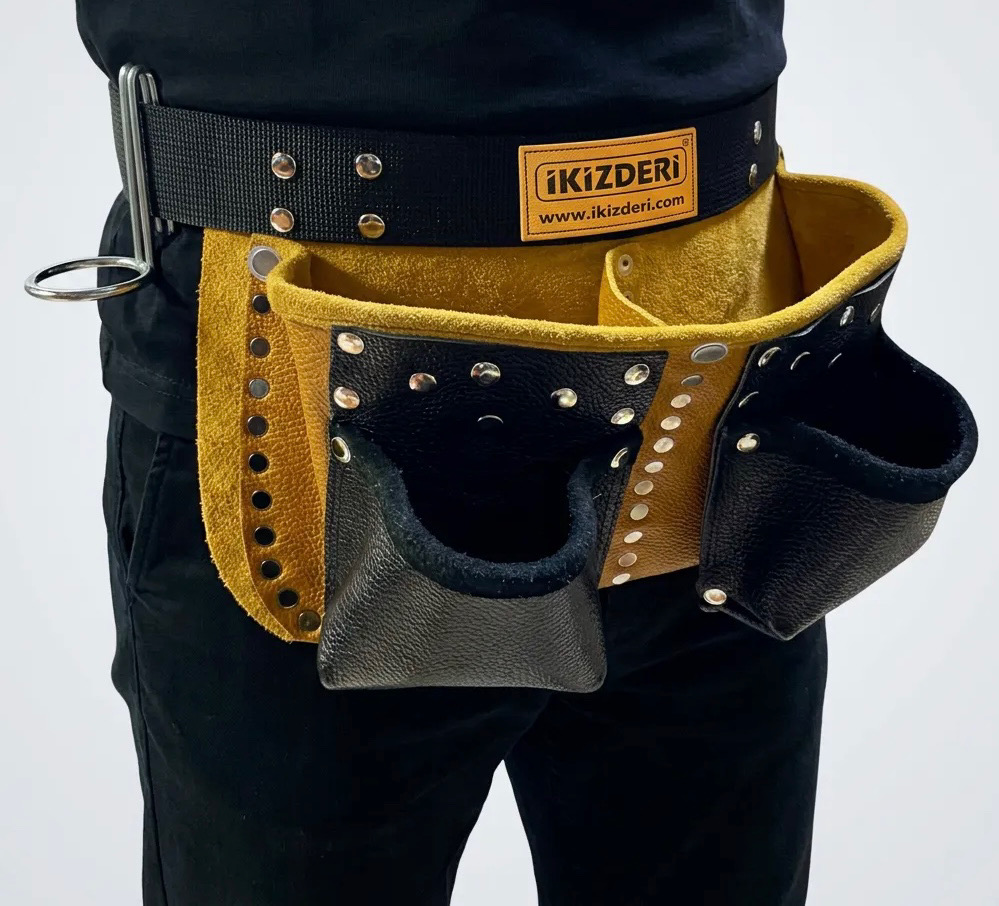
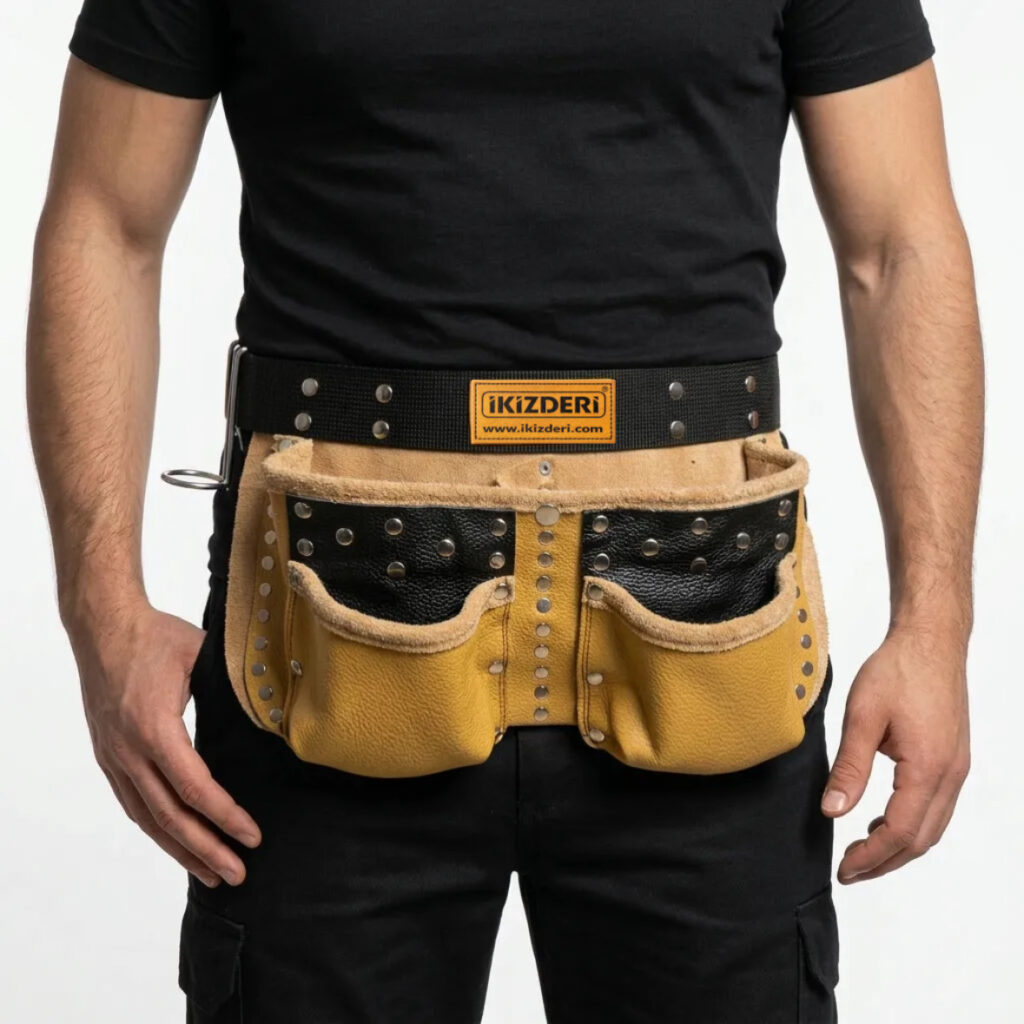
İkizderi leather tool belts are made from full-grain genuine leather in our workshop in Gerede, Bolu; quality leather is more resistant to moisture and long-lasting with proper care. A sturdy, dense leather absorbs water more slowly and returns to its old condition easily with correct drying.
How a tool belt copes with moisture depends on both the quality of the material and the user’s care. When these two come together, the belt serves for years even in the toughest conditions. You can review our leather tool belt range and leather nail apron models made for different jobs, and also take a look at our guide on how long a leather work apron lasts.
Drying Wet Leather: Right and Wrong Methods
How you dry a wet leather product directly determines its life. The table below compares the common methods and their results.
| Method | Result | Verdict |
|---|---|---|
| Air-drying at room temperature, in the shade | Leather keeps its natural moisture | Correct method |
| Stuffing with paper while it dries | Holds its shape, absorbs moisture | Correct method |
| Drying next to a radiator or stove | Leather cracks and hardens | Never do this |
| Using a hairdryer | Surface shrinks, permanent damage | Never do this |
| Leaving it in direct sun | Colour fades, leather dries out | Avoid |
| Folding and storing it while wet | Mould and permanent marks | Never do this |
In short, patience is the most important tool for rescuing wet leather. Trying to speed up drying usually ruins the product for good.
Conclusion: It’s Not the Wetting, but the Wrong Drying, That Harms
What to do when a leather tool belt gets wet is clear: remove the excess water, dry it slowly away from heat, and always condition it once dry. This simple routine completely prevents wetting from causing permanent damage to the leather. Remember, it is not water that harms leather, but the wrong drying done in haste.
In short, there is no need to panic when leather gets wet; a craftsman who knows the right steps saves the belt safely every time. And with measures like water-repellent protection and regular care, you will hardly ever face the wetting problem at all. If you want a quality leather belt that can handle moisture and tough conditions, you can review the fully handmade İkizderi leather work equipment and choose a product you can use for years with proper care.