
 İkizderi
 Leather apron prices — why can they be so different? Two leather aprons that do the same job can sell for several times each other’s price, and most buyers wonder why. The truth is that a leather apron’s price is not set randomly; concrete factors like leather quality, workmanship, production method and design directly determine it. In this guide we explain what makes up the price of a leather apron, the real difference between a cheap and a quality apron, and what to look at when comparing prices. By the end, you will be able to choose knowing exactly what your money buys.
What Determines a Leather Apron’s Price?
The main factors that determine a leather apron’s price are the quality and type of leather used, whether production is handmade or mass-produced, the stitching and rivet workmanship, the leather thickness and the apron’s design. Each of these directly affects both the price and the lifespan of the apron.
A leather apron’s price is really the sum of the material and labor that goes into it. Quality full-grain leather, skilled handwork, and strong stitching and durable rivets naturally create a higher cost. These cost items may be invisible, but they directly reflect in the quality and life of the product. In contrast, an apron mass-produced from thin, split leather costs less but is far shorter-lived. Behind the price difference lies this quality difference — often unseen, but revealed in use. To evaluate correctly, you need to know these factors one by one.
How Do Leather Quality and Type Affect the Price?
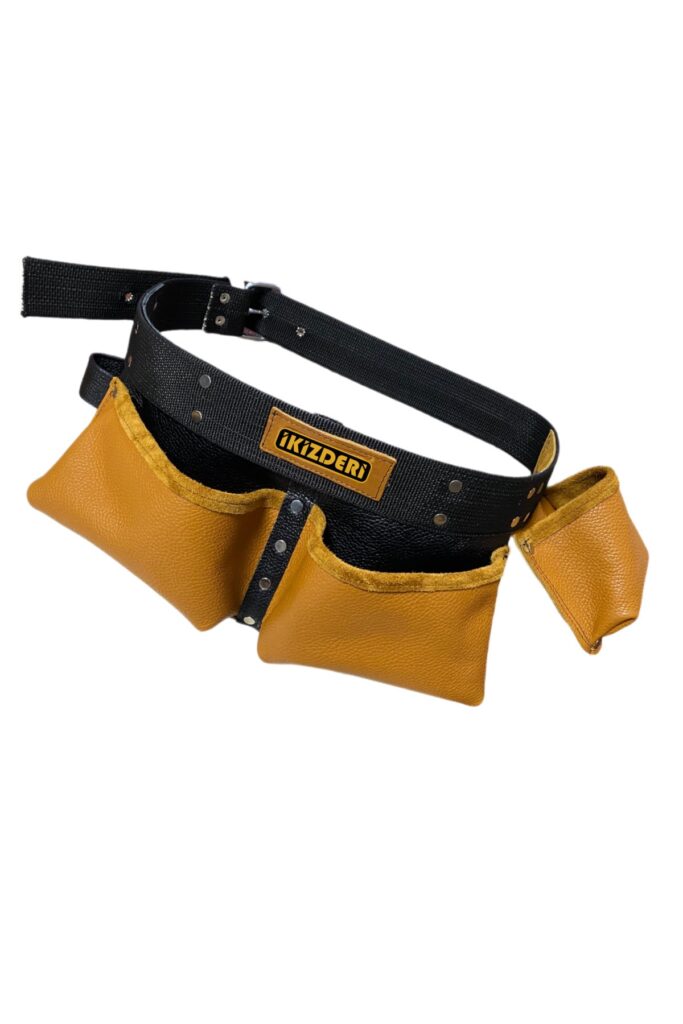
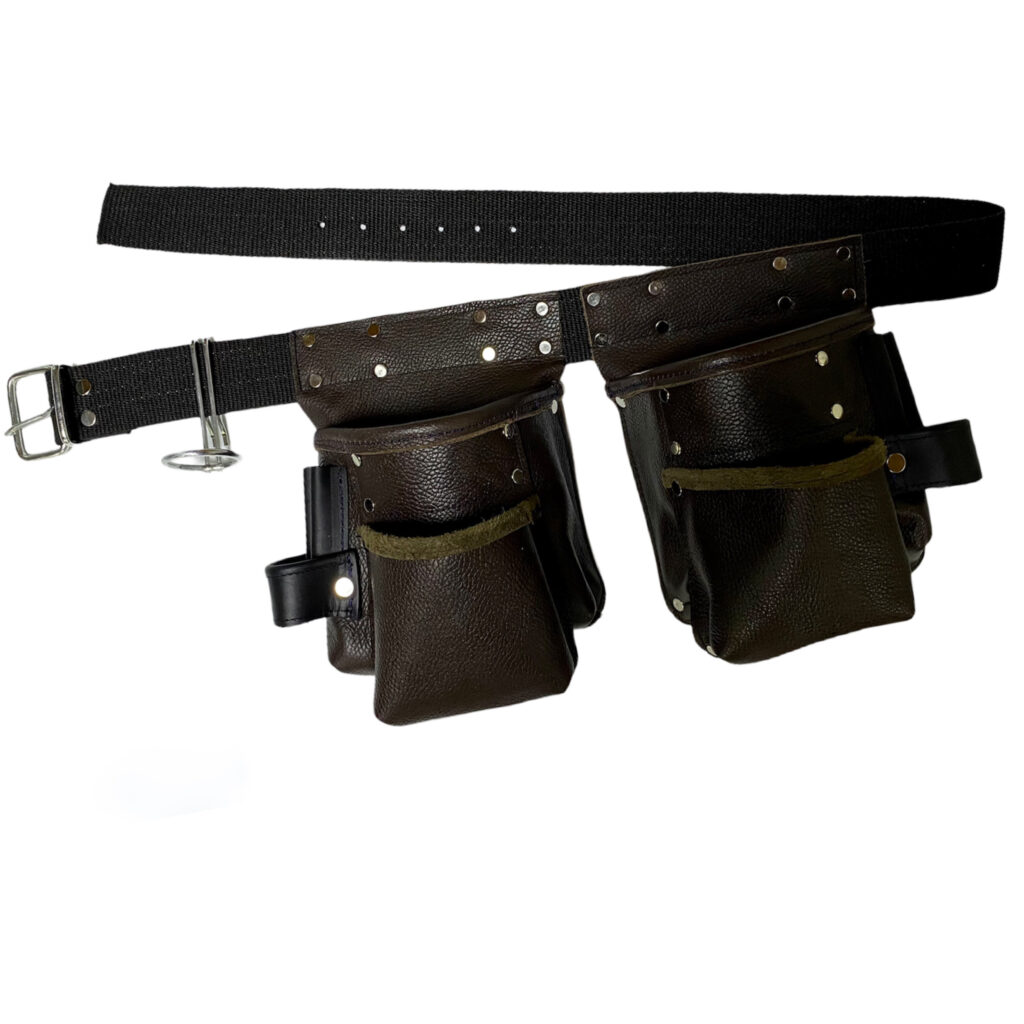
Leather quality is the most important factor determining an apron’s price. Full-grain genuine leather is the most durable and most expensive type, followed by top-grain. Split leather and synthetic leather are much cheaper but short-lived.
Full-grain genuine leather is made from the strongest and most natural layer of the hide; it withstands years, sweat and friction. Synthetic leather (PU/PVC) or pressed leather made by gluing pieces together is cheap, but cracks and falls apart quickly. Even if two aprons look similar from the outside, the leather type explains most of the difference in price and lifespan. We explain the differences between genuine and synthetic leather in detail in our faux leather vs genuine leather guide.
Handmade or Mass-Produced?
Whether a leather apron is handmade or mass-produced directly affects its price. Handmade aprons are more expensive because they require a craftsman’s labor and careful workmanship; mass-produced aprons are made at machine speed and low cost.
In a handmade leather apron, every stitch and every rivet passes through a craftsman’s hands; the leather is selected, cut and joined one piece at a time with care. This labor means both a stronger product and a higher price. In mass production, speed and cost come first; workmanship details are often sacrificed. You can find why a handmade apron is different in our why choose a handmade leather apron article. The price difference is really a difference of labor and quality.
How Do Stitching and Rivet Workmanship Reflect in the Price?
Stitching and rivets are the most critical details determining a leather apron’s strength, and good workmanship raises the price. Strong, dense, neat hand stitching along with quality rivets keep the apron’s most-stressed points standing for years.
In cheap aprons, stitches are sparse and weak; pocket mouths and strap connections come apart quickly. In a quality apron, stitches are dense and strong, and load-bearing points are reinforced with rivets. This workmanship is the invisible but most important difference that determines the apron’s lifespan. We explain why rivets and hand stitching matter so much in our why rivets and hand stitching matter guide. The difference you pay for workmanship comes back as long life.
How Does Leather Thickness Affect the Price?
Leather thickness increases both the material cost and the apron’s durability. Thicker, stronger leather requires more raw material, so it raises the price; but in return it offers a much longer-lasting and more durable apron.
An apron made from thin leather is light and cheap, but cannot withstand the pressure of heavy tools and sharp points for long. Thick, strong leather carries the load of nails, chisels and hand tools, is not easily punctured and does not wear out. Some aprons are made with double-layer leather to increase durability, which raises the material and labor cost. The difference you pay for leather thickness comes back to you directly as the load the apron can carry and its lifespan.
Do Pocket Count and Design Change the Price?
Yes; the number of pockets, the compartment layout and design details increase both the workmanship and the price of the apron. More pockets and special compartments mean more cutting, stitching and planning, which raises the cost.
A simple, single-compartment apron requires little workmanship and is cheap. A multi-pocket, tape-measure-pocket, palaska-belt or specially compartmented apron is both more practical and requires more labor. We explain how to choose the number of pockets by your job in our how many pockets should a nail apron have guide. As the design gets more complex, the price rises; but the right design clearly increases your work efficiency.
Do Brand and Place of Production Affect the Price?
Brand recognition and place of production also reflect in the price. Local producers who make aprons in their own workshop, by the hands of craftsmen, produce without intermediaries and while controlling quality; with imported or branded products, marketing and intermediary costs may be added to the price.
Buying a leather apron directly from its maker often means a better price for the same quality, because there are no extra cost layers in between. A craftsman producing in their own workshop personally controls the leather and workmanship used. In imported products, part of the price goes to the brand and shipping. Knowing the place and process of production lets you understand whether your money really goes to the product or to an intermediary.
Is a Cheap Leather Apron Really Cheap?
A cheap leather apron may look like a saving at first, but in the long run it often turns out more expensive. Replacing a short-lived, quickly-worn apron every few years costs more than buying a quality apron once.
| Feature | Cheap Apron | Quality Leather Apron |
|---|---|---|
| Leather type | Synthetic / split leather | Full-grain genuine leather |
| Lifespan | 1-3 years | 10-20 years and more |
| Stitching / rivets | Weak, comes apart fast | Strong, long-lasting |
| Long-term cost | Frequent replacement → high | One purchase → low |
| Comfort and look | Deteriorates over time | Improves with use |
As the table shows, a cheap apron’s low price is often offset by its short life; the cost of replacing it every few years is a hidden cost not seen at first. A quality leather apron, over the years, offers both a more economical and a more enjoyable use. That is why, when evaluating price, you should account not only for the moment of purchase but for all the years you will use the apron.
Is a Quality Leather Apron Worth Its Price?
A quality leather apron, when used and cared for correctly, gives back far more than its price. An apron that lasts for decades, improves with use and makes your work easier is not a one-time expense but a long-term investment.
For a craftsman, the apron is a working companion carried all day; a poor-quality apron both makes work harder and needs frequent replacement. A quality genuine leather apron, on the other hand, shapes to the person over the years, softens and grows even more beautiful. With proper care, this apron usually lasts more than ten years. You can find in detail how long a leather apron lasts in our how long does a leather work apron last article. Seen this way, a quality apron offers value far above its price.
Why Is a Leather Apron More Expensive Than a Canvas Apron?
A leather apron is more expensive than a canvas (fabric) apron because both its material cost and its durability are far higher. Canvas is cheap and light but wears out quickly; genuine leather is expensive but lasts for years, often for decades.
Canvas aprons are cheap at first because they are produced at low cost; but they puncture and tear quickly against sharp points, heavy tools and friction. Genuine leather, on the other hand, is naturally strong enough to withstand these tough conditions. We compare the difference between leather and canvas and which is right for you in our leather nail apron vs canvas guide. The price difference is really a natural result of the difference in lifespan and durability.
What Determines Leather Tool Belt and Bag Prices?
Leather tool belt and tool bag prices are determined by the same logic as aprons: leather quality, workmanship, pocket layout and hardware (buckle, ring, strap) quality directly affect the price. Strong metal hardware and thick leather raise the price but make the product far more durable.
On a leather tool belt, the most-stressed points are the buckle and strap connections; quality metal hardware and strong rivets make the difference here. On cheap belts, plastic or weak buckles break quickly. In tool bags, base strength and stitch quality matter. We assess whether a tool belt or a tool bag is more suitable for you in our tool bag or tool belt article. The difference you pay for hardware quality comes back as long life.
Does a Second-Hand Leather Apron Make Sense?
A second-hand leather apron can be a sensible choice if the leather quality is high and it has been cared for; because quality genuine leather lasts for years and improves with use. But if the leather has cracked, the stitching has come apart or the rivets have loosened, a second-hand apron will cause problems quickly.
Because genuine leather gives decades of life when cared for correctly, a second-hand leather apron in good condition can still be used for a long time. When buying, you should check whether the leather is cracked, whether the stitching is sound and whether the pockets keep their function. Stiffened but uncracked leather can be softened again with simple care. Still, saving on an apron whose critical load points are worn may soon require a new purchase. Even second-hand, the deciding factor is the original quality of the leather and the workmanship.
Is a Leather Apron a Good Gift?
A leather apron is one of the most meaningful and lasting gifts you can give to a craftsman or someone who works with their hands. A genuine leather apron that is both useful and will be used for years is remembered for a long time, unlike ordinary gifts.
Buying a leather apron for a carpenter, electrician, plumber or a loved one who does handwork as a hobby is both a personal and a functional gesture. A quality genuine leather apron becomes even more valuable over time because it shapes to the person with use. For which trade which gift is suitable, you can also draw inspiration from our gifts for carpenters article. If you are looking for a lasting and meaningful gift, a leather apron is a strong option.
What Should You Look At When Comparing Prices?
When looking at price, you should pay attention not just to the number but to what that price includes. Questioning which of two aprons offered at the same price contains full-grain leather, strong stitching and handwork is the key to the right choice.
- Ask about the leather type: Learn whether the apron is made of full-grain genuine leather or synthetic/split leather.
- Look at the stitching and rivets: Make sure the stitches are dense and neat and the load points are riveted.
- Learn the production method: Ask whether it is handmade or mass-produced.
- Assess pockets and design by your job: Too many or too few pockets upsets the price-value balance.
- Think long-term: Choose not the cheap but short-lived one, but the one with the lowest lifetime cost.
These questions let you see the real value behind the price. The right apron is not the cheapest, but the one that gives back your money over the longest time and with the highest comfort.
Does a Leather Apron’s Value Increase Over Time?
A quality genuine leather apron gains character over time instead of wearing out, and its value increases for its user. Leather softens with use, shapes to the person and develops a natural beauty called patina on its surface.
A synthetic leather or canvas apron ages, fades and falls apart over time; its value decreases every day. Genuine leather, on the contrary, becomes softer, more personal and often more beautiful over the years. A leather apron a craftsman has used for years both keeps its function and becomes a part of that craftsman’s labor. That is why a quality leather apron is one of the rare products whose price you pay on the first day but whose value you receive over the years. This is what sets it apart from an ordinary purchase.
Is a Leather Apron an Expense or an Investment?
A quality leather apron is a long-term investment more than an expense. An apron bought once, lasting for years and increasing work efficiency, more than pays for itself over time.
For a craftsman who carries their tools organized at the waist all day, the right apron both saves time and reduces the load on the back and waist. Instead of frequently replacing a poor-quality apron, investing once in a quality apron is both more economical and more comfortable in the long run. Moreover, genuine leather does not wear out with use; on the contrary, it gains character. That is why it is more accurate to see a leather apron not as an expense but as an investment in your work and comfort.
For bulk and corporate orders, get factory-direct pricing on our wholesale leather aprons page.
Conclusion: Seeing the Value Behind the Price
Leather apron prices are shaped by concrete factors like leather quality, handwork, stitching and rivets, leather thickness and design. When looking at an apron’s price, questioning what that number includes lets you see the real value of what you pay.
The best choice is not the cheapest apron, but the one with the lowest lifetime cost that makes your work easiest. You can see the value behind the price for yourself by reviewing the leather nail apron models and all the İkizderi leather work equipment we make entirely from genuine leather, by the hands of craftsmen, in our workshop in Gerede, Bolu.