
 İkizderi
 Why choose a handmade leather apron when the shelves are full of far cheaper mass-produced models? This is the question almost everyone asks before buying a work apron. In this guide we compare handmade leather aprons and mass-produced ones across five fundamental differences: material selection, workmanship, durability, quality control, and uniqueness. By the end, you will be able to decide for yourself which one truly suits your work.
The Short Answer: Why Choose a Handmade Leather Apron?
You choose a handmade leather apron because its material is selected piece by piece, its stitching is done by hand, its load points are reinforced, and every product is inspected individually. In mass production speed comes first; in handmade production quality does.
At first glance this difference looks like a detail that only shows up in the price. But the result over the years is very clear: a mass-produced apron wears out in a few seasons, while a handmade apron can be used for more than a decade. Below we examine the five factors that create this difference, one by one.
What Is a Handmade Leather Apron?
A handmade leather apron is a leather work apron whose hide is selected piece by piece, whose pattern is laid by hand, whose pieces are cut and stitched by hand, and whose every stage passes through a craftsman’s control. It is shaped not by an automated line but by the craftsman’s hand and eye.
Simple as this definition sounds, its distinguishing point is this: in handmade production no stage can be “missed”, because a human decides at every step. A machine does not notice that a piece of leather is weak, that a stitch has been left loose, or that a rivet sits in the wrong place; a craftsman does. If you are curious about every stage of production, we explain it step by step in our how a handmade leather apron is made guide.
The 5 Key Differences Between Handmade and Mass-Produced Aprons
The differences between handmade and mass-produced leather aprons fall under five headings: material, workmanship, durability, quality control, and uniqueness. The table below compares the two production methods side by side.
| Criterion | Handmade Leather Apron | Mass-Produced Apron |
|---|---|---|
| Material selection | Leather inspected one by one, weak areas eliminated | Bulk purchase, no sorting |
| Workmanship | Hand-stitched, under the craftsman’s control | Machine-stitched, speed-focused |
| Durability | Load points reinforced, long-lasting | Weak points remain as they are |
| Quality control | Every product inspected individually | Sampling from each batch |
| Uniqueness | Every product is one of a kind | All products are identical |
| Initial price | Higher | Lower |
| Long-term cost | Low (used for years) | High (replaced often) |
The last two rows are what most people overlook: the cheap product costs more in the long run precisely because it is replaced so often. Below we open up these five differences one by one.
Difference 1: Why Is Material Selection So Decisive?
In handmade production, leather is selected by inspecting it one by one for thickness and texture, and weak areas are not used. In mass production the leather is bought in bulk and this kind of sorting is generally not done.
Not every part of the same hide has the same strength. The craftsman reserves the most durable areas for load-bearing pieces such as the pocket base and belt attachment, and either does not use the thin, weak areas at all or places them where no load falls. In mass production, the pattern is laid to get the maximum number of pieces from the hide; which part of the leather falls where is not a concern.
The result is invisible in the first days. But after a few months of carrying heavy tools, a pocket base cut from weak leather starts to sag and even tear. To understand whether the leather you use is genuinely real, take a look at our how to tell if leather is real guide.
Difference 2: Hand-Stitching vs. Machine Stitching
In hand-stitching every loop is made separately and the craftsman advances by checking each one; in machine stitching a single thread runs continuously at high speed. This creates a direct difference in durability.
The greatest structural advantage of hand-stitching is this: because the loops are independent of each other, if one stitch breaks the whole seam does not unravel — only that point opens. In machine stitching, a single broken thread can open a long line of stitches from end to end. In an apron that carries heavy tools, this difference directly determines the product’s life.
Another difference appears in the stitch holes. In hand-stitching the holes are opened with an awl, pushing the leather fibers aside rather than cutting them, which slows down how fast the hole widens over time. A machine needle advances by cutting the fibers, so the stitch line loosens sooner under load.
If you are curious about the technical side of how stitch density, tension, and thread quality affect the product, we cover that in a separate guide. The essential point here is this: hand-stitching is slower and more expensive, and that is exactly why it is stronger.
Difference 3: Why Is a Handmade Apron More Durable?
A handmade apron is more durable because weak points are identified and reinforced during production. In mass production these points go unnoticed and pass to the user along with the product.
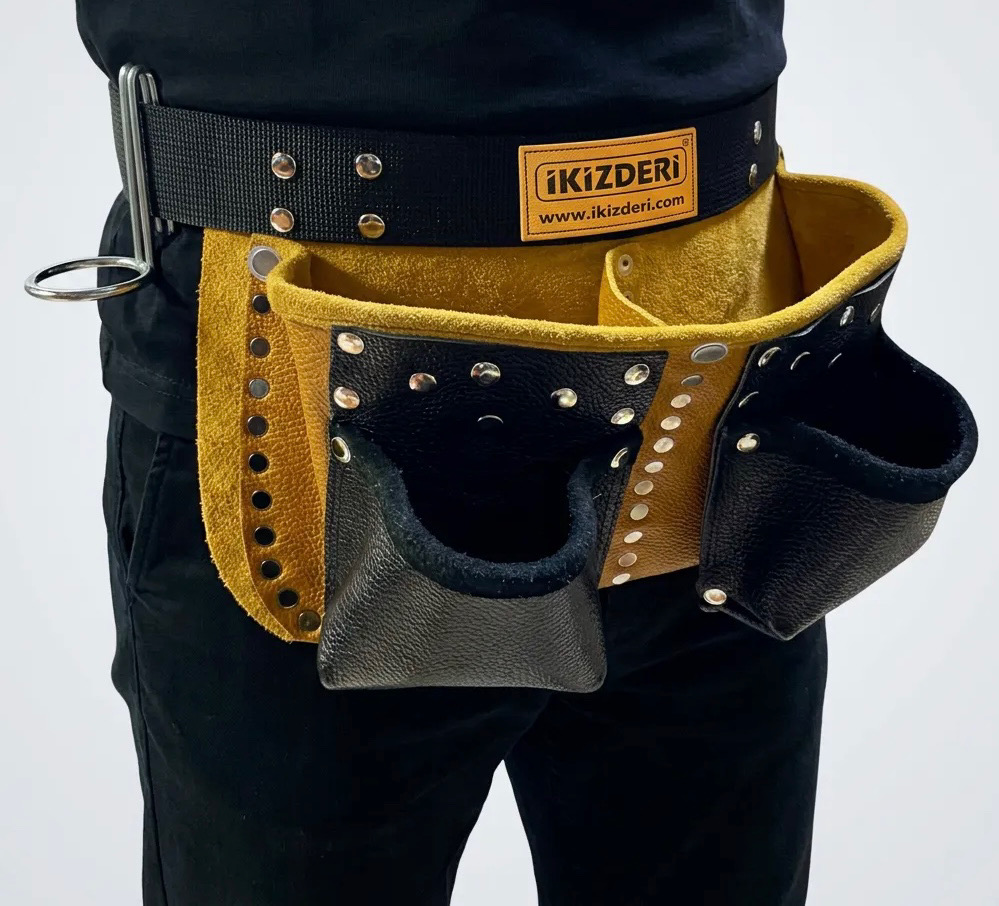
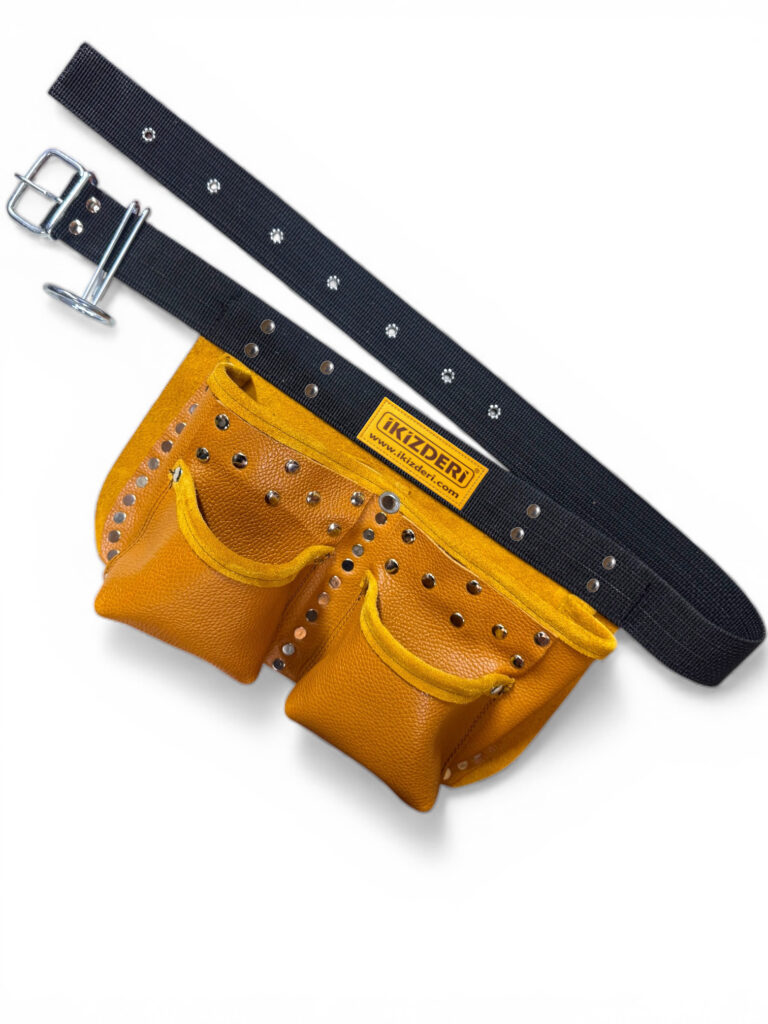
The most strained places on a work apron are well known: pocket corners, pocket openings, and the belt attachment. In handmade production the craftsman supports these points with stainless-steel rivets and adds a leather layer where needed. In mass production the entire product passes through the same standard, so these points receive exactly the same workmanship as everywhere else.
In practice this shows up in how many years the apron lasts. You can find the lifespan of a leather work apron and the factors that determine it in detail in our how long does a leather work apron last guide.
Difference 4: How Is Quality Control Done?
In handmade production, every apron is inspected one by one for stitching, rivets, and edges. In mass production, a few items from each batch are usually examined by sampling.
The consequence of this difference lands directly in the product you hold. With sampling, if an unchecked product is faulty, that flaw only surfaces once you start using it. In handmade production a piece found faulty is remade from scratch; no product leaves the workshop uninspected.
This is why, whichever model you buy from a handmade brand, you meet the same guarantee of craftsmanship. Trust in a brand is built exactly here.
Difference 5: Why Is Every Handmade Product Unique?
Every handmade product is unique because the texture, tone, and grain marks of natural leather differ in every piece. Two aprons of the same model are never exactly alike.
In mass production these differences are usually covered with heavy dye and surface coating, so the products come out looking completely identical. In handmade production these marks are often preserved, because they are proof that the leather is real. A slight tone difference between two aprons of the same model shows not that the product is flawed but that it is natural.
Over time this uniqueness becomes even more pronounced. The patina that forms on the leather as you use it takes shape according to how you work, turning the apron into an object that is entirely yours.
Why Is a Handmade Leather Apron More Expensive?
A handmade leather apron costs more because the price contains not only material but also hours of the craftsman’s labor. A mass-produced apron comes off the line in minutes; a handmade one takes hours.
The items that make up the price can be listed like this:
- Leather quality: Full-grain genuine leather costs far more than synthetic and bonded leather.
- The craftsman’s labor: Cutting, stitching, and riveting are hours of hand work.
- Material waste rate: Because weak leather areas are eliminated, fewer products come from the same hide.
- Metal hardware: Stainless-steel rivets cost more than cheap alloys.
- One-to-one quality control: A faulty product is remade, which raises the cost.
So the difference you pay is not a “brand label”; it is the direct return of the material and labor that go into the product.
What Is the Hidden Cost of a Cheap Mass-Produced Apron?
The hidden cost of a cheap apron is having to replace it often. An apron that tears within a few seasons will exceed the price of a handmade one within a few years.
There are other uncounted losses too. A tool falling out of a torn pocket can cost you time on the job and even cause damage. An apron whose stitching comes apart becomes unusable right in the middle of work. The real cost of a cheap product appears not at the moment of purchase but during use.
And there is this: constantly replaced products produce more waste. Buying a handmade, long-lasting product is also a more sustainable choice in terms of consumption.
Why Do Mass-Produced Aprons Wear Out Quickly?
Mass-produced aprons wear out quickly because thin or synthetic leather is used and load-bearing points are not specifically reinforced. The first tear almost always starts in the same places.
- Pocket opening: The first area to abrade as tools go in and out.
- Pocket base: Sags and punctures under the pressure of heavy tools.
- Belt attachment: The most strained point, carrying all the weight.
- Stitch lines: Loose machine stitching opens up end to end over time.
In handmade production these four points are known from the start and specifically supported. The difference shows itself not on the product’s first day but a few years later.
Who Is a Handmade Leather Apron Right For?
A handmade leather apron is the right choice for anyone who uses their tools every day, carries heavy loads, and wants to keep their product for years. For craftsmen who do the job professionally it is almost a necessity.
- Carpenters and furniture makers: Carry heavy hand tools on the waist all day.
- Construction and renovation workers: Need durability in tough conditions.
- Electricians and plumbers: Need their tools to stay organized and secure.
- Woodworking hobbyists: Look for long-lasting, enjoyable equipment.
- Barbers, baristas, and artisans: Expect both function and appearance.
On the other hand, for someone who will use an apron a few times a year for very light work, a handmade product may be more than needed. The right choice depends on the real intensity of your need.
How Does Buying Handmade Support the Craft?
Buying a handmade product keeps alive a body of knowledge passed from master to apprentice. This craft is learned by hand, not from books; without demand, it cannot be passed on.
Leather craft is a deep-rooted tradition in Türkiye, carried for generations in the hands of craftsmen. Every handmade product means this chain continues. At İkizderi we have been carrying on this tradition in our workshop in Gerede, Bolu, for more than ten years.
This may sound like an emotional detail, but it has a practical consequence too: where the craft lives, the quality standard lives. In a production environment without craftsmen, you will not find a single one of the differences described in this guide.
What Should You Check When Buying a Handmade Apron?
When buying a handmade apron, look at the leather thickness, stitch density, rivet quality, and pocket layout. These four headings show whether the product was really made by hand.
- Leather: Should be full-grain genuine leather; avoid thin surfaces that feel like plastic.
- Stitching: Should be dense, taut, and regular; small natural differences between loops are normal.
- Rivets: Should be stainless steel and placed at load-bearing corners.
- Pocket layout: Should have the depth and number of compartments suited to your tools.
- Edge finishing: Edges should be burnished and smooth; raw, ragged edges are a sign of carelessness.
You can review models that meet these criteria among our leather nail apron models.
Why Does a Handmade Apron Take Longer to Deliver?
A handmade apron takes longer to prepare than a mass-produced one, because every product is worked individually and no stage is skipped. That wait is a direct consequence of the product’s quality.
In mass production thousands of items sit in stock and are boxed and shipped the moment an order arrives. In handmade production the number of pieces a craftsman can finish in a day is limited. Leather selection, patterning, stitching, and final inspection take hours; when that time is cut short, quality is the first thing to fall.
In short, waiting a little longer is a small price for a product you will use for years. An apron made in a hurry repays you in lost time at a far higher rate.
Can Handmade Products Be Repaired?
One of the biggest advantages of handmade leather goods is that they can be repaired. A broken stitch can be redone and a loosened rivet replaced; you do not have to throw away the whole product.
On mass-produced aprons, a torn pocket or an opened stitch line often becomes unrepairable, both because the material does not allow it and because the repair cost approaches the price of a new item. On a handmade product the pieces are joined deliberately; it is clear which point comes apart and how.
This repairability can carry a product’s life well beyond decades. A craftsman who works with leather can reinforce a worn area and bring the apron back into service.
Does a Handmade Apron Need Care?
A handmade leather apron does need regular care, but that care is simple and multiplies the product’s life. Cleaning with a damp cloth and leather cream every few months is usually enough.
Leather left without care dries out, hardens, and cracks over time. A regularly nourished leather, by contrast, softens and gains a finer appearance as the years pass. We explain every care step in our how to care for a leather nail apron guide.
Conclusion: Why a Handmade Apron Is Worth It
A handmade leather apron stands apart from mass production through its individually selected material, hand-stitching, reinforced load points, one-to-one quality control, and unique texture. The difference you pay is the direct return of the labor and material that go into the product.
If you want to see this difference in your own working life, you can review the fully handmade İkizderi leather work equipment collection made in our workshop in Gerede, Bolu, and choose an apron you can use with confidence for years.