
 İkizderi
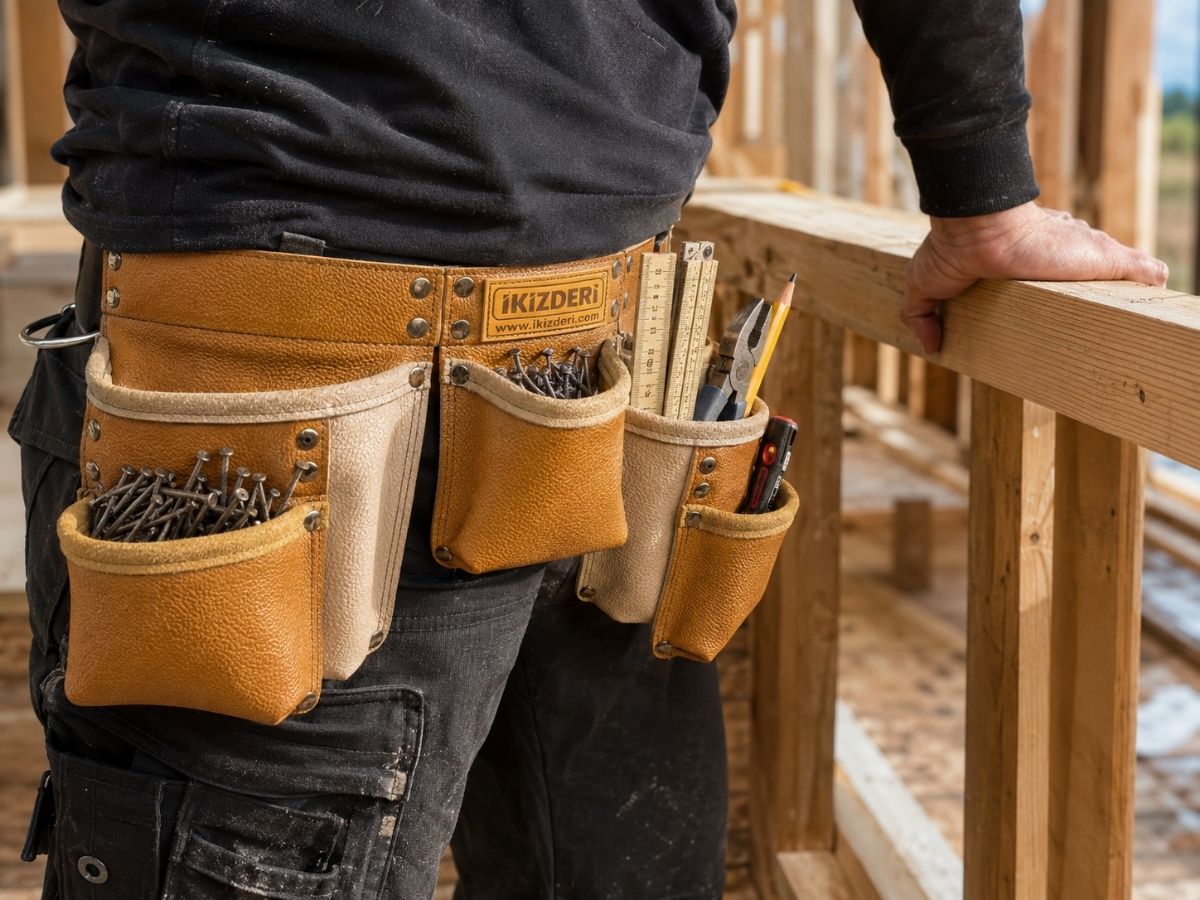
 A leather apron for construction workers is the most essential piece of gear for carrying a hammer, chisel, tape measure, nails and hand tools safely at the waist in the tough conditions of a building site. On a construction site dust, impact, weight and constant movement come together; this is why a construction apron has to be more durable, sturdier and better balanced than aprons for other trades. In this guide we explain, one by one, what a construction apron should be like in terms of material, pocket layout, belt strength and safety.
The Short Answer: What Should a Construction Apron Be Like?
A good construction apron should be made of thick genuine leather, have its load-bearing corners reinforced with stainless-steel rivets, and have a wide, adjustable waist belt. Because heavy tools are carried on a construction site, the apron must be both durable and built to distribute the load evenly.
Construction is one of the toughest environments a tool apron can face: constant dust, hard surfaces, heavy metal tools and all-day movement. A thin fabric apron tears quickly under these conditions. Below we examine every feature a construction apron should have.
What Does a Construction Apron Do?
A construction apron saves time by keeping the most-used tools within reach at the waist, improves safety, and removes the need to bend down for tools constantly. On a building site every second and every movement matters.
- Saves time: Searching for tools is the biggest time thief on a site.
- Improves safety: Sharp and heavy tools stay in pockets, reducing the risk of drops when working at height.
- Protects the back: Constantly bending for tools causes serious back fatigue by the end of the day.
- Protects clothing: Leather shields work clothes from cement and dust.
- Creates order: Every tool has a fixed place; you find it without looking.
A construction apron’s real value shows in the busiest moments of the job. A nail in your pocket while working on scaffolding is far more valuable than one you have to climb down to fetch. Every minute lost on a site adds up to hours by the end of the day; the right apron minimizes that loss.
What Material Should a Construction Apron Use?
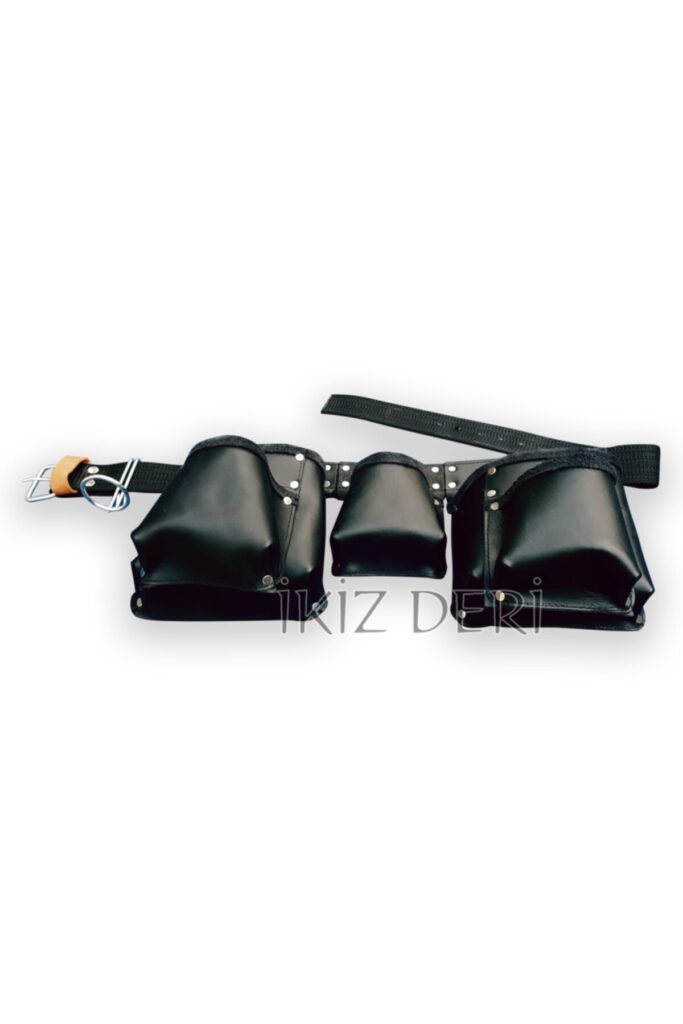
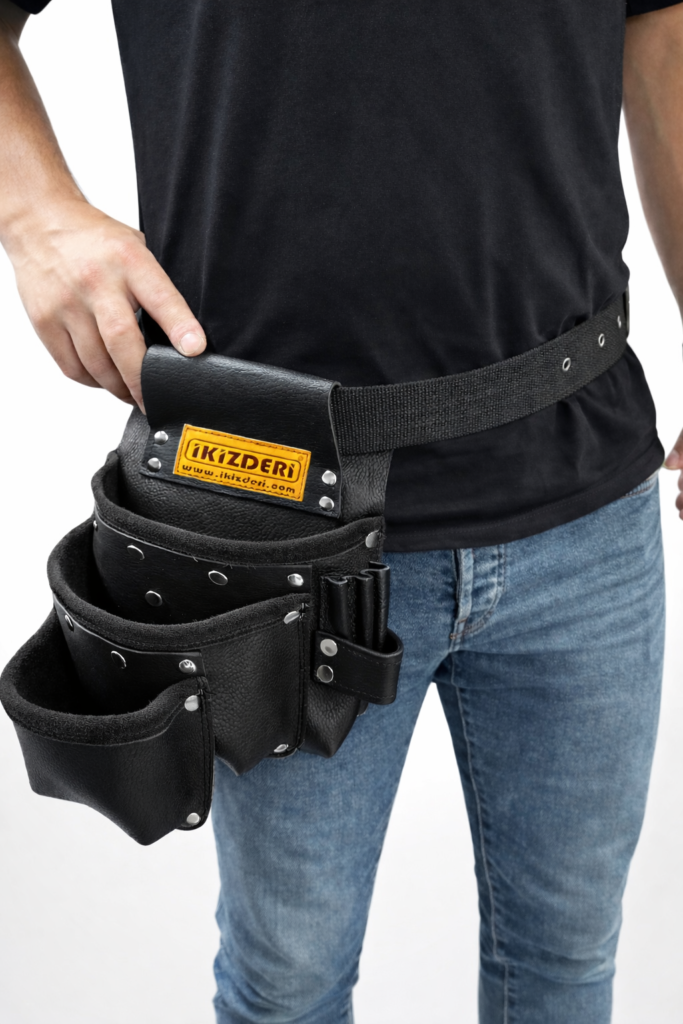
The right material for a construction apron is thick genuine leather. Leather withstands the impact, friction and harsh conditions of heavy metal tools far longer than fabric.
On a site, tools constantly hit, drop and rub against the apron. A canvas or synthetic apron tears quickly at the pocket openings under these conditions and becomes unusable within months. Thick genuine leather withstands this pressure for years, and it is also safer against heat and sparks. To understand whether the leather is genuinely real, take a look at our how to tell if leather is real guide.
How Is a Construction Apron Different from Other Trade Aprons?
A construction apron needs thicker leather, stronger rivets and a wider belt than aprons for other trades, because the load carried and the conditions faced in construction are heavier. The table below sums up the difference.
| Criterion | Construction Apron | Electrician Apron | Carpenter Apron |
|---|---|---|---|
| Leather thickness | Thick | Medium | Thick |
| Pocket type | Few wide pockets | Many slim compartments | Medium pockets |
| Tools carried | Hammer, chisel, punch, tape | Pliers, screwdrivers, cable | Nails, hammer, chisels, tape |
| Priority | Durability and safety | Organization and separation | Capacity and balance |
| Belt | Wide and very sturdy | Medium | Sturdy |
This table shows why “one apron for every trade” is a mistake. While a leather electrician apron suits an electrician and a different pocket layout suits a carpenter, for a construction worker durability and belt strength come first.
How Many Pockets Should a Construction Apron Have?
Usually 3-5 wide pockets are enough on a construction apron; what matters is not the number but the depth and strength of the pockets. A few deep pockets for heavy tools are more useful than many shallow ones.
A construction worker carries a hammer, chisel, punch, tape measure and some nails. Most of these are heavy, bulky tools. Deep and reinforced pockets hold them securely, while many small pockets only create unnecessary clutter on a site. You can find how to work out the right number in our how many pockets a nail apron needs guide.
Why Is the Belt So Important on a Construction Apron?
On a construction apron the belt is the key to carrying a heavy tool load in balance. A wide, sturdy belt spreads the load over a large surface; a narrow belt puts all the weight on a single point and causes back pain.
A construction worker carries heavy tools all day and moves constantly. In these conditions a narrow belt creates pressure and pain within a few hours. A wide belt distributes the load evenly across the waist and hips. Palaska-type wide belts are especially suited to this work; we explain how to wear one correctly in our how to wear a leather tool belt guide.
What Does a Construction Apron Do for Safety?
A construction apron reduces the risk of injury and dropped tools by keeping sharp and heavy tools fixed in specific pockets. When working at height, having tools stay secure is vital.
A hammer falling from a pocket while working on scaffolding or a roof is a serious danger to the people below. Deep, reinforced pockets hold the tool securely and largely remove that risk. Leather is also safer than fabric against sparks and heat, an advantage for construction workers near welding and grinding.
Pocket depth is a safety matter too. A chisel in a shallow pocket can slip out when you bend over; a deep enough pocket removes that risk.
How to Choose a Construction Apron: 5 Criteria
When choosing a construction apron, check five things: leather thickness, stitch strength, rivets, pocket depth and the width of the waist belt. These five criteria determine how many years the apron will last on site.
- Leather thickness: Thick, full-grain genuine leather; avoid thin surfaces that feel like plastic.
- Stitching: Dense, taut and regular; loose stitching opens quickly under heavy load.
- Rivets: Stainless-steel rivets at the pocket corners and belt attachment.
- Pocket depth: Deep enough to take in at least half of tools like a hammer and chisel.
- Waist belt: Wide, sturdy and adjustable; a narrow belt presses on a single point.
You can find why these criteria matter and what determines an apron’s life in our how long does a leather work apron last guide.
Construction Apron or Tool Belt: Which Is Better?
A construction apron also covers the front of the body, carrying tools and protecting clothing, while a tool belt is worn on the waist only and gives greater freedom of movement. The choice depends on the type of work.
For a worker at a fixed spot, an apron is more suitable because it carries tools and shields the body from dust and impact. For a worker constantly climbing scaffolding, a tool belt may feel more comfortable. We compare the two in our leather tool bag vs tool belt guide.
Who Is a Construction Apron For?
A construction apron suits everyone who carries tools on a building site, from rough construction workers to fine craftsmen. Every trade that carries heavy tools benefits from this gear.
- Rough construction workers: Carry a hammer, punch and chisel all day.
- Formworkers: Need nails, a hammer and measuring tools within reach.
- Plaster and drywall workers: Want to carry a trowel and hand tools in order.
- Steel fixers: Need to carry heavy hand tools securely.
- Renovation workers: Look for a versatile apron for different jobs.
In short, anyone who carries tools on a site and wants durable gear is the audience for this apron. For plumbers working in similarly tough conditions, take a look at our tool aprons for plumbers guide.
Should a Construction Apron Be Bib or Waist Type?
For construction workers carrying very heavy tools, a bib model with shoulder straps is more comfortable because it shifts the load from the waist to the shoulders. For lighter or highly mobile work, a waist model is more practical.
Weight carried on the waist tires the back beyond a certain point. Shoulder straps transfer much of that load to the shoulders and back, reducing end-of-day fatigue. However, a bib model can restrict movement for a worker constantly climbing scaffolding. So the choice depends on how heavy your load is and how much you move. We compare apron types in our types of craftsman aprons guide.
Why Are Rivets and Stitching Critical on a Construction Apron?
On a construction apron, rivets and stitching are the two connections that hold the most-strained points together. If these two points are weak, the apron falls apart quickly no matter how thick the leather is.
The pocket corners, pocket base and belt attachment are where the load collects most on a construction apron. If these points are not reinforced with stainless-steel rivets, they tear under the pressure of heavy tools over time. The stitching must also be dense, taut and made with waxed thread. We cover the importance of these two details in our why rivets and hand stitching matter guide.
Do Dust and Cement Damage a Construction Apron?
Cement dust and dirt dry out and harden the leather over time if not cleaned regularly. But a simple care routine easily prevents this; with proper care, leather stays sound for years even in a dusty environment.
Fine dust on a site settles into the leather’s pores and draws out its natural moisture. Wiping the apron with a dry brush or cloth after use prevents this build-up. Wet cement can also leave marks on leather, so wiping it off immediately matters. Regular leather cream keeps the leather from drying and cracking.
How Do You Care for a Construction Apron?
Because it works in a dusty, tough environment, a construction apron needs regular care. Emptying the pockets after use, wiping with a damp cloth, and applying leather cream every few months is usually enough.
Cement dust and dirt on a site dry out and harden the leather over time. Regularly nourished leather stays soft and lasts for years. Drying a wet apron at room temperature, away from heat, also matters; leather dried on a heat source cracks. We explain every care step in our how to care for a leather nail apron guide.
How Do You Balance the Weight on a Construction Apron?
You balance the weight by distributing heavy tools evenly on both sides of the waist. Piling all the heavy tools on one side strains the back at a single point and causes pain by upsetting your posture.
A hammer, punch and chisel are the heaviest loads on the apron. When you put them all on one side, the apron twists that way and your body leans the other way to compensate. Over hours this turns into back pain. The right method is to split heavy tools between both sides and keep light items in front. We explain pocket layout in our how to organize a nail apron guide.
How Long Does a Construction Apron Last?
A quality leather construction apron can be used for more than a decade with proper care. What determines its life is the leather thickness, the strength of the rivets and stitching, and regular care.
Construction is the environment that strains an apron the most, so a cheap, thin apron wears out within a few seasons here. An apron made of thick genuine leather with reinforced points withstands the harsh conditions of a site for years. In the long run, this is far more economical than a cheap apron that is replaced often.
Why an İkizderi Construction Apron?
İkizderi construction aprons are made one by one from full-grain genuine leather in our workshop in Gerede, Bolu. Load-bearing corners are reinforced with stainless-steel rivets, and the stitching is dense and taut.
With more than ten years of leather craftsmanship, we make aprons sturdy enough for the tough conditions of a building site. Each apron is designed with different needs in mind, from rough construction to fine work. The leather is selected piece by piece; weak areas are eliminated and the strongest areas are reserved for load points. This care, invisible from the outside, directly determines how many years the apron lasts.
For formwork carpenters using nails and a hammer intensively, see our leather apron for formworkers guide.
For drywall installers working with screws and a driver, see our leather apron for drywall installers guide.
See which trade should choose which leather apron in our who uses a leather work apron guide.
Conclusion: What Should the Right Construction Apron Be Like?
The right construction apron is a model made of thick genuine leather, reinforced with stainless-steel rivets, with a wide, sturdy belt and deep pockets. In the tough conditions of a site, durability and safety come before everything else.
To find the model that best suits your work, you can review the fully handmade leather nail apron models and all İkizderi leather work equipment made in our workshop in Gerede, Bolu, and choose an apron you can use with confidence for years.