
 İkizderi
 A leather apron for formworkers is a specialized leather work apron that lets concrete-formwork carpenters carry nails, a hammer, a chisel, a tape measure and formwork materials organized and within reach at the waist. Formwork is a fast-paced job built around constant nailing, pulling, measuring and carrying heavy panels. This is why a formwork apron must have both the capacity to hold many nails and the strength to survive heavy use. In this guide we explain, one by one, what a formwork apron should be like.
The Short Answer: What Should a Formwork Apron Be Like?
A good formwork apron is a model with wide pockets that hold many nails, a hammer holder, thick genuine leather, and corners reinforced with stainless-steel rivets. Because formwork relies most on nails and a hammer, the apron should be designed around these two tools.
A formworker drives and pulls hundreds of nails a day and keeps a hammer in hand constantly. At this pace the nail pocket must be deep, the hammer holder sturdy and the leather thick. Below we examine every feature a formwork apron should have.
What Does a Formwork Apron Do?
A formwork apron speeds up the work pace, improves safety, and removes the need to bend down constantly by keeping nails, a hammer and measuring tools within reach at the waist. In formwork, speed translates directly into output.
- Saves time: With nails and a hammer at the waist, the work pace speeds up noticeably.
- Keeps nails in order: Hundreds of nails are gathered in one place instead of scattered.
- Improves safety: The hammer and chisel stay secure at the waist, reducing the risk of drops when working at height.
- Protects the back: Constantly bending for nails causes serious back fatigue by the end of the day.
- Protects clothing: Leather shields work clothes from cement and form oil.
Bending for every nail turns into hundreds of unnecessary movements over a day. A full nail pocket at the waist removes these movements, saving time and protecting the back. Another benefit is focus: every second spent searching for a nail pulls the craftsman’s attention away, and in formwork even a small measuring error can cause big problems.
Why Is the Nail Pocket So Important on a Formwork Apron?
The nail pocket is the heart of a formwork apron, because a formworker uses more nails than anything else all day. A wide, deep nail pocket holds many nails securely and lets the craftsman grab a handful in a single movement.
In formwork, nails are consumed constantly and quickly. A shallow pocket holds few nails and spills them when you bend. A wide, deep nail pocket holds a handful of nails and lets you reach in without looking. This is where a formworker saves the most time. We explain how to set up the right pocket layout in our how to organize a nail apron guide.
How Is a Formwork Apron Different from a Normal Nail Apron?
A formwork apron needs a bigger nail pocket, a sturdier hammer holder and thicker leather than a normal nail apron, because formwork uses nails and a hammer far more intensively. The table below sums up the difference.
| Criterion | Formwork Apron | Normal Nail Apron |
|---|---|---|
| Nail pocket | Very wide and deep | Medium |
| Hammer holder | Sturdy, for constant use | Standard |
| Leather thickness | Thick | Medium-thick |
| Use intensity | Very high | Medium |
| Priority | Nail capacity and durability | General use |
This table shows why a formworker needs a special apron. A general leather nail apron is enough for many jobs, but the intensive nailing of formwork calls for a stronger, wider-pocketed model.
Why Is a Hammer Holder Necessary on a Formwork Apron?
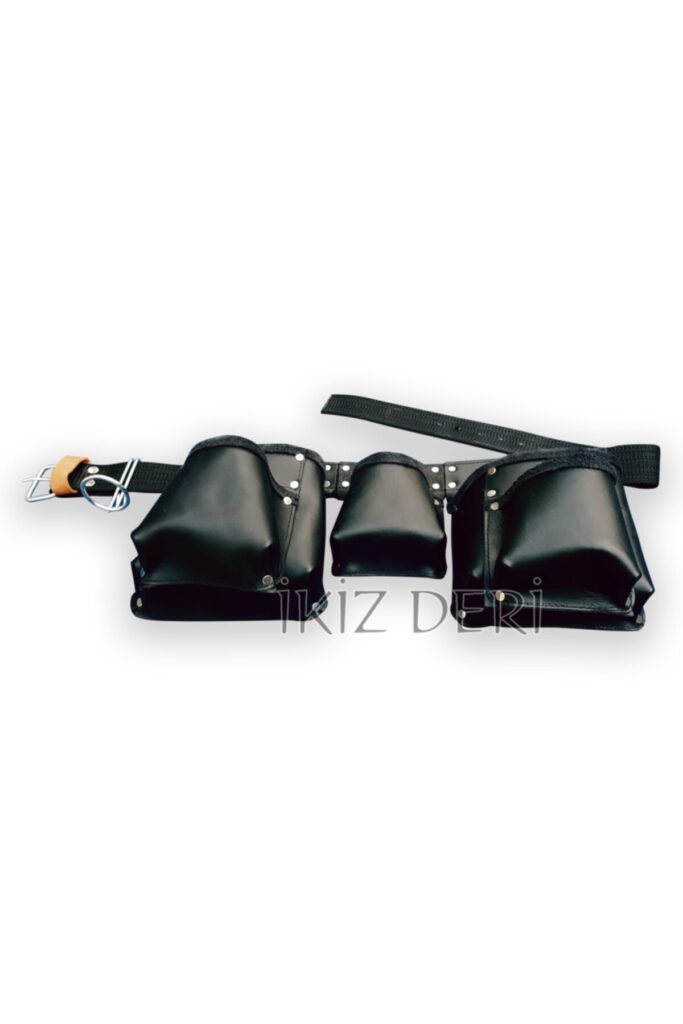
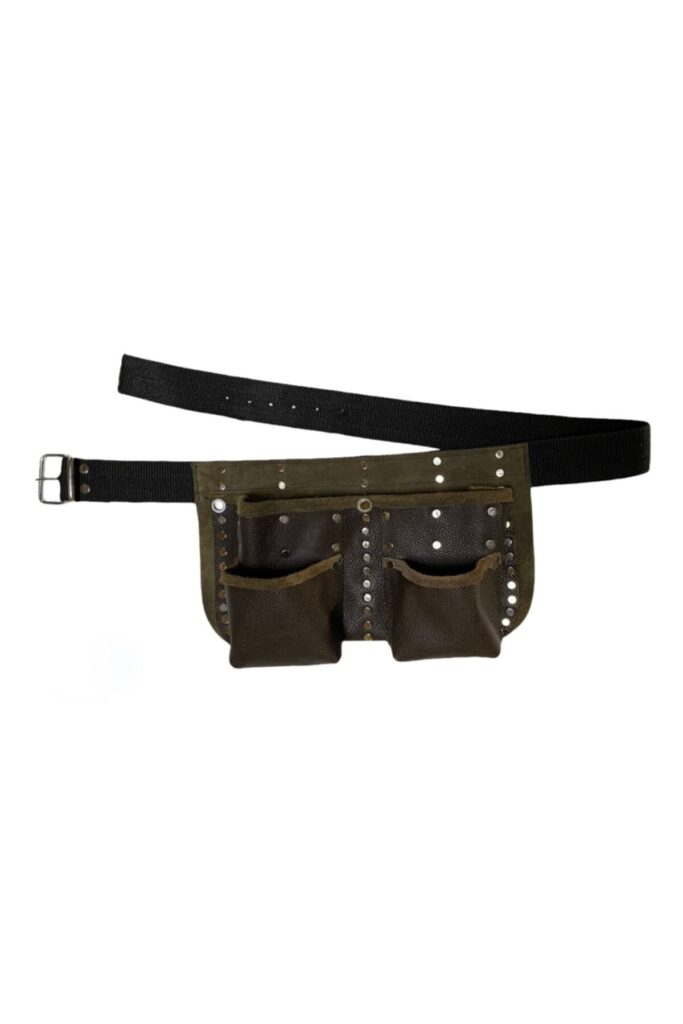
A hammer holder keeps the heavy hammer secure and within reach at the waist. Because a formworker uses the hammer constantly, setting it down and picking it up each time wastes serious time.
The hammer is a formworker’s most-used tool. Driving a nail, then measuring, then driving another nail repeats all day. Keeping the hammer hanging at the waist frees the hand and prevents searching for the hammer between tasks. A sturdy hammer holder is essential on a formwork apron.
What Material Should a Formwork Apron Be?
A formwork apron should be made of thick genuine leather. Leather withstands the constant friction of nails, hammer impacts and the harsh conditions of the form site far longer than fabric.
Sharp-pointed nails go in and out of a formworker’s pocket all day. A fabric pocket lasts a few months and tears at the opening. Thick genuine leather withstands this pressure for years. Leather can also be wiped clean of form oil and cement. To be sure the leather is genuinely real, take a look at our how to tell if leather is real guide.
How Many Pockets Should a Formwork Apron Have?
Usually 3-4 pockets are enough on a formwork apron: one large nail pocket, a hammer holder, and a tape-measure and pencil pocket. In formwork, the width of the nail pocket and the strength of the hammer holder matter more than the number of pockets.
A formworker does not carry a wide variety of tools; the work revolves around nails, a hammer, a tape measure, a pencil and a chisel. So a few well-designed pockets are more useful than many small ones. A separate pocket for the tape measure speeds up measuring. We evaluate the right number of pockets in our how many pockets a nail apron needs guide.
How Should a Formwork Apron Carry the Tape and Pencil?
A formwork apron should have a separate, slim pocket for the tape measure and carpenter pencil. Because measuring is frequent in formwork, the tape and pencil must not get lost among the nails.
A formworker measures and marks constantly, so the tape and pencil are tools used as often as nails. Throwing them into the nail pocket loses the tape among the nails and breaks the pencil tip. A separate, slim pocket keeps these two tools organized and within reach. A good formwork apron considers this small but critical detail alongside the nail pocket.
What Does a Formwork Apron Do for Safety?
A formwork apron reduces the risk of injury and drops by keeping nails and sharp tools fixed in specific pockets. When working at height on form scaffolding, having tools stay secure matters.
Working at height is common on a form site. A hammer or a handful of nails falling from a pocket is a danger to the people below. Deep pockets and a sturdy hammer holder hold these items securely and reduce the risk. Gathering nails in a separate pocket also protects the craftsman’s hand from sharp points.
How to Choose a Formwork Apron
When choosing a formwork apron, check five things: the width of the nail pocket, the strength of the hammer holder, leather thickness, rivets and the width of the waist belt. These criteria determine how many years the apron lasts in intensive form work.
- Nail pocket: Wide and deep; should hold a handful of nails securely.
- Hammer holder: Sturdy and well-positioned; should carry a heavy hammer.
- Leather thickness: Thick, full-grain genuine leather.
- Rivets: Pocket corners and belt attachment reinforced with stainless-steel rivets.
- Waist belt: Wide and adjustable; should distribute the load evenly.
You can find what determines an apron’s life in our how long does a leather work apron last guide.
How Do You Balance the Weight on a Formwork Apron?
You balance the weight by distributing the full nail pocket and the hammer on both sides of the waist. With the hammer on one side and the full nail pocket on the other, the load is balanced and the back is not strained at a single point.
A formworker’s two heaviest loads are the hammer and the full nail pocket. Piling both on one side pulls the apron that way and causes back pain by the end of the day. Placing the hammer on the dominant-hand side and the full nail pocket on the other side balances the load and speeds up access. We explain the right pocket layout in our how to organize a nail apron guide.
Who Is a Formwork Apron For?
A formwork apron suits everyone who works with concrete formwork; carpenters and construction workers who use nails and a hammer intensively also benefit from this type of apron.
- Formwork carpenters: Ideal for those driving and pulling nails all day.
- Rough construction workers: Use nails and a hammer intensively.
- Carpenters: Use nails and a hammer often in woodwork.
- Scaffolders: Carry heavy tools and connection materials.
For a general overview for everyone working on a site, see our leather apron for construction workers guide, and for carpenters our carpenter’s apron guide.
Why Are Rivets and Stitching Critical on a Formwork Apron?
On a formwork apron, rivets and stitching carry the pressure of a heavy hammer and a full nail pocket. If these two connections are weak, the apron tears quickly under intensive use.
Because the nail pocket is constantly full, a large load falls on the pocket corners. If these corners are not reinforced with stainless-steel rivets, they open up over time. The hammer holder’s attachment point must be reinforced the same way. Dense, taut stitching with waxed thread keeps the apron from falling apart in intensive form work. We cover these details in our why rivets and hand stitching matter guide.
How Do You Care for a Formwork Apron?
Because it contacts cement dust and form oil, a formwork apron needs regular care. Emptying the nail pocket after use, wiping the leather with a damp cloth, and applying leather cream every few months is usually enough.
Dust and metal particles that collect in the nail pocket abrade the leather from the inside if not emptied regularly. Form oil can stain the leather, so wiping it off while wet matters. Regularly nourished leather stays sound for years even in the tough conditions of a form site. We explain every care step in our how to care for a leather nail apron guide.
How Long Does a Formwork Apron Last?
A quality leather formwork apron can be used for years with proper care. But because formwork is intensive, the apron’s durability depends directly on material and workmanship quality.
Form work is one of the jobs that strains an apron the most, because the nail pocket is always full and the hammer holder is in constant use. A cheap, thin apron wears out within months at this pace. An apron made of thick genuine leather with reinforced points lasts for years and is far more economical in the long run.
There is also a hidden cost to a cheap formwork apron: it has to be replaced often. Nails spilling from a torn pocket waste time on the job, and an apron whose hammer holder breaks becomes unusable right in the middle of work. The real cost of a cheap product appears not at purchase but during intensive use, which is why a quality apron is the more sensible choice for a demanding job like formwork.
Why an İkizderi Formwork Apron?
İkizderi aprons are made one by one from full-grain genuine leather in our workshop in Gerede, Bolu. The nail pocket is designed wide and deep, and the hammer holder and load-bearing corners are reinforced with stainless-steel rivets.
With more than ten years of leather craftsmanship, we make aprons sturdy enough for the intensive pace of formwork. The leather we use is selected piece by piece; weak areas are eliminated and the strongest areas are reserved for load points. It is 100% locally made and, with proper care, lasts for years.
Conclusion: What Should the Right Formwork Apron Be Like?
The right formwork apron is a model with a wide nail pocket, a sturdy hammer holder, thick genuine leather and stainless-steel rivets. The intensive nailing and hammering of formwork put capacity and durability before everything else.
To find the model that best suits your work, you can review the fully handmade leather nail apron models and all İkizderi leather work equipment made in our workshop in Gerede, Bolu, and choose an apron you can use with confidence for years.