
 İkizderi
 Essential hand tools for woodworkers form the foundation of quality woodworking; working with the right tools improves both the quality and the speed of the job. So which tools are indispensable on a carpenter’s waist and in their bag, and how are they carried most efficiently? In this guide we introduce the 10 essential hand tools for woodworkers one by one, then explain how to carry them in an organized, safe way with a nail apron or tool belt. By the end, you will be able to build both your tool list and your carrying layout with a master’s efficiency.
The Short Answer: What Are a Woodworker’s Essential Hand Tools?
A woodworker’s 10 essential hand tools are: a hammer, tape measure, chisel, hand saw, square, marking pencil, screwdriver, sandpaper, pliers, and utility knife. These tools cover the basic operations of woodworking such as measuring, cutting, joining, and smoothing.
These ten tools form a base sufficient for most woodworking jobs. Depending on the specialty, power tools or special hand tools can be added to this list; but these ten basic tools are the core set that every carpenter should have on their waist or in their bag.
What these tools have in common is that they are both frequently used and small enough to be carried easily on the waist. This is why a nail apron or tool belt is not just an accessory for a carpenter but an inseparable part of the work. Choosing the right tools is as important as carrying them correctly. Now let’s look at each tool and its function closely.
The 10 Essential Hand Tools for Woodworkers
The ten hand tools below cover almost all of a carpenter’s daily work. Each is indispensable for a specific function; let’s take them one by one.
1. Hammer
The hammer is the most basic carpenter’s tool for driving nails, joining parts, and making adjustments when needed. A balanced, sturdy hammer that fits your hand makes a difference in both precise work and strong blows. Carpenters usually carry the hammer in a hammer loop on the waist, so it is gripped in one motion.
2. Tape Measure
The tape measure is indispensable for measuring work and the basis of the “measure once, cut once” rule. Accurate measurement is the first step of a quality job; a wrong measurement means wasted material. Because it is one of the most reached-for tools, the tape measure should be kept in the top front pocket of the apron.
3. Chisel
The chisel is used to carve wood, cut grooves, and create fine details. A sharp, well-maintained chisel provides clean, precise workmanship. Because chisels are cutting tools, they should be carried in a safe pocket with the blade protected. Keeping chisels of different widths lets you work both wide surfaces and narrow recesses easily; in fine joinery, the chisel is the most critical tool.
4. Hand Saw
The hand saw is a basic tool for cutting wood. Saws with different tooth structures allow both rough and fine cuts. Although power saws have become common, the hand saw is still indispensable for precise, small cuts. Also, in places without electricity or for short cuts, a hand saw is both practical and reliable; so every carpenter’s set must include one.
5. Square
The square is needed to check right angles and draw straight lines. It is the key to correct joints and clean corners; without a square, precise assembly is almost impossible. It is used together with the pencil during marking. When making a cabinet, drawer, or frame, having the corners at exactly 90 degrees is only ensured with a reliable square; so the square is the silent hero of fine carpentry.
6. Marking Pencil
The carpenter’s pencil is used to mark measurements and cut lines on wood. Its flat shape usually keeps it from rolling and lets it be erased without leaving marks. The pencil should always be in the same place, in an easily reached slot.
7. Screwdriver
The screwdriver is needed to insert and remove screws. A flat and Phillips-head screwdriver set covers most carpentry jobs. Frequently used screwdrivers should be kept in an easily reached pocket on the waist.
8. Sandpaper
Sandpaper is used to smooth surfaces, remove roughness, and make final touches. It is the finishing touch of fine workmanship; a well-sanded surface directly shows the quality of the work. It is useful to keep sandpaper of different grits. Starting with coarse sandpaper and finishing with fine is the right way to get a smooth, professional surface; this gradual approach prepares a perfect base before painting and finishing.
9. Pliers
Pliers are a multipurpose tool for removing nails, cutting wire, and holding small parts. They are a lifesaver in unexpected situations and should be in every set. To be handy, they should stay in an accessible pocket on the waist. Especially when you need to pull out a wrongly driven nail or grip a stuck part, good pliers save time and make the job easier; in this respect they are a versatile helper.
10. Utility Knife
The utility knife is used for fine cuts, marking, and various detail work. It is important to carry it sharp, safe, and with the blade protected. Because it is a small but very functional tool, it is an inseparable part of the carpenter’s set.
These ten tools are the core of a basic carpenter’s set. Over time you can add to this list according to your work and specialty; but without these tools, most woodworking jobs remain incomplete.
How Are Woodworker’s Hand Tools Carried?
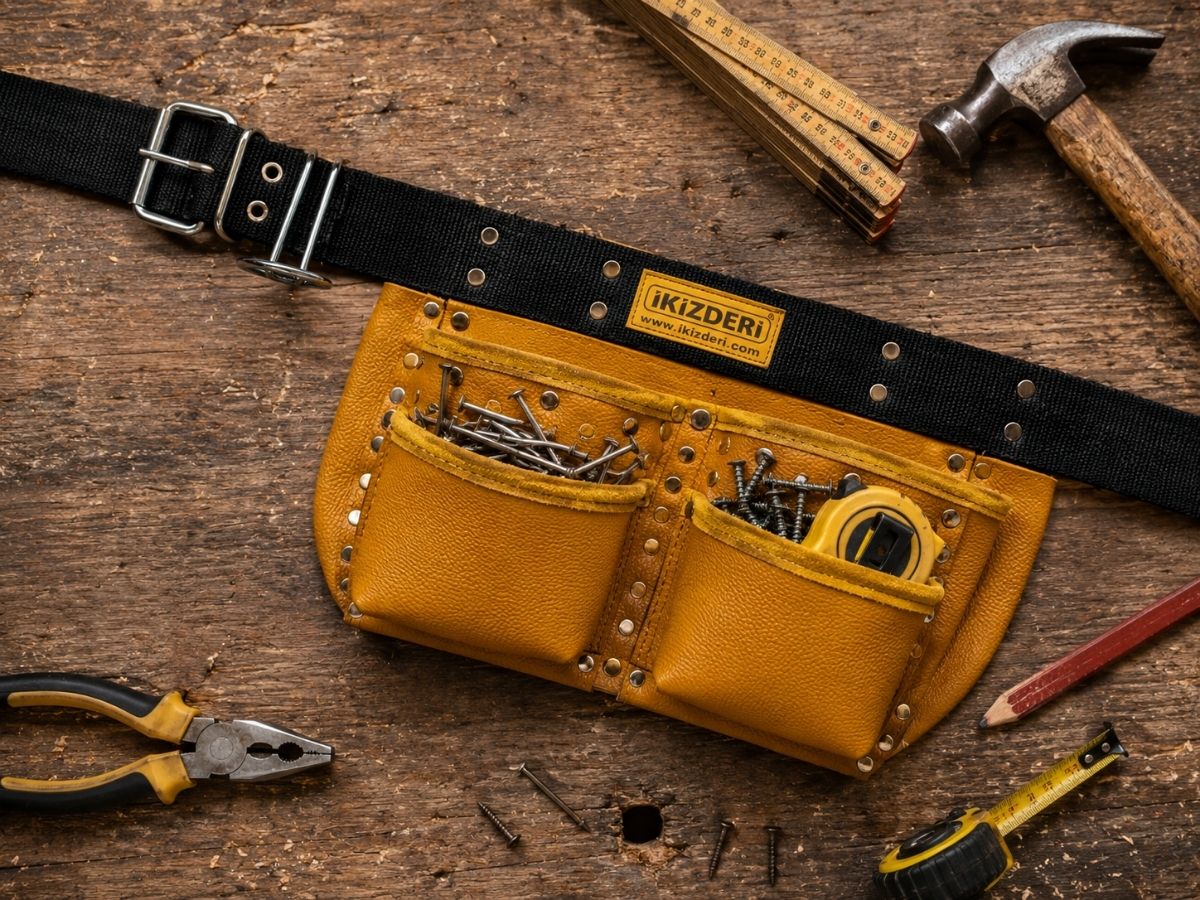
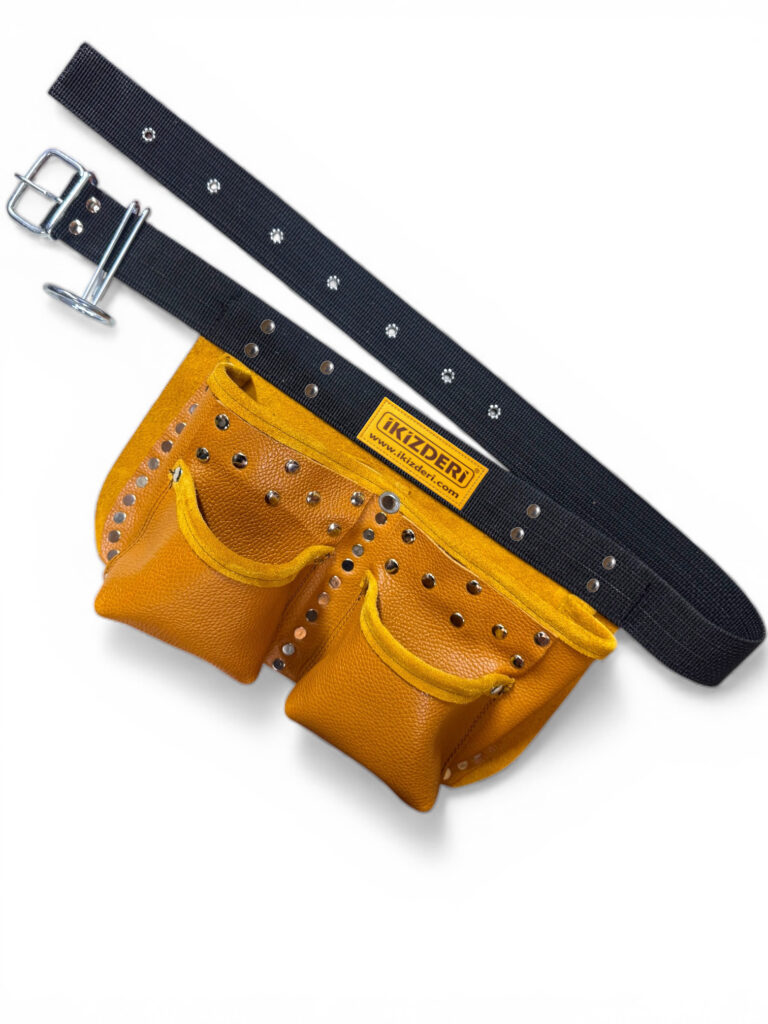
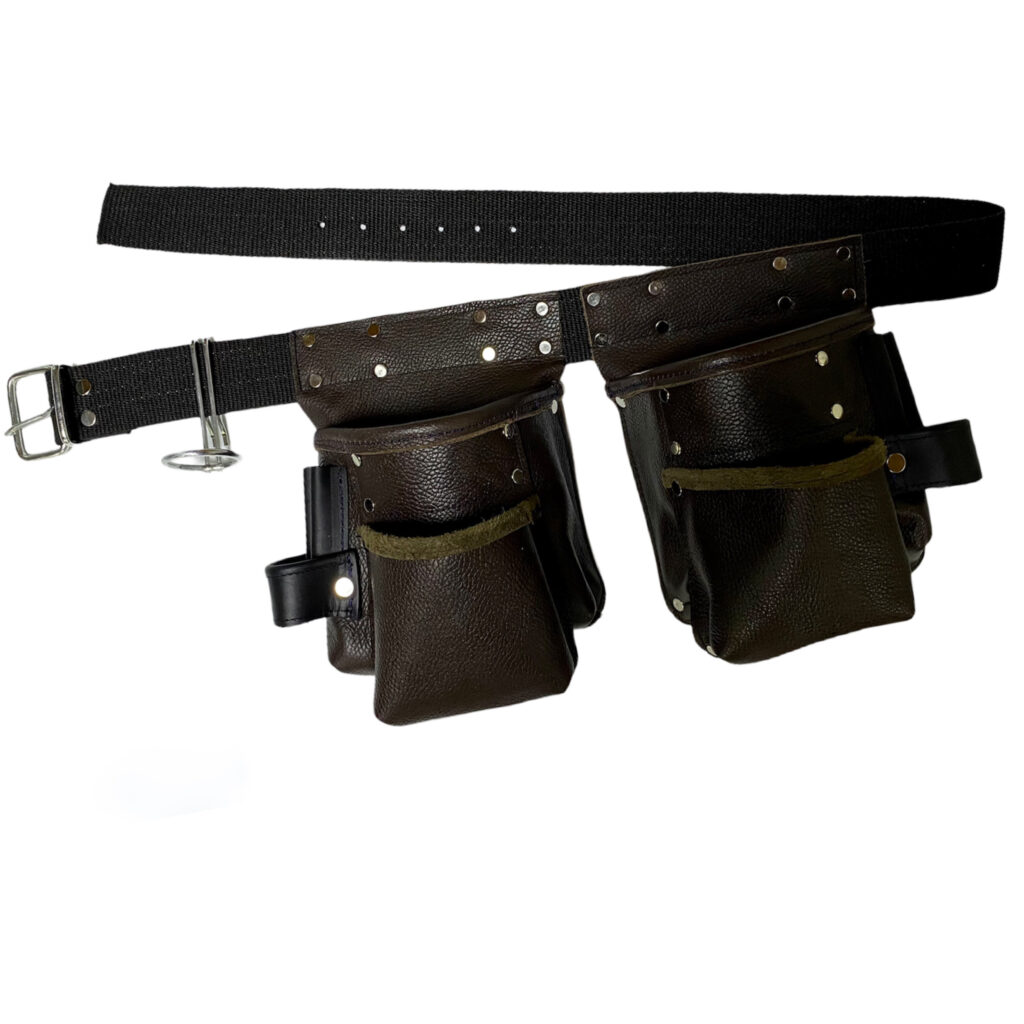
A woodworker’s hand tools are carried most efficiently by attaching a nail apron or tool belt to the waist, so every tool is reached instantly. Frequently used tools can stay on the waist, and rarely used ones in a tool bag.
For a carpenter, constantly used tools such as the hammer, tape measure, chisel, pencil, and square should be in a waist-worn apron. This way you do not lose time searching for tools and can give both hands to the work. Larger or rarely used tools can be carried in a tool bag. To strike the balance between waist carrying and bag storage, you can use our leather tool bag vs tool belt comparison.
The carrying layout also changes by tool type. Heavy tools like the hammer should be placed so as not to upset balance, cutters like the chisel with the blade protected, and frequently used ones like the tape measure and pencil in the most accessible pockets. This order provides both fast work and safety. With a well-built carrying system, every tool is at hand exactly when you need it; this is the key to flow in woodworking.
What to Watch Out for When Carrying Hand Tools?
When carrying hand tools, safety, order, and balance are the three most important points; especially the blades of sharp tools should be protected and heavy tools placed so as not to upset balance. Wrong carrying risks both injury and tool damage.
- Protect sharp tool blades: Chisels and utility knives should be carried with a sheath or in a safe pocket.
- Place heavy tools in balance: Heavy tools like the hammer should not pile on one side.
- Give every tool a fixed place: This increases both speed and safety.
- Do not overload: Carry only the tools needed for the job.
A correct layout is essential to carry your tools organized and safe on the waist. You can find all the details of building an efficient tool layout in our how to organize a nail apron guide.
Which Tools Should a Beginner Woodworker Start With?
A beginner woodworker should start with the most basic tools such as a hammer, tape measure, chisel, saw, and square, and expand the set over time. There is no need for expensive or many tools at the start.
Starting with basic tools both protects the budget and lets you truly learn the function of each tool. As you get to know your work, you better understand which additional tools you need. A few quality basic tools are always more valuable than many cheap ones, because quality tools do better work and last longer. Growing your set over time, according to your real needs, is the smartest way.
Another important point when starting is to get an organized apron or belt to carry your tools. No matter how quality your tools are, if you carry them scattered, efficiency drops. So one of your first investments should be a good leather apron to carry your tools safely and organized. Starting with the right carrying solution makes your woodworking journey more fluid and enjoyable.
How to Store and Store Woodworking Tools Correctly?
Woodworking tools should be stored in a dry, organized system where every tool has its own place; those carried on the waist in the apron, and the rest in a tool bag or cabinet. Correct storage increases both the life and the ease of use of tools.
A damp environment causes rust on metal tools and rot on wooden handles, so tools should be stored in a dry place. Every tool having a fixed place both prevents loss and provides quick access when needed. Keeping the basic tools you use often in the apron on your waist lets you start the day ready. Larger or rarely used tools can wait organized in a bag or workshop cabinet.
How to Expand Your Tool Set Over Time?
The smartest way to expand a tool set is to start with basic tools and add new ones as the work requires. Instead of buying many tools at once, growing according to real need both protects the budget and builds a more conscious set.
For a new carpenter, ten basic hand tools are a sufficient start. As you get to know your work, you realize you need special tools for certain jobs; that is when you can expand your set in a targeted way. This approach prevents spending money on tools you will not use and ensures every new tool is truly useful.
Hand Tools or Power Tools?
For a carpenter, hand tools and power tools are not rivals but complements; hand tools provide precision and control, and power tools provide speed and power. The most efficient work comes from using both together in the right jobs.
For example, a power saw brings speed in large, repetitive cuts, while a chisel and hand saw offer better control in fine detail and final touches. Power tools depend on an outlet or battery; hand tools work always, everywhere. So experienced carpenters keep both types. The waist-worn apron usually carries hand tools; power tools are kept in a bag or on a workbench.
How to Care for and Keep Woodworking Hand Tools Sharp?
Woodworking hand tools stay long-lasting and efficient with regular cleaning, sharpening of cutting tools, and protection from moisture. A well-maintained tool both does better work and is safer.
Cutting tools such as chisels, saws, and utility knives dull over time; regular sharpening is essential for clean, precise cuts. Protecting metal tools from moisture prevents rust; wiping them with a dry cloth after use is enough. Wooden-handled tools can be nourished occasionally with a little oil. Carrying your tools in an organized apron, so they do not hit each other, also reduces dulling and damage. In short, the care you show your tools directly reflects on the quality of your work.
Hand Tools and Where They Sit in the Apron
Each hand tool works most efficiently when it has a set place in the apron. The table below shows that pairing.
| Tool | What It Does | Where It Sits |
|---|---|---|
| Hammer | Driving and pulling nails | Side loop / hammer holder |
| Chisel | Carving and paring wood | Deep, slim compartment |
| Tape measure | Measuring | Small front compartment |
| Carpenter pencil | Marking | Pencil slot |
| Square | Checking angles | Side pocket or bench |
| Utility knife | Cutting and trimming | Covered / deep compartment |
| Nails and screws | Consumables | Wide front pocket |
Once you set this pairing, the time you spend hunting for tools during the day drops noticeably.
To learn about choosing the right fastener, see our types of nails guide.
Conclusion: The Right Tools and the Right Carrying, the Basis of Quality Work
The 10 essential hand tools for woodworkers are the hammer, tape measure, chisel, saw, square, pencil, screwdriver, sandpaper, pliers, and utility knife. Carrying these tools organized with the right apron or belt increases both work quality and productivity.
Remember, a good carpenter has not only good tools but also a good working order. When you carry and organize the right tools correctly, your work becomes both faster and higher quality.
As important as quality tools is the equipment you carry them with. You can review the fully handmade genuine leather İkizderi leather work equipment and choose a solution to carry your tools organized and safe for years.