 İkizderi
 Choosing a leather apron for electricians directly affects an electrician’s daily comfort and safety. The tools electricians carry differ from a carpenter’s; pliers, screwdrivers, cable ties, and small fittings should sit in organized, quickly accessible pockets. In this guide we explain what makes the best leather apron for electricians — the features to look for, the ideal number of compartments, and the material and safety advantages. By the end, you will be able to confidently choose the electrician’s apron that best suits your work.
The Short Answer: What Makes the Best Leather Apron for Electricians?
The best leather apron for electricians is a lightweight model with 2-3 compartments, organized pockets suited to small hand tools, and made of genuine leather. Instead of heavy, multi-compartment aprons, a simple and balanced layout that provides quick access is more efficient for electricians.
Electrical work often happens on ladders, in tight spaces, or at height, so the apron must be light and not restrict movement. At the same time, tools like pliers, screwdrivers, and cable must stay without mixing. Below we examine all the features of an apron that meets these needs.
An electrician’s needs differ noticeably from a carpenter’s or builder’s. While a carpenter carries a heavy hammer and many nails, an electrician works with small but varied tools. So in an electrician’s apron, order and speed of access matter more than capacity. The right apron must have a design that respects this difference; otherwise, however high its quality, it will not fully suit your work.
What Features Should an Electrician’s Apron Have?
The main features to look for in an electrician’s apron are lightness, an organized pocket structure, durable material, and an adjustable waist belt. These four features define the apron best suited to the nature of electrical work.
- Lightness: Provides freedom of movement on ladders and in tight spaces.
- Organized pockets: Small hand tools and fittings must stay without mixing.
- Durable material: Genuine leather resists friction and sharp points.
- Adjustable waist belt: Provides comfortable use with different clothing and positions.
An apron with these features lets an electrician work both fast and safely. Heavy models with too many compartments often create unnecessary load in electrical work. Electrical work is a trade that requires speed and precision; your apron must keep up with that pace. A well-chosen apron leaves you both less tired and more productive at the end of the day.
Which Tools Do Electricians Carry?
Electricians usually carry small hand tools such as pliers, side cutters, a screwdriver set, cable ties, insulating tape, a multimeter, and a utility knife. Because these tools are small and varied, they need organized compartments.
- Pliers and side cutters: The basic tools for cutting and gripping cable.
- Screwdriver set: Flat and Phillips, insulated models are preferred.
- Cable ties and insulating tape: Frequently used consumables.
- Multimeter / test pen: Needed for measurement and checking.
- Utility knife: Used for stripping and cutting cable.
What these tools have in common is that they are small; so instead of deep, large pockets, shallow and organized compartments are more useful for electricians. A layout where small parts do not sink to the bottom and can be easily seen and taken is ideal.
Also, most of these tools have sharp, pointed tips; screwdrivers, side cutters, and test pens strain the material when placed in a pocket. In a canvas pocket these points eventually make holes, while a quality leather pocket stays sound for years. This is why material choice for electricians is not only about durability but also an economical decision. The right material multiplies the apron’s lifespan.
How Many Compartments Should an Electrician’s Apron Have?
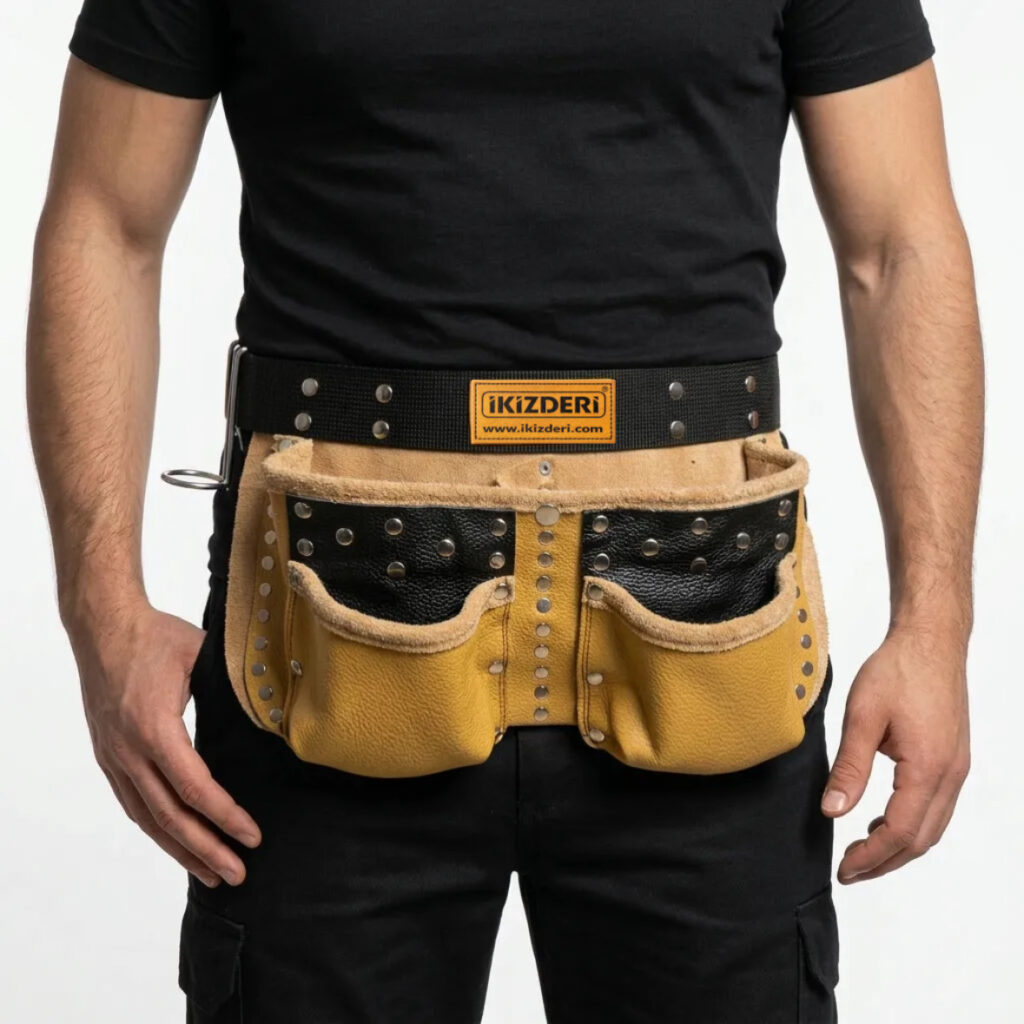
Usually 2-3 compartments are enough in an electrician’s apron, because the tools carried are small and limited in number. A multi-compartment apron can create unnecessary weight and clutter in electrical work.
Two or three compartments are enough to keep pliers and screwdrivers in one and small fittings in another. This way you stay light and reach every tool quickly. To evaluate the number of compartments suited to your need in more detail, take a look at our how many pockets a nail apron needs guide. Remember, the goal is not the most compartments but the layout that best suits your work.
Should an Electrician’s Apron Be Leather or Canvas?
In an electrician’s apron, genuine leather is far more durable and long-lasting than canvas; it resists sharp-pointed tools and friction better. Although canvas is light, it is quickly punctured by pointed tools.
The tools electricians carry, such as screwdrivers, side cutters, and test pens, have sharp points; these points eventually pierce and tear canvas fabric. Genuine leather, on the other hand, withstands this pressure for years. You can find a detailed evaluation in our leather vs canvas nail apron guide comparing the two materials. In the long run, leather is both more economical and more reliable for electricians.
Why Does Leather Provide a Safety Advantage for Electricians?
Because leather is far more resistant to sparks and heat than canvas, it offers an extra layer of safety in electrical work. While canvas fabric can catch fire easily, genuine leather withstands brief heat contact.
In electrical work there is always a risk of a short circuit or sparks. In such a case, a leather apron acts as an extra barrier protecting both clothing and body. Leather also makes it harder for sharp tool points to pierce the pocket and touch the body. This safety advantage makes a leather apron not only durable but also a safer choice for electricians.
Of course, a leather apron does not replace primary protective equipment such as insulated gloves or proper footwear; these should always come first in electrical work. But a leather apron reduces risk by offering an extra layer of protection in daily work. Considered as a piece that completes your safety equipment, a quality leather apron is a valuable investment in both comfort and safety.
Tool Belt or Apron for an Electrician?
For electricians, a tool belt is often more suitable because it spreads pockets around the waist and provides freedom of movement; but a tool bag may also be needed for service work. The choice depends on your working style.
For an electrician working on a ladder, on a ceiling, or in a tight space, a tool belt with pockets spread around the waist gives balance and access advantages. An electrician doing service calls at different addresses can carry all their tools in a bag and transfer the ones needed for the current job to their belt. Our leather tool bag vs tool belt guide comparing the two solutions helps you make the right decision.
How to Organize an Electrician’s Apron?
In an electrician’s apron, the most frequently used tools such as pliers and screwdrivers should be in the front pockets on the dominant side, and small fittings in a separate, shallow compartment. The right order lets you reach every tool by reflex.
Small consumables such as cable ties, insulating tape, and terminals should stay in a separate compartment so they do not mix. Measuring tools like the test pen and multimeter should be in an easily visible pocket. You can find all the details of building an efficient tool layout in our how to organize a nail apron guide. Once the order settles, your speed in electrical work noticeably increases.
What to Check When Choosing an Electrician’s Apron?
When choosing an electrician’s apron, check the material, pocket layout, weight, and waist belt. These four points determine the apron’s performance in daily use.
- Material: Genuine leather; the most durable against sharp points and sparks.
- Pocket layout: Shallow, organized compartments suited to small tools.
- Weight: A light model eases movement on ladders and in tight spaces.
- Waist belt: A wide, adjustable belt provides all-day comfort.
You can find models that meet these criteria among our leather master apron range and leather tool belt options.
Why Is Blue Common in Electrician Aprons?
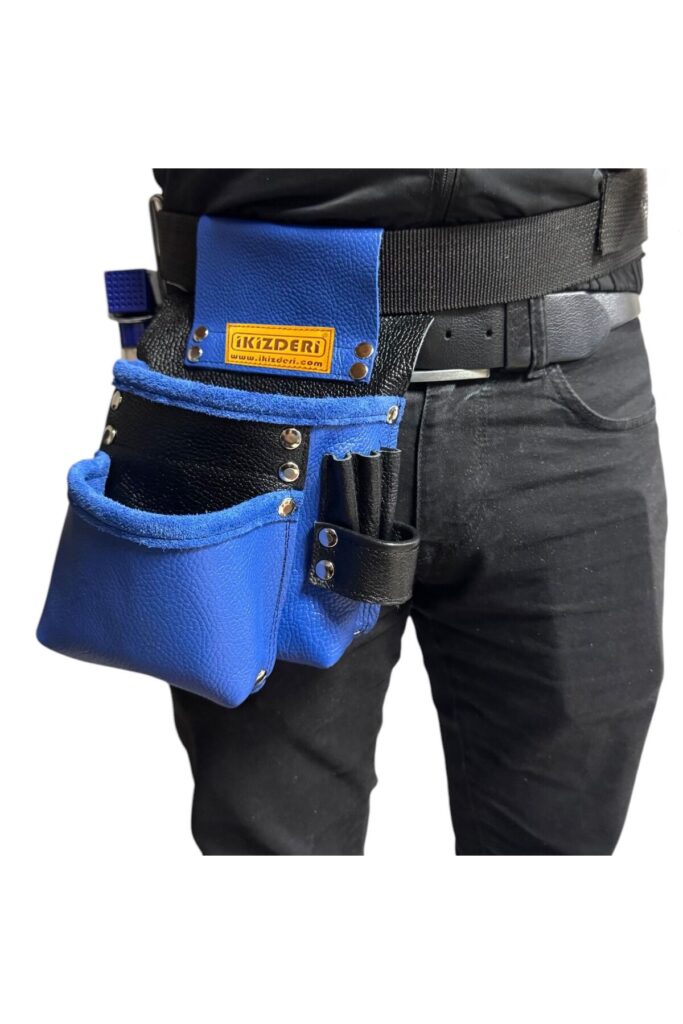
Blue is a color traditionally adopted in the electrical and plumbing trades; it also hides dirt and stains at a moderate level. Color does not affect the apron’s durability; it is entirely a matter of preference and tradition.
Many electricians prefer blue tones because they reflect their trade identity. But colors like black, tan, and brown serve the same function and show dirt less. What matters is not the color but the quality of the leather and how well the pocket layout suits your work. Still, a blue leather apron remains both a practical and a professional choice for many electricians.
Service Electrician vs. Site Electrician: Different Needs
A service electrician needs portability and a wide variety of tools, while a site electrician prioritizes freedom of movement and durability. These two working styles require different carrying solutions.
A service electrician traveling to different addresses carries all their tools in a tool bag and transfers the ones needed for the current job to the belt on their waist. An electrician working on a site, moving around the same area all day, prefers to keep tools on the waist. So for a site electrician a sturdy, comfortable leather tool belt, and for a service electrician the bag-and-belt duo, is the most efficient solution.
Recommendations for Electricians Working at Height
For electricians working at height or on ladders, it is important that the apron is light, balanced, and has deep enough pockets not to drop tools. A tool falling from height is both a loss of work and a serious safety risk.
While working on a ladder, the apron’s weight should not upset balance, so a light model that sits well on the waist should be preferred. Pockets should also be deep enough so tools do not fall out while bending or reaching. Some craftsmen secure critical tools to the apron with a cord when working at height; this eliminates the risk of dropping entirely.
How to Care for an Electrician’s Leather Apron?
An electrician’s leather apron is cleaned by wiping with a damp cloth and nourished every few months with leather cream; this preserves the leather’s flexibility and life. The dust and dirt that build up in electrical work are easily removed with regular cleaning.
Regularly emptying cable scraps, tape residue, and dust from the apron protects both the order and the leather’s life. Leather hardens and cracks when it dries, so a colorless leather cream should be applied every few months. You can find all the care details in our how to care for a leather nail apron guide.
Which Apron Should a Beginner Electrician Choose?
For a beginner electrician, a light leather tool belt with medium compartments and an adjustable waist belt is the most balanced choice. There is no need for a very specialized or very expensive model at the start.
A new electrician understands better which pocket layout they need as they get to know the work. So a versatile, mid-level model makes sense at the start. A quality genuine leather apron is still usable years later, while a cheap model wears out quickly. Investing in quality even when choosing your first apron pays off in the long run.
Electrician’s Apron vs Carpenter’s Apron
Electricians’ and carpenters’ aprons look similar at first glance, but their needs differ. The table below sums up the difference.
| Criterion | Electrician’s Apron | Carpenter’s Apron |
|---|---|---|
| Pocket type | Many slim compartments | Fewer, wider pockets |
| Pocket depth | Medium (small tools) | Deep (hammer, chisels) |
| Tools carried | Pliers, screwdrivers, cable, terminals | Hammer, nails, chisels, tape measure |
| Weight | Lighter | Heavier |
| Priority | Organisation and separation | Durability and capacity |
Knowing this difference prevents buying the wrong product. In electrical work the number of compartments decides it; in carpentry, pocket depth does.
Conclusion: The Right Leather Apron for Electricians
The best leather apron for electricians is a light model with 2-3 compartments, organized pockets suited to small tools, and made of genuine leather. Leather offers both durability and a safety advantage against sparks.
One detail often overlooked when choosing an electrician’s apron is the width of the pocket openings. To pull small tools out and put them back quickly, the opening must be wide enough; a very narrow opening makes you force the tool out each time and wears the pocket edge over the years. On a good electrician’s apron, depth and opening width are considered together.
In short, the right apron for an electrician is one that offers order over capacity, freedom of movement over weight, and durability over cheapness. To find the model that best suits your work, you can review the fully handmade genuine leather İkizderi leather work equipment and choose an apron you can use with confidence in electrical work for years.