
 İkizderi
 Types of screws are surprisingly varied, from head type and shank structure to material and size. Choosing the right screw directly affects both the strength of a joint and whether it can be removed and refitted; the wrong screw can split the material, strip the head, or loosen over time. In this guide we introduce the most-used types of screws one by one — by head type, point structure, material, use and size. By the end, you will know exactly which screw to choose for which job.
What Is a Screw Made Of and What Parts Does It Have?
A screw is basically made of three parts — head, shank (threaded part) and point — mostly made from steel, with a zinc, black phosphate or stainless coating depending on use. The structure of these three parts determines what job the screw suits.
The head determines how a screwdriver or driver grips the screw. The thread structure on the shank (fine or coarse thread) affects which material the screw holds in. The point shows whether the screw can enter the material by itself. So when choosing a screw, you should look not only at length but also at head type and thread structure.
Types of Screws by Head
By head type, screws are divided into cross-head (Phillips/PZ), slotted, hex (Allen) and Torx heads. The shape of the head determines which bit drives the screw and how much torque can be applied.
- Cross-head (Phillips / Pozidriv): The most common type; it has a cross recess and is driven quickly with a cordless driver. Used in general woodwork and assembly.
- Slotted head: Has a single straight slot; seen in old and classic applications, the bit slips easily at high torque.
- Hex (Allen) head: Has a hexagonal recess; used in high-torque, sturdy joints. Common in furniture and machine assembly.
- Torx head: Has a six-point star recess; transfers very high torque without the bit slipping. Increasingly preferred in professional work.
The head choice determines how easily the screw is driven. A cross head is practical for daily work; but in professional work needing high torque and frequent use, a Torx or hex head prevents the bit from stripping.
Types of Screws by Point and Thread
By point and thread structure, screws are divided into pointed (self-piloting) and drill-point (self-drilling). The thread can be fine or coarse, which determines which material the screw holds in.
- Pointed screw: Enters wood and soft materials by cutting its own pilot; the most common type.
- Drill-point (self-drilling) screw: Its point is like a drill bit; it can enter sheet metal and steel without a pre-drilled hole.
- Fine-thread screw: Suitable for hard materials and metal parts; holds more tightly.
- Coarse-thread screw: Suitable for wood and soft materials; its wide threads grip the fibers well.
In soft wood a coarse thread holds better, while in hard material and metal a fine thread does. Choosing the thread structure to match the material directly affects the strength of the joint.
The Most Common Types of Screws by Use
By use, the best-known screws are wood screws, chipboard screws, drywall screws, sheet-metal screws and machine screws. Each is designed for a specific material and job.
| Screw Type | Feature | Use |
|---|---|---|
| Wood screw | Pointed, coarse thread | Woodwork, furniture |
| Chipboard screw | Full thread, countersunk head | Chipboard, MDF, furniture assembly |
| Drywall screw | Thin, black phosphate coated | Plasterboard, drywall installation |
| Sheet-metal screw | Fine thread, drill point | Sheet metal, roofing |
| Machine screw | Straight shank, uses a nut | Machine and metal part assembly |
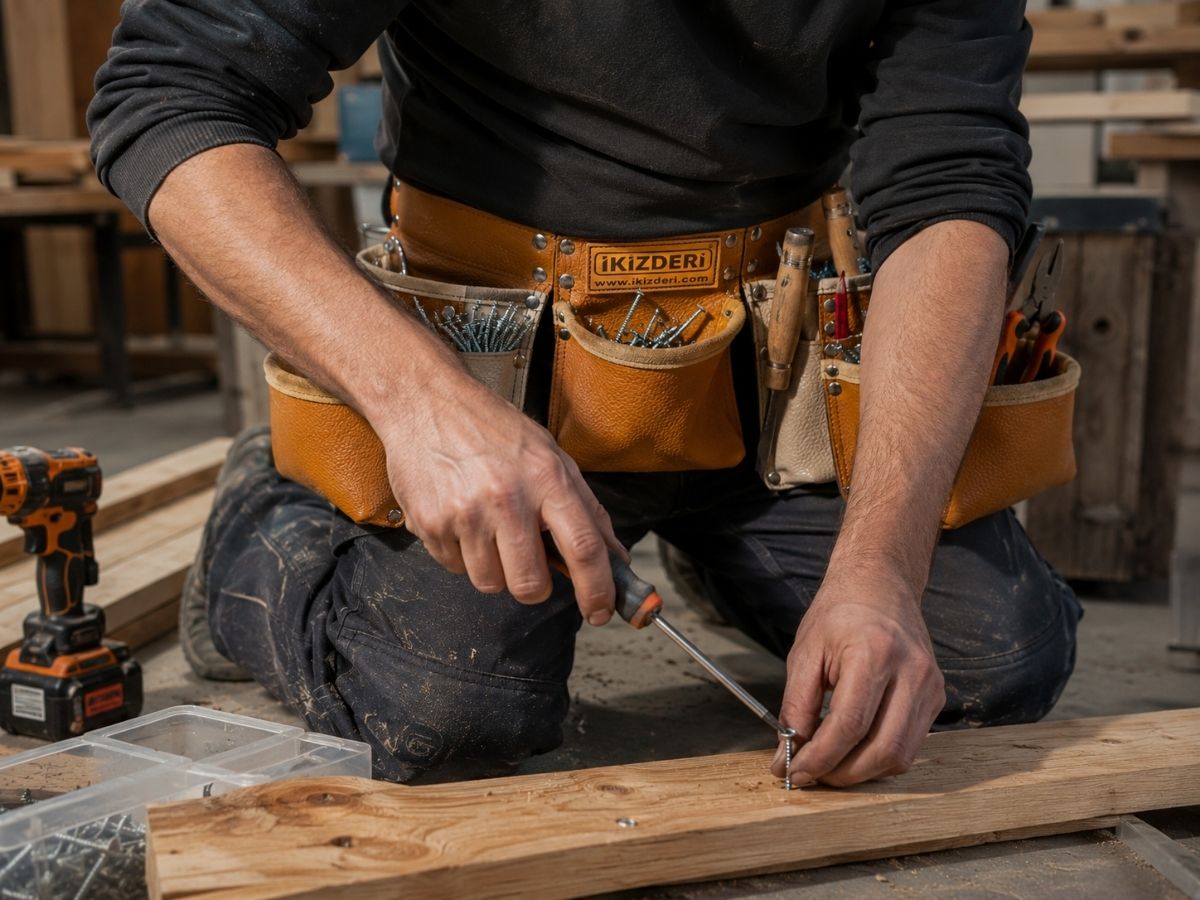
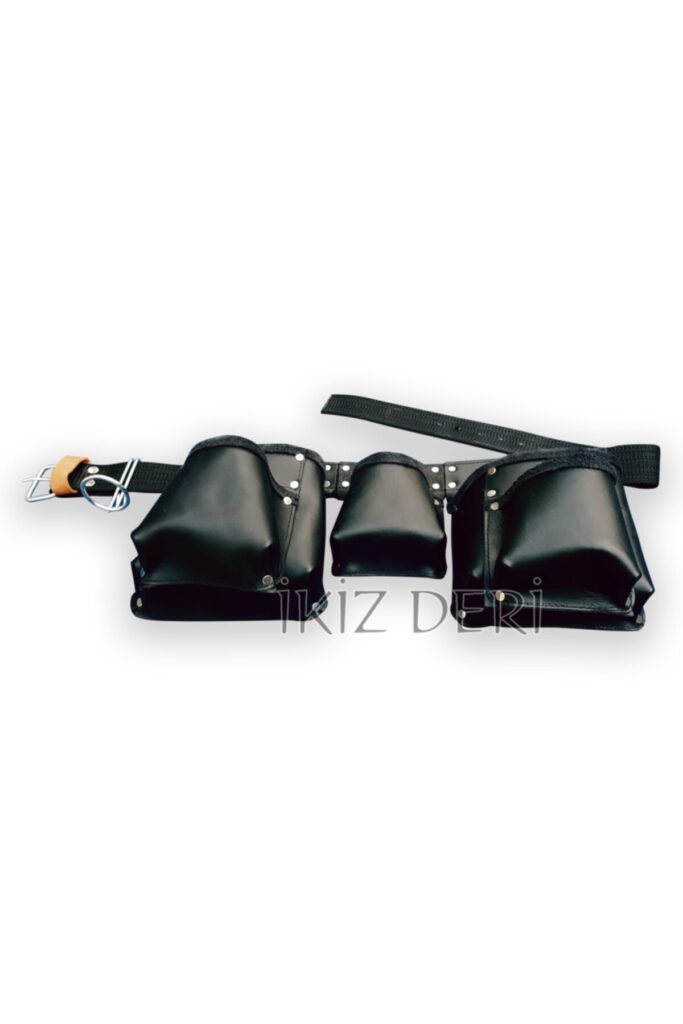
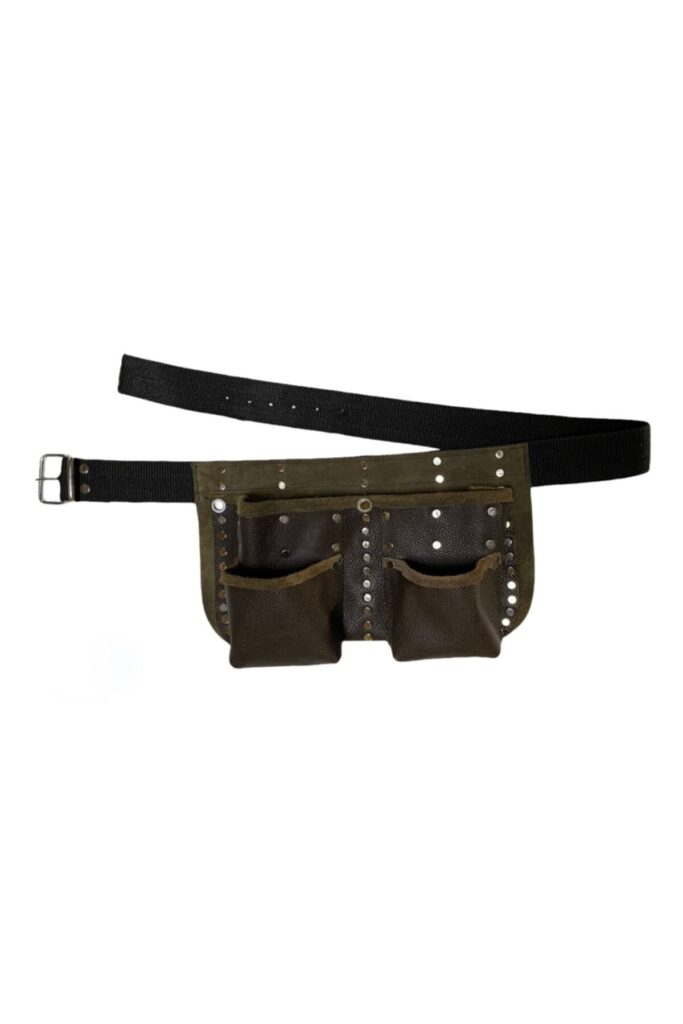
A craftsman uses several of these types together during the day. Carrying screws of different sizes and types in order clearly speeds up the workflow. You can find the most practical way to keep your screws organized at the waist among our leather nail and screw apron models.
What Does a Screw Size Mean?
A screw size is usually given by two measurements as diameter × length (for example 4×40). The first number is the screw’s diameter (thickness) in millimeters, and the second is its length.
For example, a “4×40” screw is 4 mm in diameter and 40 mm long. As the diameter increases, the screw is thicker and stronger; as the length increases, it enters the material more deeply. To choose the right size, think about the thickness of the material being fastened and the holding power needed. The wrong size either leaves the joint weak or splits the material. We explain how to carry screws of different sizes in order in our how to organize a nail apron guide.
Types of Screws by Material and Coating
Screws are also divided by material and coating: zinc-plated (yellow or white), black phosphate coated, stainless steel and brass are the most common. The coating determines the screw’s resistance to rust and where it is used.
- Zinc-plated screw: The most common type; suitable for indoor and normal work, with medium rust protection.
- Black phosphate screw: Usually seen in drywall screws; suitable for dry indoor use, weak against moisture.
- Stainless-steel screw: Never rusts; ideal for outdoor, damp environments and seaside.
- Brass screw: Decorative and rust-free; preferred in furniture and visible joints.
A screw used in a damp or outdoor environment must be stainless or well-coated; otherwise it rusts quickly, loses strength and stains the material.
How Do You Choose Screw Length?
Screw length is chosen to be about twice the thickness of the upper material being fastened, so a large part of the screw enters the base material underneath and forms a strong joint.
For example, if you are fixing an 18 mm chipboard to a base underneath, a screw about 35-40 mm long is suitable. Too short a screw does not hold; too long a screw can come out of the base material or split it. The right length matters for both strength and a clean look.
Do You Need a Pilot Hole Before Driving a Screw?
In hard wood and near the edge of the material, drilling a pilot hole prevents splitting and keeps the screw straight. In soft materials, a pilot hole is usually not needed.
A pilot hole is drilled with a bit slightly thinner than the screw’s diameter. This hole prevents the screw from forcing and splitting the material as it enters, and helps it sit properly. Especially in hardwoods, near the board edge and in valuable materials, a pilot hole gives a clean, strong result. In soft chipboard and wood, the screw can usually enter directly.
What Is a Self-Drilling Screw?
A self-drilling screw has a point designed like a drill bit, able to enter sheet metal and steel without a pre-drilled hole. This lets it do both the drilling and the fastening in a single step, saving time.
A normal screw requires drilling a hole before entering sheet metal and steel; a self-drilling screw removes this step thanks to the drill part at its point. It is a great help especially in roofing, cladding and metal assembly. But as the material gets thicker, the drill part may not be enough; in that case a pilot hole may still be needed. Choosing the right self-drilling screw is done according to the sheet thickness.
Screws or Nails: Which to Use?
Screws are preferred for removable joints that need high holding power, and nails for fast, flexible joints. A screw holds more tightly and can be removed when needed; a nail is driven faster and is flexible against vibration.
In furniture assembly, drywall and work that must be removable, screws come to the fore. In fast-moving work like rough construction, formwork and roofing, nails are more practical. Both change place often on the same craftsman’s waist, so an apron that carries both screws and nails in order makes work life easier. We also cover the difference between the two in our types of nails guide.
Why Does a Screw Head Strip and How to Prevent It?
A screw head strips when the wrong size or type of bit is used, when the bit does not seat fully, or when too much torque is applied. With the right bit and a straight angle, this problem is largely prevented.
Head stripping is most common with cross-head screws, because the bit can slip out of the recess at high torque. The ways to prevent it are: use a bit that exactly fits the screw head, hold the bit square to the screw, and do not overdo the driver’s torque. Replacing a worn bit is also important; a worn bit can strip even a sound screw. Torx and hex-head screws are more resistant to this than cross heads.
How Do You Remove a Stripped Screw?
A stripped screw can be removed with a rubber band, a screw extractor, or by cutting a notch into the head. The aim is to create a surface the bit can grip again.
On a slightly stripped screw, placing a thin rubber band between the bit and the head increases grip. In more serious cases a screw extractor is used; this bit removes the screw with its reverse thread. As a last resort, a straight notch can be cut into the head with a small saw and removed with a flat screwdriver. The way to prevent these problems from the start is to use the right bit and the right torque.
Why Is Torx Increasingly Preferred?
The Torx head almost completely prevents the bit from slipping thanks to its six-point star recess, and transfers very high torque. This is why it is increasingly preferred in professional assembly and production work.
With a cross head, the bit can slip out of the recess at high torque and strip the head, ruining both the screw and the bit. With a Torx head, the bit seats fully and transfers all the force without slipping. This makes a big difference for craftsmen driving hundreds of screws a day with a cordless driver: fewer stripped screws means less lost time. Torx bits also wear more slowly, which saves money in the long run.
What Are the Most Common Mistakes When Choosing a Screw?
The most common mistakes are choosing the wrong size, using a thread that does not match the material, choosing an uncoated screw in a damp environment, and using the wrong bit. These mistakes both weaken the joint and damage the screw or material.
- Wrong size: Too thin a screw does not hold; too thick splits the material.
- Wrong thread: A fine thread does not hold well in soft wood; a coarse thread loosens in hard material.
- Wrong coating: An uncoated screw rusts quickly outdoors.
- Wrong bit: A bit that does not fit the head strips the screw and makes it unusable.
- No pilot hole: Driving a screw straight into hard wood causes splitting.
Most of these mistakes are prevented by choosing the right screw and the right bit. An experienced craftsman decides which screw to use based on the material and the environment before starting.
Which Screw for Which Job? A Quick Guide
To choose the right screw, it is enough to think about the material and the type of joint needed. The short guide below shows the right screw for the most common jobs.
- Wood and furniture: Pointed, countersunk-head wood or chipboard screw.
- Drywall (plasterboard): Thin, black phosphate drywall screw.
- Sheet metal: Drill-point, fine-thread sheet-metal screw.
- Outdoor and damp environment: Stainless or zinc-plated screw.
- High torque and professional work: Torx or hex-head screw.
This guide helps you find the right screw for most jobs. When you are unsure, the material being fastened and the moisture of the environment are the two most decisive factors.
Besides screws, you can review the hammers used in nail work in our types of hammers guide.
If you want to choose the right bit for a screw pilot hole, see our types of drill bits and their uses guide.
If you want to choose the right plug to fix a screw to the wall, see our types of wall plugs and anchors guide.
Conclusion: Why Choosing the Right Screw Matters
Choosing the right type and size of screw directly determines a joint’s strength, removability and lifespan. Head type, thread structure, material and size together reveal which job a screw suits. The wrong screw can waste even the best workmanship.
If you want to carry different types and sizes of screws organized and within reach all day, you can review the leather nail apron models and all İkizderi leather work equipment we make entirely from genuine leather in our workshop in Gerede, Bolu.