
 İkizderi
The durable genuine leather work apron in your hands is actually the result of a long journey that requires craftsmanship. Before it is processed, raw hide is a material that rots, smells and spoils quickly; the process that turns it into a sturdy leather lasting for years is called tanning. So how is leather tanned? In this article, starting from raw hide, we explain what tanning is, which methods it is done with, its steps, and how a piece of leather becomes a sturdy work apron.
İkizderi · Genuine Leather
From Raw Hide to a Sturdy Work Apron
Handmade master aprons from thick, well-tanned genuine leather. Single piece or production for your team.
What Is Tanning?
Tanning is the process by which raw hide is turned into a material that is resistant to rot, durable and usable. Thanks to this process, leather does not smell, does not rot, keeps its flexibility and gains the strength to last for years.
When raw hide is taken from an animal, it is a living tissue and begins to spoil quickly; if not processed, it rots, smells and becomes unusable. Tanning is a chemical and physical process that turns this natural tissue into a stable, durable and flexible material. Humanity discovered this method thousands of years ago and began using leather in countless fields, from clothing to shelter, from work tools to harness. Without tanning, leather is a perishable tissue that can last only a few days; with tanning, it turns into a material that can be used for decades. This is why tanning is the most critical stage at the heart of leather production.
The origin of the word “tanning” also goes back to this tradition; historically, a tanner was the craftsman who processed leather. In many languages, the term for tanning derives from the craft of the leather worker. This profession has been one of the most deep-rooted crafts of cities throughout history, and tanneries formed a tradition of craftsmanship passed from generation to generation. Although it is done in modern facilities today, the basic logic of tanning has been the same for thousands of years: to turn raw hide into a durable material that will serve people for years.
Why Must Leather Be Tanned?
Leather must be tanned because in its raw state it is a tissue that rots, smells and hardens and cracks. Tanning protects the leather against this spoilage and turns it into a flexible, durable and long-lasting material.
Unprocessed leather becomes unusable in two directions: if left damp, it rots and smells because of bacteria; if left to dry, it hardens, cracks and breaks apart. In both cases, the leather becomes useless. Tanning eliminates both of these problems by stabilizing the leather’s fiber structure. Tanned leather is both more resistant to moisture and does not harden and crack when it dries; it stays flexible and sturdy. This transformation makes leather suitable for products that will be used for a long time, like a work apron, shoe or bag. In short, tanning is a mandatory step that turns leather from a “perishable tissue” into a “durable material.”
We can understand how important this transformation is by looking at the fate of untanned raw hide. An unprocessed hide begins to smell and rot within a few days; when it dries, it hardens like wood and cannot be bent by hand. But the same hide, when tanned correctly, turns into a soft, flexible and extremely durable material. Humanity discovering this process thousands of years ago is one of the important turning points in the history of civilization; because leather met many basic needs, from clothing to harness. In this sense, tanning is not just a technique but a historical achievement.
How Is Raw Hide Prepared for Processing?
Before tanning, raw hide goes through preparation stages such as soaking, cleaning of hair and flesh residue, and liming. These stages bring the leather to a clean and smooth surface suitable for tanning.
Before tanning begins, raw hide must be prepared carefully. The first step is to re-soak and soften the dried or salted hide. Then the hair on the hide and the flesh and fat residue on the underside are cleaned; this is usually accompanied by liming. Liming allows the hair to be removed easily and prepares the leather for tanning. When these preparation stages are complete, what remains is a clean and smooth layer of leather ready to be tanned. If these steps are done carelessly, the leather will not be of good quality no matter how good the subsequent tanning is. So the foundation of good leather is actually laid in this meticulous preparation stage.
The preparation stage also determines how clean and smooth a surface the leather will have. If flesh and fat residues are not fully cleaned, they lead to odor and spoilage over time. Proper removal of the hair ensures that the leather’s surface is smooth and aesthetic. For this reason, in experienced tanneries the preparation stage is given at least as much care as the tanning. A well-prepared leather gives a higher-quality result in all subsequent stages; a poorly prepared leather cannot reach the desired quality even with the best tanning.
Workshop · Handmade Production
Quality Leather Means a Quality Apron
Master aprons handmade from thick, well-tanned genuine leather in Gerede, Bolu.
What Are the Main Tanning Methods?
There are two main tanning methods: vegetable tanning and chrome tanning. Vegetable tanning is a traditional and natural method using plant extracts; chrome tanning is a faster and more modern method using chromium salts.
Vegetable tanning is done with natural tannins obtained from tree bark, oak galls and various plants. This traditional method, used for centuries, gives the leather a sturdy, full structure and a character that grows more beautiful over time; but it is a slow process that can take weeks. Chrome tanning, developed in the 19th century, is a much faster method using chromium salts; it gives the leather softness and flexibility, and today most of the world’s leather is produced this way. Both methods have their own advantages: vegetable tanning offers naturalness and character, while chrome tanning provides speed and flexibility. Which method is chosen depends on where the leather will be used.
Besides these two main methods, there are also different tanning techniques that are a mix of the two or aimed at special purposes. For example, some leathers are processed first with chrome and then with vegetable tannin, combining the advantages of both methods. But fundamentally, the leather world rests on two great traditions: vegetable and chrome tanning. Which method a leather is tanned with directly determines its hardness, flexibility, smell and how it will change over time. So experienced craftsmen can often tell how a leather was tanned just by touching it.
How Is Leather Tanned? The Main Steps
Leather tanning consists of the steps of soaking, liming and cleaning, the main tanning (tannage), oiling and dyeing, drying, and finishing. Each step determines the durability and appearance of the leather.
- Soaking: The dry or salted raw hide is re-softened.
- Liming and cleaning: Hair and flesh residue are removed, the surface is cleaned.
- Tannage (main tanning): The leather is processed with vegetable tannin or chromium salt and stabilized.
- Oiling and dyeing: The leather is given flexibility, color and the desired character.
- Drying: The leather is dried in a controlled way.
- Finishing: The surface goes through final treatments and is made ready for use.
Each of these steps requires expertise and care; a mistake in one stage lowers the quality of the whole leather. A well-tanned leather emerges from the careful application of these steps. The resulting leather is now ready to be turned into products like a work apron, bag or shoe. Tanning is a process that requires patience and craftsmanship; a place where science meets craft.
The duration and detail of these steps vary according to the tanning method chosen. In vegetable tanning, the tannage stage may require the leather to be kept in a tannin solution for weeks, while in chrome tanning this time drops to days. The amount of oil used in the oiling stage determines how soft the leather will be, and the dyeing stage determines its color. Drying is a very critical step; if the leather is dried too fast it cracks, and if too slow it can mold. So each stage is adjusted according to the product’s purpose, under the supervision of an experienced craftsman. A good leather is the sum of these fine adjustments.
What Is the Difference Between Vegetable Tanning and Chrome Tanning?
Vegetable tanning is natural, traditional and slow; it gives the leather sturdiness and a patina that grows more beautiful over time. Chrome tanning is a fast and modern method; it gives the leather softness and flexibility. The table below compares the two methods.
| Feature | Vegetable Tanning | Chrome Tanning |
|---|---|---|
| Substance used | Natural plant tannins | Chromium salts |
| Duration | Weeks (slow) | Days (fast) |
| Structure | Sturdy, full | Soft, flexible |
| Patina | Beautifies over time | Less patina |
| Use | Belt, apron, saddle | Shoe, clothing, bag |
As the table shows, the two methods serve different needs. If sturdiness, fullness and beautifying over time are wanted, vegetable tanning is preferred; if softness, flexibility and speed are needed, chrome tanning is chosen. In products requiring sturdiness, like work aprons, belts and saddles, fuller and more durable leathers are generally used. The right method is always determined according to the product’s intended use.
Which Leather and Tanning Are Suitable for a Work Apron?
A thick, sturdy and durable tanning is suitable for a work apron, because the apron is used in harsh conditions for a long time. Full and sturdy-structured leathers provide both the protection and the long life of a work apron.
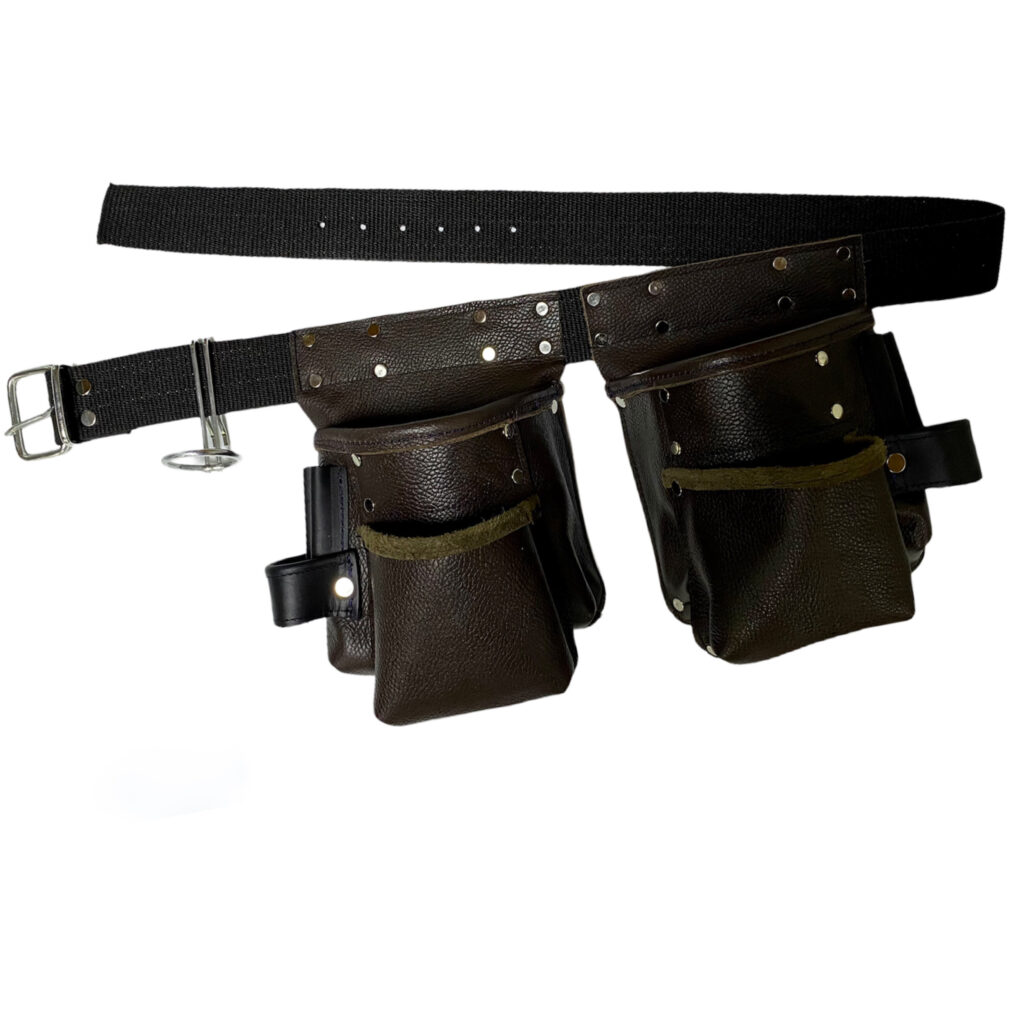
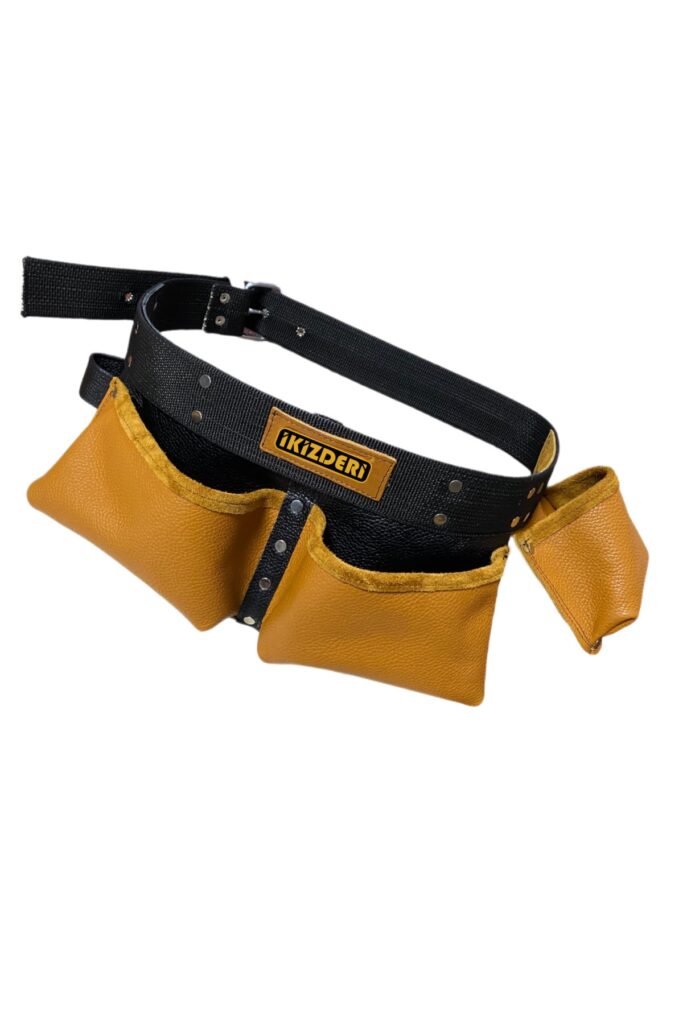
A work apron must withstand sharp tools, heavy loads, friction and harsh conditions. So in work aprons, thick and sturdy-structured leathers are preferred over thin and soft ones. Such leathers carry the weight of tools, do not tear easily on sharp edges and last for years. A well-tanned thick leather also gains a beautiful patina over time. For trades that work with fire, like blacksmiths and welders, heat-resistant thick leathers are especially important. In short, the quality of a work apron depends first of all on the type of leather used and its being properly tanned. We explained how to tell the quality of leather in our how to tell genuine leather article.
The thickness of the leather is also a decisive factor for a work apron. Although a very thin leather is light, it sags under the load of heavy tools and is easily pierced by sharp edges; a very thick leather becomes heavy and can restrict freedom of movement. So a good work apron is made of a leather with the thickness that strikes the right balance between protection and comfort. In fire work this balance leans toward protection, and in work requiring fine craftsmanship it leans toward flexibility. Choosing the right leather for the right job requires as much craftsmanship as tanning.
How Does Tanned Leather Become a Work Apron?
Tanned leather becomes a work apron by going through the stages of cutting, patterning, stitching and riveting. In these stages, the right areas of the leather are selected, cut carefully and joined sturdily.
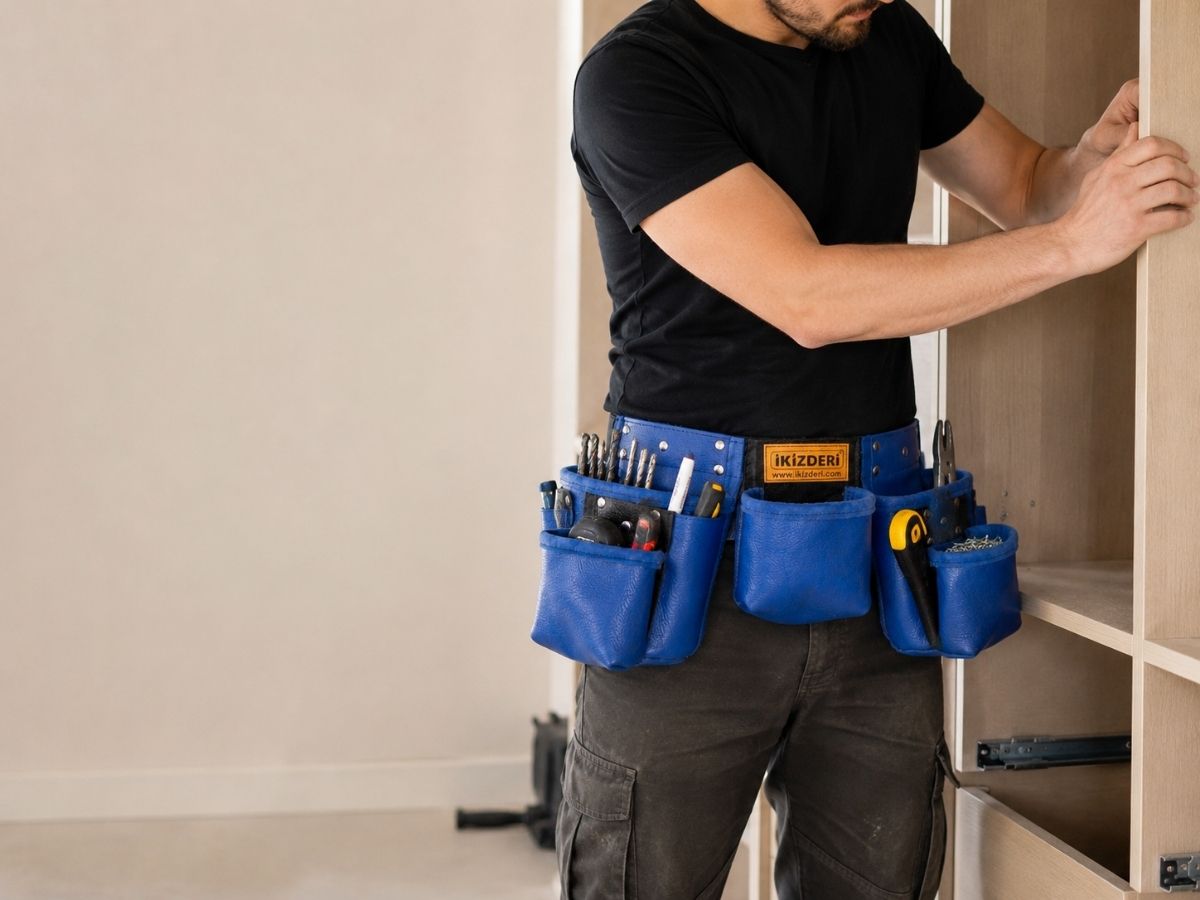
When tanning is complete, the resulting leather is now ready to be turned into a work apron. The first step is to select the sturdiest and most suitable areas of the leather and cut them according to the pattern; this selection is important because different areas of each leather have different sturdiness. The cut pieces are brought together according to the apron’s design and joined with strong stitching. The most strained points, such as strap connections, are reinforced with rivets. Pockets, compartments and straps are added carefully. A good master apron emerges from these stages being done by hand and with care. At İkizderi, we turn well-tanned thick genuine leather into master aprons with these meticulous processes in our workshop in Gerede, Bolu.
In this final stage, the importance of handcraft becomes clear once again. Details like stitch density, cutting precision and rivet strength, which could be overlooked in machine production, are checked one by one in handmade production. The craftsman’s experience determines which leather is suitable for which product, where it will be cut and how it will be joined. So leather that has gone through a long and meticulous tanning process takes its final form again in a craftsman’s hands. This journey from raw hide to work apron is a craft that requires craftsmanship and labor from start to finish.
What Is the Environmental Dimension of Tanning?
The environmental dimension of tanning varies according to the method used; vegetable tanning is more environmentally friendly because it uses natural substances. Modern facilities try to reduce the environmental impact of chrome tanning with waste management and treatment.
Like every production process, tanning also has an environmental dimension. Vegetable tanning is generally considered more environmentally friendly because it uses natural plant tannins. In chrome tanning, proper management of wastewater and chemicals is important; modern facilities minimize this impact with treatment systems. On the other hand, the greatest environmental advantage of leather is its long life: when a leather product is used for decades, it produces far less waste than cheap products that are frequently replaced. Also, leather is obtained mostly from raw hides that are a by-product of the food industry; that is, it makes use of a resource that would otherwise be waste. When produced correctly and used for a long time, leather remains a sustainable material.
In recent years, environmentally friendly methods have become increasingly common in the tanning sector. While interest in vegetable tanning is rising again, modern systems that provide water and chemical recovery are also used in chrome tanning. Consumers turning to long-lasting and natural products supports this transformation. In the end, a leather product that can be used for decades and can be handled naturally when its life ends becomes a conscious choice against the “use-and-throw” culture. Choosing a quality leather work apron is, in this sense, a smart decision in terms of both durability and sustainability.
For general background, see the Wikipedia article on Tanning.
Conclusion: The Craftsmanship Behind a Work Apron
The answer to the question of how leather is tanned is actually the story of a raw tissue turning into a durable material with patience, knowledge and craftsmanship. From soaking to liming, from tannage to finishing, every step determines the quality of the sturdy leather apron in your hands. A well-tanned thick leather withstands sharp tools, heavy loads and the years, and moreover grows more beautiful over time. Behind a work apron, there is this deep-rooted and meticulous craft.
We turn well-tanned thick genuine leather into master aprons by hand in our workshop in Gerede, Bolu. If you would like to own a sturdy and long-lasting leather apron, you can message us on WhatsApp right away, and review all models at the İkizderi shop.