
 İkizderi
 Types of drill bits are surprisingly different depending on the material to be drilled, and choosing the wrong bit both ruins the work and blunts the bit in an instant. Trying to drill concrete with a bit made for wood spoils the hole and strains the drill. Choosing the right drill bit means a clean hole, a long-lasting bit and safe work. In this guide we explain the most-used types of drill bits step by step — the types by material, the coating differences, choosing diameter and length, and correct use. By the end, you will know exactly which bit to choose for which job.
Why Is the Drill Bit So Important?
The drill bit is the part that actually makes the hole; no matter how powerful the drill is, it is impossible to make a clean, accurate hole with a wrong or blunt bit. The bit being right for the material, the diameter and the job directly determines the quality of the result.
Every drill bit is designed for a specific material: a wood bit drills wood, a metal bit drills metal, and a masonry bit drills the wall cleanly. The match between the bit and the material determines the cleanness of the hole’s edge and how long the bit stays sharp. Using the wrong bit cracks the hole, blunts the bit and sometimes leads to breakage. The sharpness and coating of the bit also affect both drilling speed and the bit’s life. That is why choosing the right bit is as important as the drill, if not more so.
What Are the Types of Drill Bits by Material?
By material, the most-used drill bits are the wood bit, the metal (HSS) bit, the masonry bit, the glass-tile bit and the multi-purpose bit. Each is designed to drill a specific material in the cleanest and safest way.
| Bit Type | Feature | Use |
|---|---|---|
| Wood bit | Sharp guide point in the center | Wood, chipboard, MDF |
| Metal (HSS) bit | High-speed steel, sharp conical tip | Metal, sheet, plastic |
| Masonry bit | Hard tungsten carbide tip | Concrete, brick, stone |
| Glass/tile bit | Spear point, carbide tip | Glass, ceramic, tile |
| Multi-purpose bit | Balanced carbide tip | Mixed materials, general use |
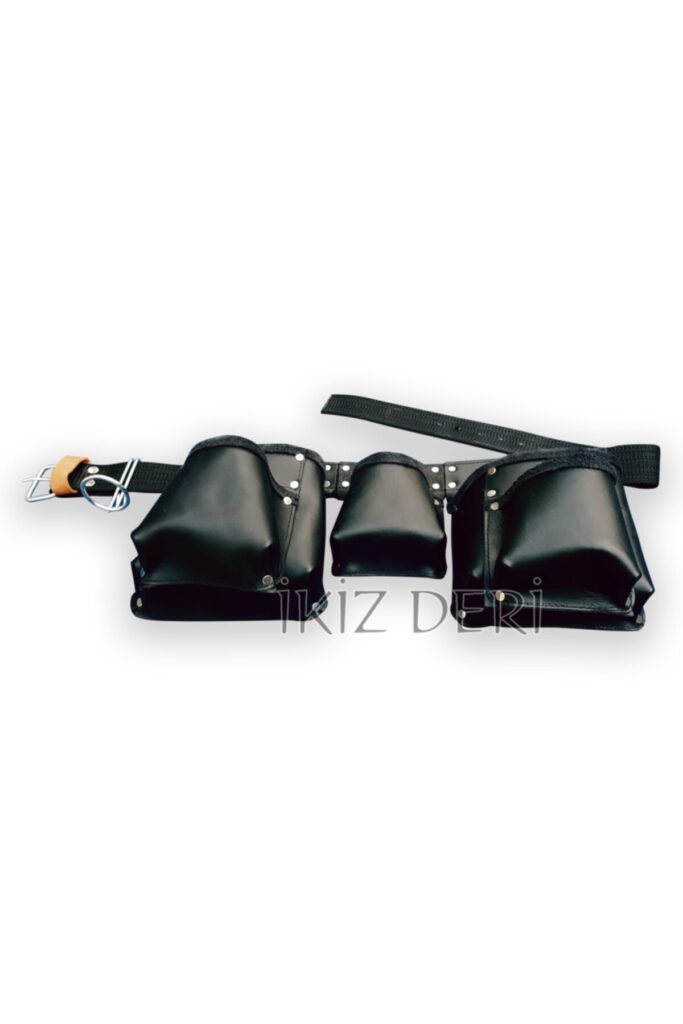
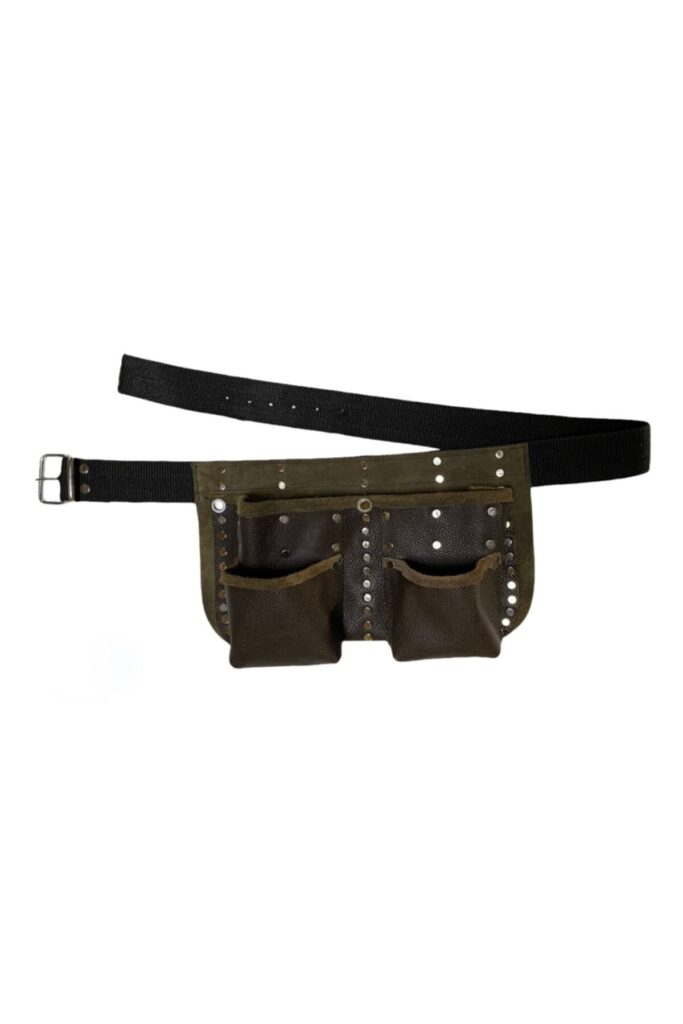
A craftsman may use several of these bit types together during the day. Carrying the drill, bits and hand tools organized together clearly speeds up the workflow. You can find the most practical way to keep your tools organized at the waist among our leather nail apron models.
How Do You Recognize a Wood Bit?
A wood bit is recognized by the small sharp guide point right in its center. This point lets the bit sit exactly where you want without slipping on the wood and starts the hole cleanly.
The sharp guide point prevents the bit from wandering left or right when drilling wood, while the sharp edges on either side open a clean hole. Wood bits work easily in chipboard, MDF and solid wood. For larger, cleaner holes, a “hinge bit” (Forstner) or wide-diameter wood bits are used. Trying to drill metal or concrete with a wood bit immediately blunts the guide point; that is why a wood bit should be used only in wood and its derivatives.
What Is a Metal (HSS) Drill Bit For?
A metal drill bit is usually made from HSS (high-speed steel) and is used to drill materials like sheet metal, iron, aluminum and plastic. It has no guide point; instead it has a conical, sharp tip angle.
Because HSS bits are made from hardened steel, they withstand the friction heat of metal. When drilling metal, not forcing the bit and cooling it when needed (a drop of oil or water) extends the bit’s life. For tough materials like hard stainless steel, cobalt-alloy HSS bits are preferred. A metal bit can also drill wood, but not as cleanly as a wood bit; its real job is metal. Since small-diameter metal bits break easily, low speed and straight pressure are important.
Why Is a Masonry Bit Different?
A masonry bit differs from the others by carrying a hard tungsten carbide tip. This hard tip drills concrete and brick not by cutting but by crushing and grinding; that is why it is usually used with a hammer drill.
Drilling concrete is completely different from drilling wood or metal; here the bit applies a back-and-forth hammering while rotating and advances by crushing the hard material. For this job the drill must be in “hammer” (percussion) mode. For heavier work, SDS-bit rotary hammers are used. Using a masonry bit in wood or metal is inefficient, because the carbide tip is not sharp but crushing and does not open a clean hole. The right bit for setting a wall plug is a masonry bit whose diameter matches the plug.
Which Bit Is Used for Glass and Tile?
For glass, ceramic and tile, special spear-point, carbide-tipped bits are used. These bits are designed to drill the fragile surface slowly without cracking it.
Glass and tile are extremely fragile; trying to drill with a normal bit at high speed cracks the surface. A spear-point carbide bit is used at low speed and light pressure, cooled with water if needed. When drilling tile, sticking a piece of tape at the start keeps the surface from slipping. Working patiently at low speed is the most important rule for preventing cracks in glass and tile.
How Do You Choose Drill Bit Diameter and Length?
The drill bit diameter is chosen according to the width of the hole to be made, and its length according to the depth. When making a hole for a screw or plug, the bit diameter is determined by the diameter of the screw or plug to be used.
If you are drilling a pilot hole for a screw, the bit diameter should be slightly smaller than the screw’s shank (root) diameter, so the screw threads grip the wood. For a plug, the bit diameter is chosen equal to the plug’s outer diameter. For hole depth, the bit length should be enough; too short a bit does not reach, and too long a bit makes control harder. Putting tape or a depth stop on the bit makes it easier to stop at the desired depth. The right diameter and length give both a strong joint and a clean hole.
How Do You Choose a Pilot-Hole Bit for a Screw?
A pilot-hole bit for a screw should be close to the screw’s root diameter, and slightly thinner than it. This thinness lets the screw’s threads grip the wood or material while also preventing splitting.
In hard wood and work near the edge of the material, drilling a pilot hole prevents splitting and keeps the screw straight. If the pilot hole diameter is too large, the screw sits loose and does not hold; if too small, the material splits. Different screw sizes need different bit diameters; we explain in detail which size is right for which screw in our types of screws and sizes guide. The right pilot hole is the most skipped but most important step of driving a screw.
What Is the Difference Between HSS, Cobalt and Titanium Coating?
HSS bits are standard metal bits; cobalt bits are more durable for tough metals like hard stainless steel; titanium-coated bits have increased surface hardness and life. All three are used to drill metal but differ in durability.
- HSS (high-speed steel): General-purpose metal bits; suitable for sheet, iron and aluminum, and economical.
- Cobalt-alloy HSS: More resistant to heat and wear; ideal for hard stainless steel and tough metals.
- Titanium-coated: The surface is hardened with a coating; longer-lasting, but the coating wears off over time.
For daily work, a normal HSS bit is enough. For a craftsman who often drills hard metal, a cobalt bit is more economical in the long run, because it blunts more slowly. Coated bits offer an average balance. Considering the hardness of the material you will drill when choosing a bit saves both time and money.
Why Does a Drill Bit Blunt or Break?
A drill bit blunts or breaks because of using it on the wrong material, applying too much pressure, choosing the wrong speed and forcing it without cooling. Most of these causes can be prevented with the right technique.
Trying to drill metal with a wood bit immediately ruins the guide point. High speed and pressure when drilling metal heat the bit and blunt it by losing its temper. Side force on thin bits or forcing them when stuck in the hole leads to breakage. Working on the right material, at the right speed and with straight, balanced pressure extends the bit’s life many times over. Working with a blunt bit is both slow and dangerous; the bit overheats, the material burns and the hole you make is ruined, forcing you to redo the job.
Can a Drill Bit Be Sharpened?
Metal (HSS) drill bits can be re-sharpened with a suitable grinding stone or a bit-sharpening jig. As long as the correct tip angle is kept, a blunt bit becomes usable again in a few minutes.
The standard tip angle of HSS bits is usually 118 degrees; keeping this angle and the symmetry of the two edges is important during sharpening. A bit sharpened with broken symmetry vibrates in the hole and enlarges it. Masonry (carbide) bits need a special stone and are usually not worth sharpening — they are replaced. The sharp guide point of wood bits can also be corrected carefully with a fine file. Sharpening frequently used bits is both more economical and more practical than constantly buying new ones.
How Do You Choose the Right Speed?
The right speed is chosen according to the hardness of the material and the bit diameter: low speed for hard material and large-diameter bits, high speed for soft material and small-diameter bits. The wrong speed blunts the bit and ruins the hole.
When drilling metal, low-to-medium speed and straight pressure both protect the bit and give a clean hole; high speed burns the metal. In wood you can work easily at higher speed. When drilling concrete, hammer mode and medium speed are needed. Large-diameter bits are always turned at low speed because their edge speed is high. Setting the speed to the material is one of the most practical signs of skill.
When Do You Use a Forstner (Hinge) Bit?
A Forstner (hinge) bit is used to make wide-diameter, flat-bottomed, clean-edged holes in wood. Its best-known use is opening the recesses where furniture hinges sit, which is why it is popularly called the “hinge bit.”
A normal wood bit cannot open a clean, flat-bottomed hole at wide diameters; a Forstner bit creates a recess with a flat bottom and smooth edges. It is ideal for kitchen cabinet hinges, wood plugs and decorative recesses. A Forstner bit should be used at low speed and steady pressure; high speed burns the wood. Using a drill stand or depth stop to control the hole depth gives a neat result, especially in hinge recesses. This bit is indispensable for precise, visible work in carpentry.
How Do You Fit a Drill Bit into the Chuck Correctly?
A drill bit should be fitted into the center of the chuck (the bit holder), straight and seated all the way. A crooked or half-fitted bit vibrates in the hole, enlarges it and can break easily.
When fitting the bit, you open the chuck, push the bit all the way in, then tighten it firmly by hand or with a key. The bit seating centered in the chuck prevents wobble while turning; a wobbling bit both ruins the hole and is dangerous. On keyless chucks, turning firmly by hand is enough; on keyed chucks, tightening from three points in turn ensures balance. Making sure the drill has completely stopped before removing the bit when the job is done is important for safety. A correctly fitted bit both opens a clean hole and lasts long.
What Is the Difference Between a Hammer Drill and a Regular Drill?
A hammer drill applies a back-and-forth hammering in addition to the rotary motion; this lets it drill hard materials like concrete, brick and stone. A regular drill only rotates and is suitable for wood and metal.
When drilling concrete, the bit cannot advance by rotating alone; hammering is needed to crush and grind the material. The hammer drill’s “percussion” mode provides this and, with a carbide bit, drills concrete. When drilling wood and metal, hammer mode is not needed; in fact hammering cracks wood and ruins a metal bit. That is why on multi-purpose drills you should switch hammer mode on and off according to the material. For heavier concrete and demolition work, SDS-bit rotary hammers are used. Choosing the right mode is essential for protecting both the bit and the material.
What Are the Most Common Mistakes When Choosing a Drill Bit?
The most common mistakes are using a bit not suited to the material, choosing the wrong diameter, working with a blunt bit and applying the wrong speed. These mistakes both ruin the hole and wear out the bit and the drill.
- Wrong material bit: Drilling concrete with a wood bit or metal with a masonry bit ruins the hole and the bit.
- Wrong diameter: Too large a pilot hole will not hold the screw; too small a hole splits the material.
- Blunt bit: A blunt bit burns the material rather than drilling; it overheats and ruins the hole.
- Wrong speed: High speed on a large bit or too much pressure on thin metal ruins the bit.
- Forcing without cooling: Working hard metal without cooling takes the temper out of the bit.
Most of these mistakes are prevented by choosing the right bit for the job and working at the right speed and pressure. An experienced craftsman decides which bit to use based on the material before starting to drill.
Which Drill Bit for Which Job? A Quick Guide
To choose the right bit, it is enough to think about the material you will drill. The short guide below shows the right drill bit for the most common jobs.
- Wood, chipboard, MDF: A guide-point wood bit.
- Metal, sheet, aluminum: An HSS (cobalt if needed) metal bit.
- Concrete, brick, stone: A carbide-tipped masonry bit (hammer mode).
- Glass, tile, ceramic: A spear-point carbide bit (low speed).
- Pilot hole for a screw: A wood/metal bit thinner than the screw’s root.
This guide helps you find the right bit for most jobs. When you are unsure, the type and hardness of the material you will drill are the two most decisive factors.
You can find the right plug to fit in the hole you drilled in our types of wall plugs guide.
Conclusion: Why Does the Right Drill Bit Matter?
Choosing the right drill bit means a clean hole, a long-lasting bit and safe work. The type suited to the material, the right diameter and the right speed together determine a good result. The wrong bit makes even the most powerful drill useless.
If you want to carry your drill, bits and hand tools organized and within reach all day, you can review the leather nail apron models and all the İkizderi leather work equipment we make entirely from genuine leather in our workshop in Gerede, Bolu.