
 İkizderi
 A craftsman’s efficiency depends not only on how skilled they are, but on how they carry their tools. Most craftsmen, without even realizing it, make the same tool-carrying mistakes every day; these mistakes cause loss of time and energy and wear out the waist, back and tools. The good news is that all these mistakes can be easily fixed with the right leather apron and a few simple habits. In this article we explain, one by one, the 7 most common tool-carrying mistakes craftsmen make and the solution to each.
İkizderi · Genuine Leather
Carry Your Tools the Right Way
Pocketed, balanced and durable genuine leather master aprons. Single piece or custom/bulk for your team.
Why Is Tool Carrying So Important?
Tool carrying is very important because it directly affects a craftsman’s work efficiency, safety and health. Correctly carried tools come to your hand in seconds; wrongly carried tools are constantly searched for, get lost and tire your waist.
A craftsman’s day passes reaching for and putting down tools countless times. When these movements are done with the right order, the workflow continues uninterrupted; with the wrong order, you have to stop and search, bend and straighten for every tool. Over time these small losses add up, slowing the work and tiring the craftsman. Also, carrying heavy and sharp tools wrongly leads to both work accidents and, in the long run, back and waist problems. That is why tool carrying is one of the invisible but most important parts of craftsmanship. Fixing the 7 mistakes below improves your entire working order.
Mistake 1: Stuffing Tools Randomly Into a Pocket or Bag
The most common mistake is stuffing all tools disorderly into a pocket or bag. This disorder leads to long searching, time loss and frustration for every tool.
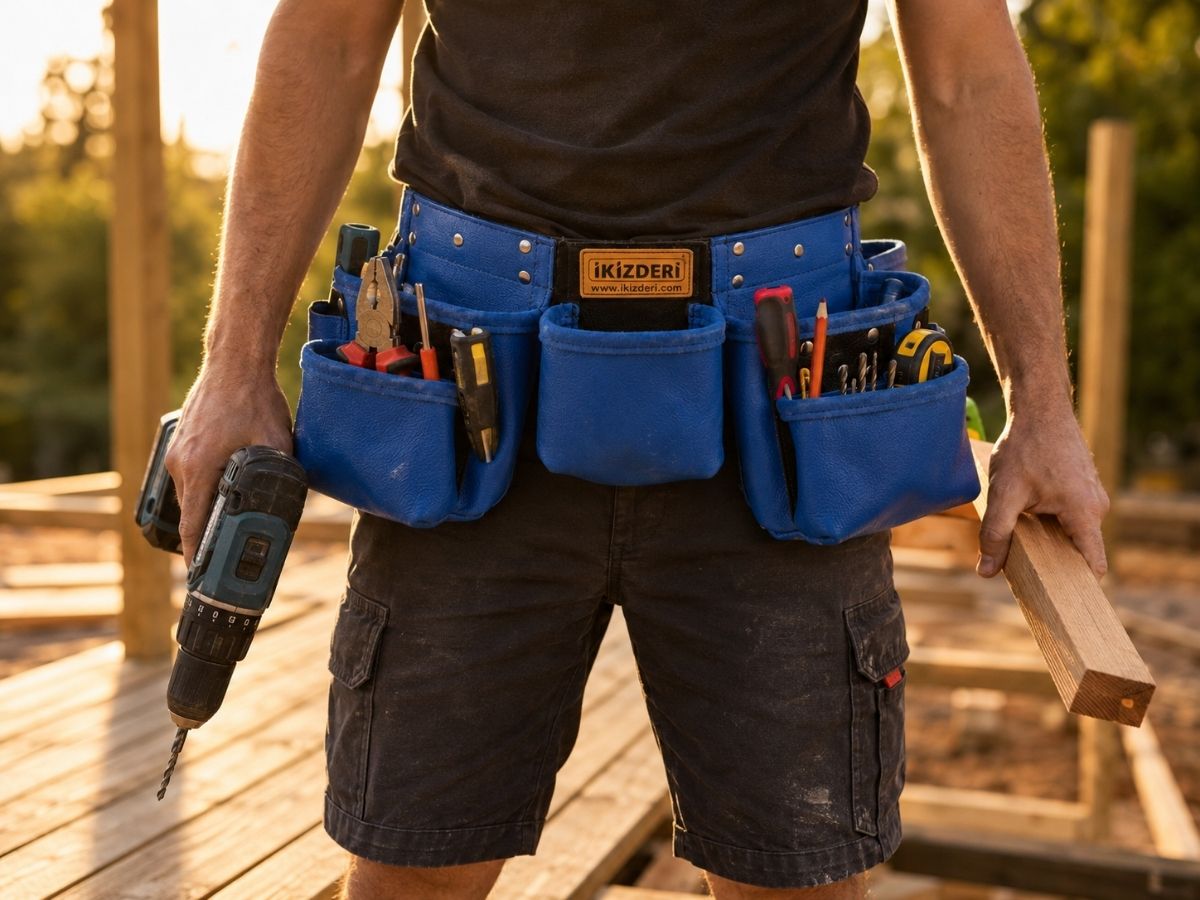
When tools are gathered randomly somewhere, you have to constantly rummage to find the tool you need. This both wastes time and takes your attention away from the work. The solution is a pocketed order where each tool has a specific place. A pocketed leather apron or bandolier belt keeps the tools you use most in separate slots; so you find the right tool without looking, by muscle memory. An organized craftsman does not search for their tool; they reach out and take it. Even this single change gives back the dozens of minutes you lose during the day.
Another invisible cost of disorder is tools damaging each other. A sharp point thrown into the same pocket can scratch a precise measuring tool or ruin a screw thread. When each tool has a separate slot, the tools do not rub against each other and last longer. When setting up a pocketed order, it makes most sense to group tools by frequency of use and type; measuring tools together, cutting tools separate, materials in a separate compartment. This small logic of order turns, after a while, into a habit you apply without thinking.
Mistake 2: Using a Cheap or Fabric Belt/Apron
The second common mistake is carrying heavy tools in a cheap or fabric belt/apron. Fabric belts sag under weight, their stitches open and they wear out quickly; this ruins both safety and order.
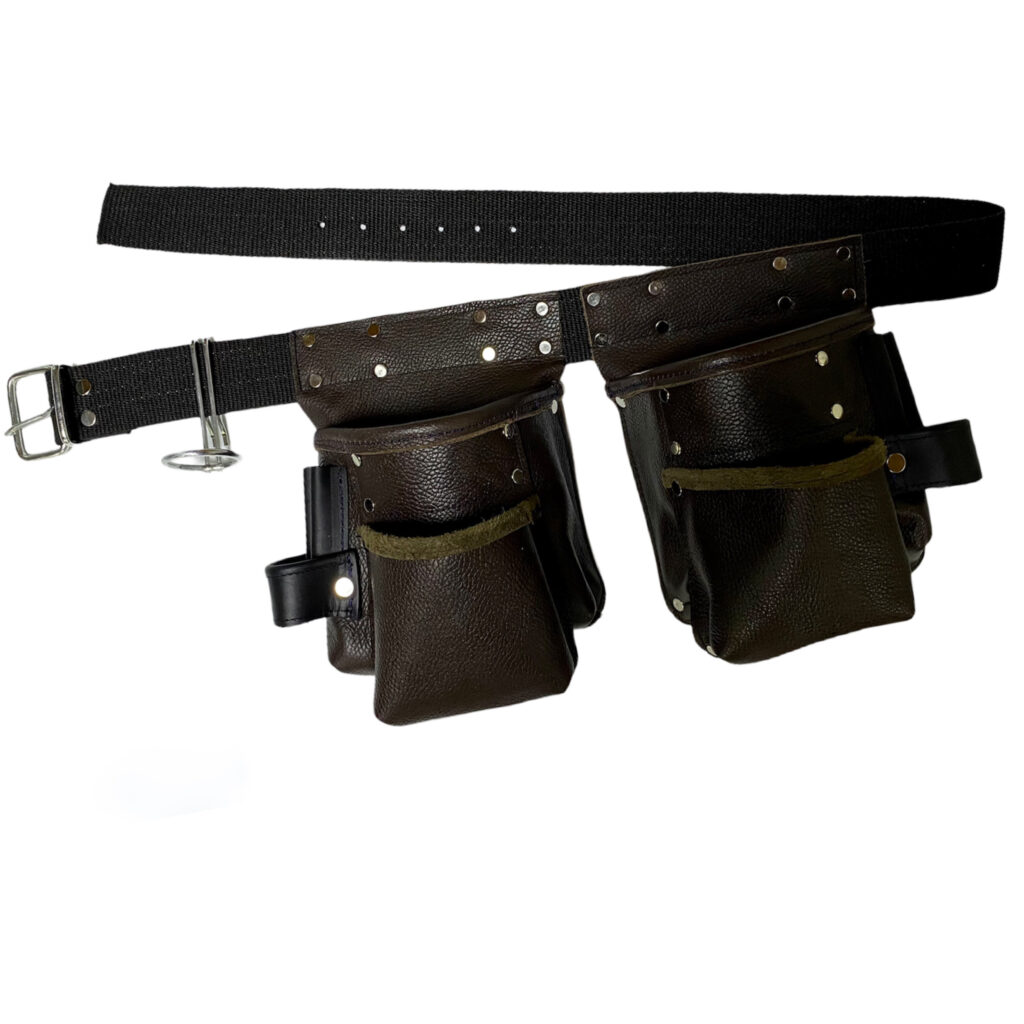
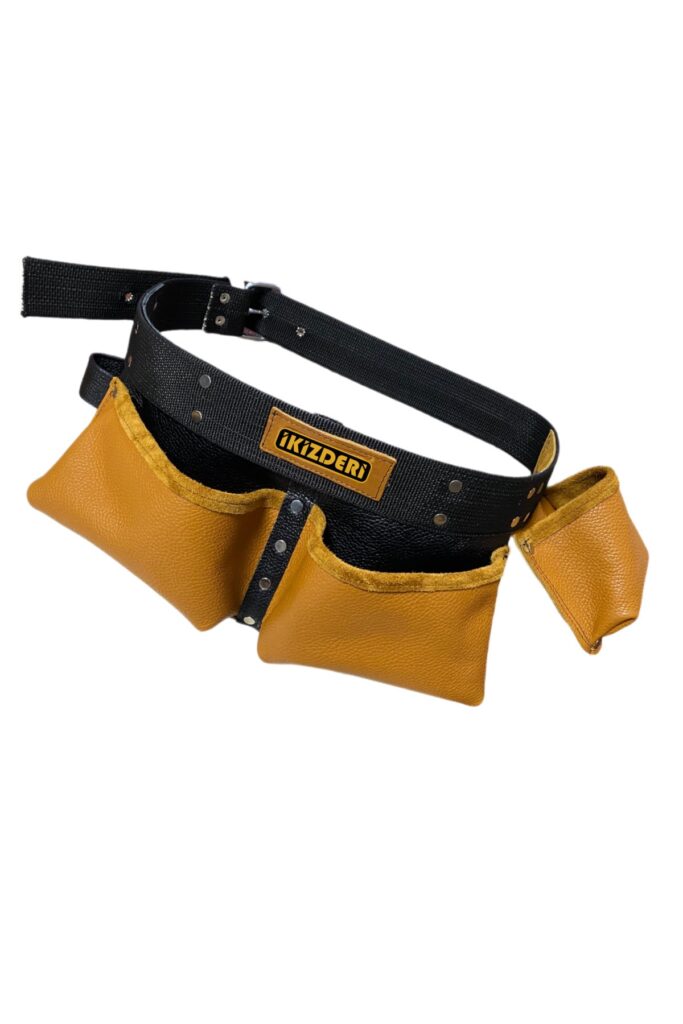
Carrying tools requires sturdiness, because tools are heavy and have sharp edges. A fabric or thin synthetic belt cannot carry this load for long; it sags, the pocket mouths open and tools start to fall. Genuine leather, on the other hand, carries the load of heavy tools for years, does not tear easily on sharp points and molds to your body with use. Although a little more expensive at first, a quality leather apron is far more economical because it is used for years without replacement. If you trust your tools, you should also trust the apron that carries them.
The simplest way to understand the quality of a belt or apron is to look at its stitching and connection points. Frequent, regular stitches, reinforced rivets and thick leather are signs that the apron will withstand heavy work conditions. In a cheap product, the stitches are sparse, the leather thin and the rivets weak; within a few months the pocket mouths open. A good leather apron is an investment bought once and used for years; constantly replaced cheap belts are, in the long run, both more expensive and more frustrating.
Mistake 3: Carrying Heavy Tools Unbalanced
The third mistake is carrying heavy tools unbalanced, piled on one side of the waist or body. This imbalance leads to back and waist pain, posture problems and early fatigue in the long run.
Weight bearing on one side of the body causes unbalanced strain on the muscles and spine. A craftsman working this way all day eventually experiences back and waist problems. The solution is an apron order that distributes heavy tools evenly across the body. Most of the weight bearing evenly on the waist and both sides protects the spine and reduces fatigue. A well-designed leather apron prevents this problem by transferring the load evenly to the shoulder and waist. Carrying your tools in balance protects not only today but also your health years later.
The importance of balanced carrying shows itself especially in craftsmen who work long shifts. For someone working eight to ten hours a day, constant weight on one side of the waist can turn into permanent posture problems over time. An apron that distributes the load to both sides and the waist minimizes this risk. Carrying heavy tools close to your body is also important; weight carried away from the body strains the waist like a lever. So a good apron should be evaluated not only by the number of pockets but by how it distributes the weight.
Workshop · Bulk / Logo Production
Balanced, Pocketed Aprons for Your Team
Logo genuine leather aprons that carry tools neatly and in balance. Get a quote for your team now.
Mistake 4: Carrying Sharp Tools Unprotected
The fourth mistake is carrying utility knives, chisels or pointed tools unprotected and open. This both leads to serious accidents and lets sharp points tear the apron and pockets from the inside.
A sharp or pointed tool, when thrown open into a pocket, can both injure your hand and pierce the apron’s pocket from the inside. Locking the utility knife’s blade, capping the chisel’s point and carrying pointed tools in a separate, sturdy slot is a basic safety rule. A quality leather apron has separate pockets with reinforced mouths for sharp tools; these pockets protect both you and the tool. Carrying sharp tools unprotected is the real cause of most work accidents and worn-out aprons. A little care protects both your fingers and your apron.
Another important point in carrying sharp tools is that the point should always face down or in a safe direction. A sharp point facing up while you bend and straighten threatens both you and those around you. Experienced craftsmen always carry their chisels and knives in a protective sheath or a capped slot. Also, changing a dull blade in time is part of safety; because a dull blade slips when forced, and that is exactly when it causes an accident. Carrying a sharp tool correctly is an aspect of craftsmanship that requires both safety and respect.
Mistake 5: Putting the Most-Used Tool in the Wrong Place
The fifth mistake is putting the tool you use most in a hard-to-reach place. A tool you use dozens of times a day should be in the easiest-to-reach pocket; otherwise you lose time every single time.
Every craftsman has a few tools they reach for most throughout the day; like the tape, pencil or screwdriver. Putting these tools in a hard-to-reach place means hundreds of unnecessary movements during the day. The solution is simple: place the tools you use most in the front and side pockets your hand reaches most comfortably, and the rarely-used ones in the back or bottom slots. A pocketed leather apron lets you set up this order. Placing your tools by frequency of use increases your work speed noticeably without you realizing it.
When setting up this order, it is very important that the tools always sit in the same pocket. When you always put the same tool in the same place, after a while you reach for the right pocket without looking; this is called muscle memory and is the greatest speed secret of professional craftsmen. Putting a tool in this pocket one day and that pocket the next breaks this memory and forces you to search each time. So set up a logical order once and stay loyal to it; the power of order is hidden in its repetition and consistency.
Mistake 6: Overloading the Apron or Belt
The sixth mistake is filling every pocket of the apron with tools beyond its capacity. Overloading both wears out the apron and, with its weight, tires the craftsman and restricts their movement.
A craftsman who wants to carry every tool on them overfills the apron; but excess load both strains the stitching and tires you with unnecessary weight you constantly carry. The solution is to carry the tools needed for that job and leave the rest in the tool bag. The most-used ones should be on the belt, the heavy and rarely-used ones in the bag. This distinction both extends the apron’s life and protects your waist. A balanced and reasonably loaded apron is both more comfortable and longer-lasting. Carrying few but right tools is always more efficient than carrying many but scattered tools.
A sign of overloading is the shoulder and waist fatigue you feel at the end of the day. If you feel a clear relief when you take off your apron, you are probably carrying more weight than needed. Preparing the apron each morning according to the job you will do that day, leaving unnecessary tools behind, is a good habit. A carpenter’s fine-work day and demolition day do not require the same tools. “Loading” the apron according to the job both lightens you and lets you reach the tools you need most faster.
Mistake 7: Leaving Tools on the Floor or Bench Instead of on the Belt
The seventh mistake is leaving tools on the floor, bench or ladder instead of carrying them on the belt. This habit leads to constant tool searching and to tools getting lost, falling and causing accidents.
Setting tools aside while working seems practical at first; but a little later you start searching for that tool. Especially when working on a ladder or at height, setting a tool down and climbing back is both a time loss and dangerous; a falling tool can injure the person below. The solution is to always keep the tools you use most on your belt. A pocketed leather apron, because it keeps tools on you, means you neither search nor climb down to fetch. Carrying tools on the belt both speeds up the work and prevents accidents from falling and loss; this is the most basic habit of a professional craftsman.
Most of the tools lost on construction sites and in workshops are actually tools set aside and forgotten. In shared work areas, a tool left on a bench soon passes into someone else’s hands or is lost completely. Carrying tools on the belt eliminates this loss too; because your tool is always on you. Also, when working at height and on scaffolding, a tool carried on the belt keeps your hands free, protecting both your safety and your balance. A craftsman who makes carrying tools on them a habit works both more safely and more productively.
Wrong and Right Tool Carrying: Where Is the Difference?
The difference between wrong and right habits in tool carrying determines both work speed and the fatigue at the end of the day. The table below compares the two approaches.
| Topic | Wrong Carrying | Right Carrying |
|---|---|---|
| Order | Random, mixed up | Each tool in a separate pocket |
| Balance | Piled on one side | Distributed evenly on the waist |
| Sharp tools | Open, unprotected | Locked, in a separate slot |
| Access | Slow, searched for | Instant, within reach |
| Result | Fatigue, accident risk | Speed, safety, order |
As the table shows, the secret of right tool carrying is hidden not in expensive tools, but in a sturdy and orderly carrying system. And the foundation of this system is always a pocketed, durable leather apron. We explained the tools a craftsman should carry in detail in our 10 things every craftsman should have on their belt article.
What Does Right Tool Carrying Give the Craftsman?
Right tool carrying gives the craftsman time, safety, health and order. A craftsman who carries their tools right works faster, tires less, has fewer accidents and does their job more professionally.
A craftsman who fixes the 7 mistakes above regains the dozens of minutes lost during the day, because they no longer search for tools. Thanks to balanced carrying, their waist and back do not tire, protecting their health in the long run. Because they carry sharp tools safely, the risk of accidents drops. And an orderly system where every tool has a specific place gives their work a professional look. At the foundation of all this is a correctly chosen, pocketed and balanced leather apron. Doing tool carrying right is actually one of the invisible but most difference-making aspects of craftsmanship.
These gains also reflect over time on the craftsman’s work and their relationship with the customer. A craftsman who works orderly and fast finishes the job in less time and more cleanly; this increases both customer satisfaction and the craftsman’s reputation. A craftsman who carries their tools neatly on them also looks professional and reliable in the customer’s eyes. In short, right tool carrying is not just a matter of personal comfort but also a sign of the craftsman’s respect for their work and their professionalism. A small change of habit raises the entire quality of the work in the long run.
Conclusion: Right Carrying Is the Invisible Half of Craftsmanship
The 7 most common tool-carrying mistakes craftsmen make are: stuffing tools randomly, using a cheap belt, carrying unbalanced, carrying sharp tools unprotected, putting the most-used one in the wrong place, overloading, and leaving tools around instead of on the belt. All of these mistakes can be fixed with a pocketed, durable leather apron and a few simple habits.
We produce pocketed, balanced and durable genuine leather aprons for craftsmen and teams. If you would like to choose the right apron, you can message us on WhatsApp right away, and review all models at the İkizderi shop.