
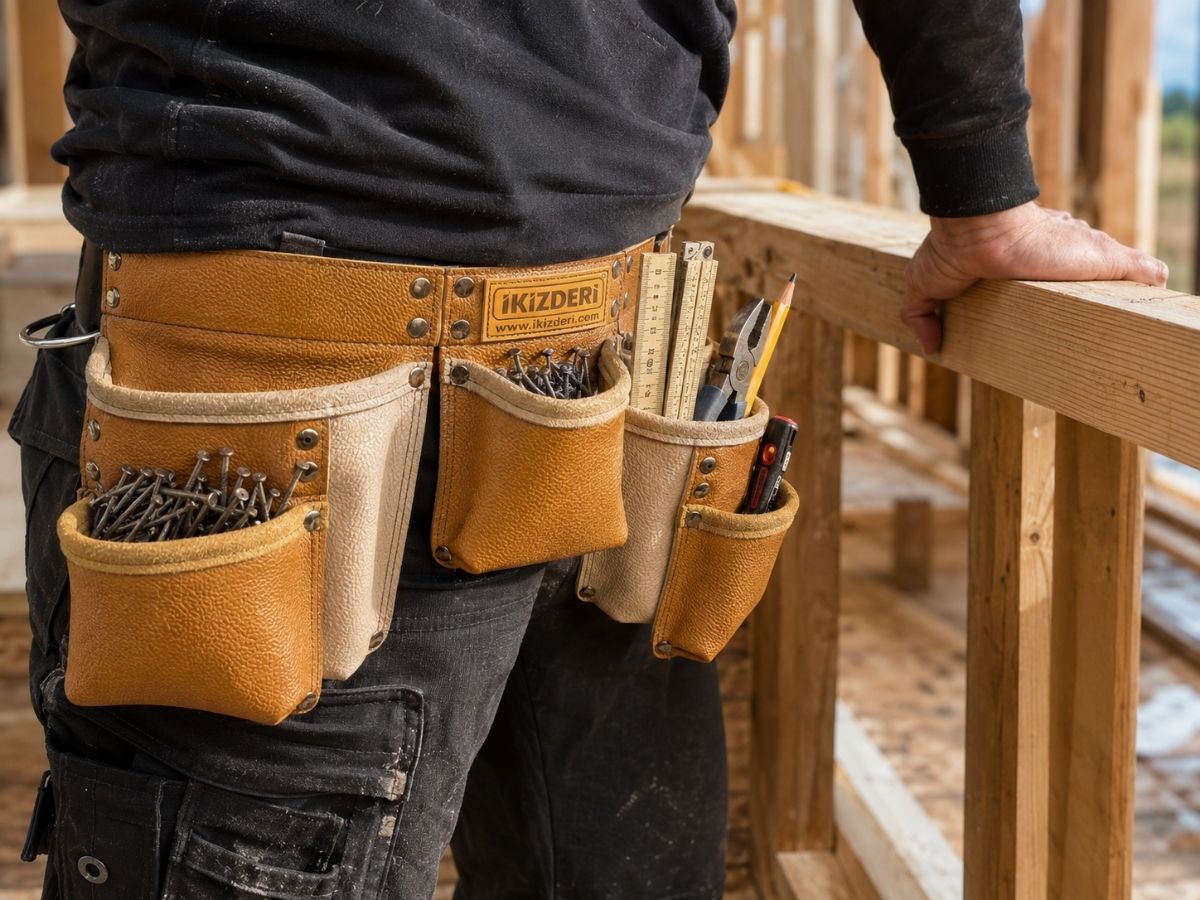
 İkizderi
 A bandolier belt — known in Turkish as “palaska” — is the sturdy leather belt system we often see today on leather work aprons, wrapping the body diagonally or at the waist. But the origin of this belt actually goes back centuries, to a military past. Passing over time from the battlefield to the workshop, the bandolier belt has today become a practical solution that lets craftsmen carry their tools comfortably and in balance. In this article we explain what a bandolier belt is, where the concept comes from, its historical origin and how it became a modern leather apron component.
İkizderi · Genuine Leather
Bandolier-Belt Genuine Leather Aprons
Sturdy genuine leather bandolier-belt aprons that carry tools in balance. Single piece or production for your team.
What Is a Bandolier Belt (Palaska)?
A bandolier belt is a sturdy, usually leather belt system that wraps the body or waist and serves to carry materials and equipment on it. Its origin is in military use; the soldier carried their ammunition and gear organized and within reach thanks to this belt.
In the classic sense, a bandolier belt is a wide leather belt that wraps the chest diagonally or is tied at the waist. Soldiers used this belt to carry cartridge pouches, sword slings or various equipment; its sturdy structure allowed the load of heavy gear to be carried comfortably. The most important feature of the bandolier belt is that it distributes weight evenly across the body and keeps the carried items organized and quickly accessible. This feature is exactly what took the bandolier belt from being merely military gear and turned it over time into a practical carrying system used in different fields. Today, when we say bandolier belt, both its historical origin and the balanced carrying system in modern work aprons come to mind.
What distinguishes a bandolier belt from other simple belts is that it is not just a strap; it is a system designed to carry things on it. While a classic belt only wraps the waist, a bandolier belt is also equipped with compartments, hooks or loops to carry materials and equipment in a certain order. This “carrying system” quality is what makes the bandolier belt so functional in both military use and modern work aprons. A bandolier belt keeps the load it carries both secure and accessible.
Where Does the Concept Come From?
The concept of the bandolier belt entered daily use through military terminology and was long used as part of army equipment. Throughout history, the term has been used to describe the soldier’s cartridge and equipment belt.
In Turkish, “palaska” is a term frequently used especially in Ottoman and early Republican military culture. As an indispensable part of a soldier’s gear, this leather belt became one of the symbols of military life because it provided both functional and organized carrying. Over time the word was not limited to its military meaning; it began to be used for any sturdy leather belt system that wraps the body and carries things on it. Today, especially on leather work aprons, the term “bandolier belt” describes a balanced and sturdy carrying system that carries the trace of this deep-rooted past. The military origin of the concept also explains why the bandolier belt has such a sturdy and functional structure.
What Is the Historical Origin of the Bandolier Belt?
The historical origin of the bandolier belt lies in the leather belt systems soldiers developed to carry their heavy gear. For centuries, armies used sturdy leather bandolier belts to carry ammunition and equipment in an organized way.
Throughout human history, soldiers have always needed practical solutions to carry their weapons, ammunition and gear. This need led to the birth of leather belt systems that wrap the body and distribute weight evenly. Leather was the most suitable material for this job because it is both durable and conforms to the body. Cartridge pouches, sword slings and equipment hooks were attached to these belts, so the soldier both kept freedom of movement and reached the gear they needed instantly. This system developed over the centuries and was used in similar forms in different armies. The bandolier belt’s sturdiness and functionality today are a heritage of this deep-rooted military past; a solution that worked on the battlefield passed over time into civilian life.
Throughout history, many pieces of military gear have passed into civilian life thanks to their functionality; the bandolier belt is a beautiful example of this. A design tested in harsh conditions, under heavy load and in situations requiring fast access naturally adapts to the practical needs of daily life. The balanced carrying logic the soldier trusted at the front eventually served hunters, shepherds and finally craftsmen. So the bandolier belt went from being merely war gear to a universal carrying solution with proven functionality.
Workshop · Handmade Production
A Deep-Rooted Tradition, Modernized
Bandolier-belt, multi-compartment genuine leather nail and tool aprons. Handmade in Gerede, Bolu.
How Did the Bandolier Belt Become an Apron Component?
With its success in carrying military gear, the bandolier belt eventually caught craftsmen’s attention and was adapted to leather work aprons to carry tools in balance. So the battlefield’s practical solution became an indispensable part of the workshop.
The system that let the soldier carry ammunition in balance was actually exactly what the craftsman needed too: carrying heavy tools organized, balanced and quickly accessible. This similarity led the bandolier belt to be naturally adapted to work aprons. Especially for carpenters and builders who work a lot with nails, screws and hand tools, bandolier-belt aprons offered great convenience. The belt’s sturdy structure distributes the load of heavy tools evenly to the waist; its multi-compartment design gives every tool and material a separate place. So the bandolier belt brought the “balanced and organized carrying” logic of its historical origin into the modern workshop. Today, bandolier-belt nail aprons are the most practical and current form of this deep-rooted idea.
The most beautiful part of this transformation is that the basic idea has never changed. Whether it carries a soldier’s ammunition or a carpenter’s nails, the aim is the same: to carry weight in balance and reach what is needed instantly. Only what is carried has changed; the system has stayed the same. In modern bandolier-belt aprons, the compartments are designed for the nails, screws, anchors and hand tools today’s craftsman uses; but the belt’s balanced and sturdy logic is the same as it was centuries ago. This continuity is also beautiful proof that a good design defies time.
What Are the Advantages of a Bandolier-Belt Apron?
The biggest advantages of a bandolier-belt apron are that it distributes tools evenly to the waist, carries many materials in an organized way and provides fast access. This both increases work speed and lightens the load on the waist and back.
- Balanced carrying: Distributes weight evenly to the waist and body, does not tire the back.
- Order: Thanks to the multi-compartment structure, every tool and material sits in a separate slot.
- Fast access: The most-used tools are within reach.
- Durability: Sturdy genuine leather carries the load of heavy tools for years.
- Freedom of movement: The waist-type structure allows comfortable movement while bending.
These advantages make the bandolier-belt apron ideal especially for craftsmen working with many small materials. Carrying nails, screws, anchors and hand tools in separate compartments eliminates constant tool searching. The balanced carrying logic from the bandolier belt’s military origin lets the craftsman work more comfortably and productively all day.
Another important advantage of the bandolier-belt apron is that it takes the weight off the neck and transfers it to the waist. In a neck-strap apron, the load of heavy tools bears directly on the neck and shoulder; this leads to neck and back pain in long shifts. The bandolier belt eliminates this problem by distributing the load to the waist, the strongest area of the body. So the craftsman tires less at the end of the day and protects their health in the long run. This ergonomic structure makes a big difference especially for professional craftsmen who work long hours every day.
Why Should a Bandolier-Belt Apron Be Made of Leather?
A bandolier-belt apron should be made of leather because leather is the only material sturdy enough to carry the load of heavy tools for years while conforming to the body. Fabric or synthetic belts sag and wear out quickly under this load.
There is a reason the bandolier belt was historically made of leather: leather is sturdy enough to carry heavy gear and, at the same time, flexible enough to fit the body. These features also apply to a work apron’s bandolier belt. The belt of an apron full of nails and tools is constantly under pulling force; a fabric belt sags and its stitches open under this load. Genuine leather, on the other hand, carries this load for years, does not tear easily on sharp tools and molds to the body with use. Leather also gains patina and grows more beautiful over time. So a real bandolier-belt apron is always made of sturdy genuine leather. You can find more about the durability of leather in our how long a leather work apron lasts article.
Another important advantage of leather is its resistance to the friction and puncturing of sharp tools. In an apron full of nails, chisels and pointed tools, the belt and compartments constantly contact sharp edges. While a fabric material tears quickly in these conditions, thick genuine leather withstands this friction for years. Leather also, as in historical bandolier belts, gains a form and character unique to its user over time. So both historically and practically, the bandolier belt and leather are two inseparable concepts.
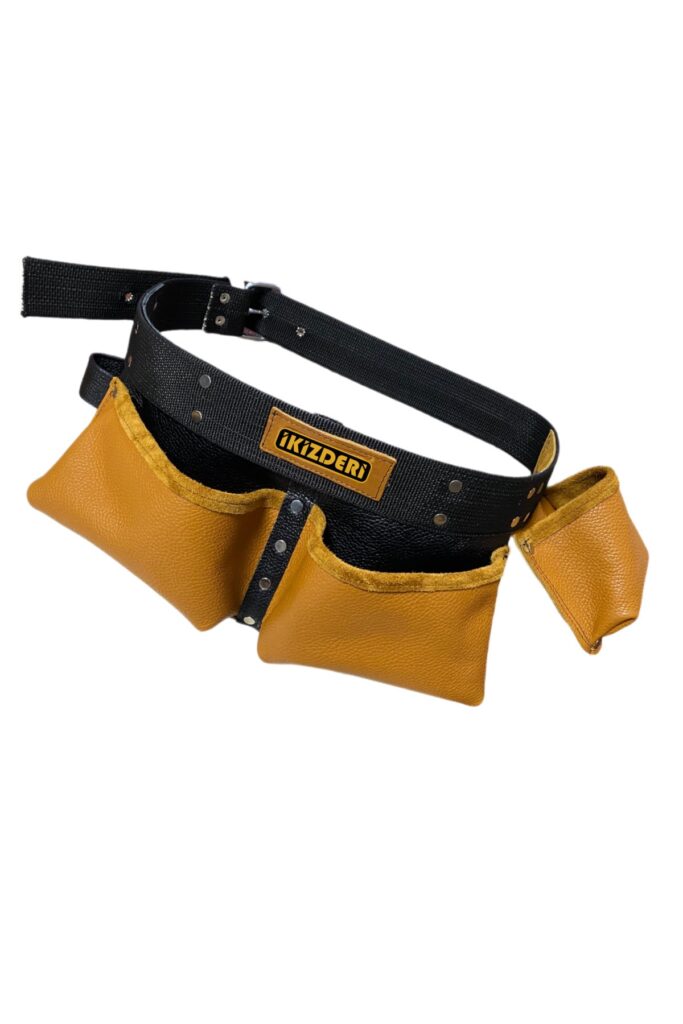
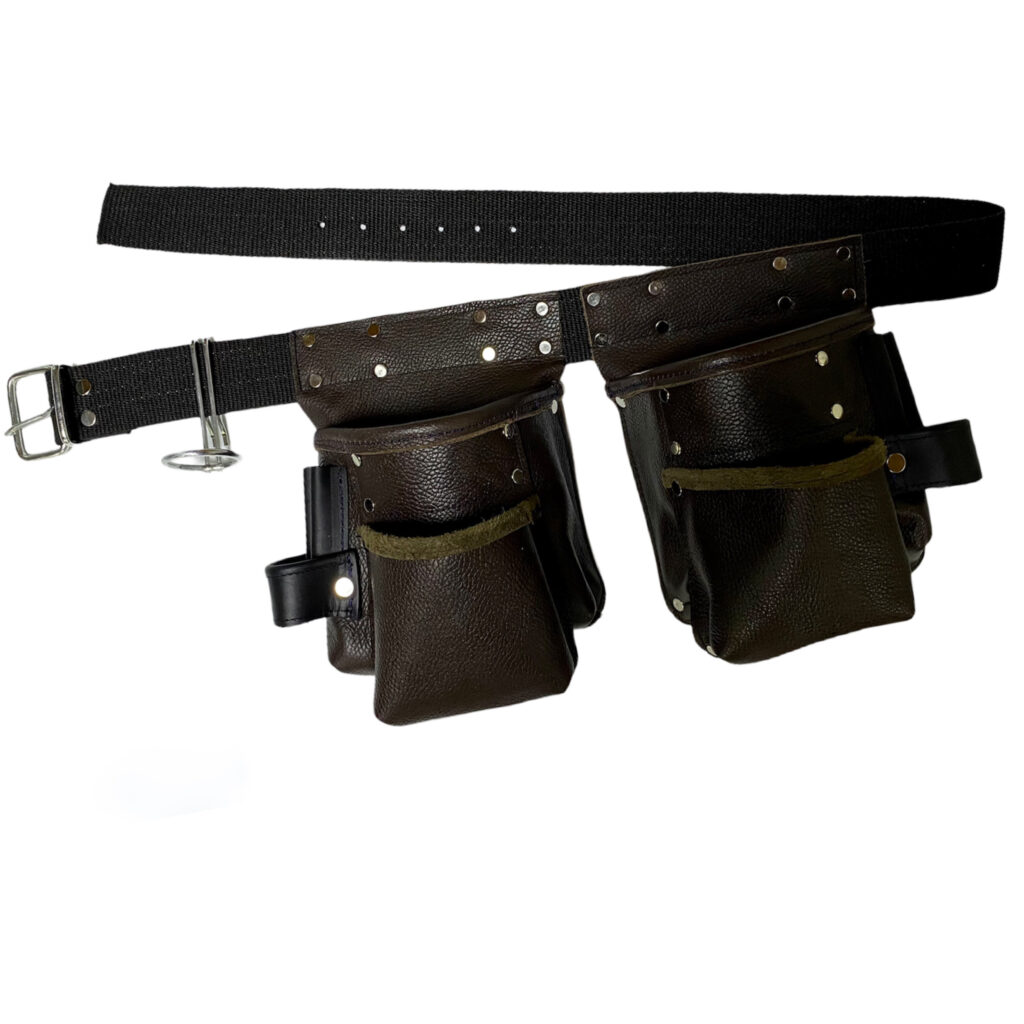
What Is the Difference Between a Bandolier Belt and a Neck-Strap Apron?
A bandolier belt distributes weight evenly to the waist and body, while a neck-strap apron bears most of the weight on the neck and shoulder. So for craftsmen carrying heavy tools, the bandolier belt is more comfortable. The table below compares the two systems.
| Feature | Neck-Strap Apron | Bandolier-Belt Apron |
|---|---|---|
| Weight distribution | Bears on neck and shoulder | Distributed evenly to waist and body |
| Heavy tool carrying | Tires the neck | Carries comfortably |
| Movement | Limited | Free, waist-type |
| Use | Light work, workshop | Nails, tools, heavy work |
As the table shows, for a craftsman carrying many heavy tools, the bandolier belt is more comfortable and healthier than a neck-strap apron. Neck-strap aprons are suitable for light work and workshop use, while bandolier-belt aprons are ideal for craftsmen working intensively with nails and tools. The two systems serve different needs; but when it comes to heavy carrying, the bandolier belt’s balanced structure stands out.
Who Is a Bandolier-Belt Apron Suitable For?
A bandolier-belt apron is suitable for carpenters, builders, furniture makers, plumbers and all craftsmen working intensively with nails and screws. Everyone carrying many small materials and hand tools benefits from the bandolier belt’s balanced and organized structure.
Bandolier-belt aprons are designed especially for trades that need to carry nails, screws, anchors and hand tools together, in an organized way. A carpenter or builder works with dozens of different materials and tools all day; carrying them in the bandolier belt’s separate compartments both speeds up the work and keeps it organized. Furniture makers, upholsterers and assembly craftsmen also benefit greatly from this system. The weight distributing evenly to the waist reduces fatigue in long working hours. In short, for every craftsman who wants to carry their tools neatly on them, a bandolier-belt apron is a practical and comfortable solution. You can review our bandolier-belt apron models with different compartment counts.
The compartment count can be chosen according to the craftsman’s job and the variety of materials they carry. While a simple two- or three-compartment bandolier belt is enough for someone carrying few tools, a more comprehensive four- or five-compartment model is more suitable for a craftsman working with many different nails, screws and hand tools. Choosing the right compartment layout maximizes the efficiency the bandolier belt provides. A craftsman identifying the tools and materials they use most and choosing a model accordingly noticeably increases both order and work speed.
How Are Modern Bandolier-Belt Aprons Made?
Modern bandolier-belt aprons are made from thick genuine leather, with strong stitching and rivets, in a multi-compartment structure. In good production, the belt is sturdy enough to carry the heavy load; the compartments are designed to keep different materials organized.
A quality bandolier-belt apron requires care from material selection to stitching. First, thick and durable genuine leather is chosen, because the load the belt will carry is heavy. The belt and compartments are joined with strong stitching and rivets to withstand the pulling force of heavy tools. The compartment count and layout are determined by the target trade; in a nail apron the compartments are more numerous and deep, while in a tool apron they are sized for hand tools. At İkizderi, we produce bandolier-belt aprons from thick genuine leather by hand in our workshop in Gerede, Bolu. So the practical logic of a deep-rooted military tradition is offered to the modern craftsman with handcraft.
The biggest advantage of handmade production is that every apron is made with care and durability in mind. Details like stitch density, rivet strength and leather quality, which could be overlooked in machine production, are checked meticulously in handmade production. Handmade production also offers custom compartment layout, length and design according to need; production can be done for a craftsman’s or a team’s specific needs. Logo bandolier-belt aprons for corporate companies can also be produced this way. So a traditional design is preserved while offering a personal solution suited to every craftsman.
Conclusion: From a Military Heritage to a Modern Solution
The bandolier belt has transformed from a deep-rooted leather belt system on which the soldier carried their gear in balance, into a modern work apron component on which the craftsman today carries their tools neatly. The military origin of the concept explains why the bandolier belt is so sturdy and functional. Today, bandolier-belt genuine leather aprons are the most practical and durable form of this deep-rooted idea; they carry tools in balance, keep them organized and last for years.
We produce bandolier-belt, multi-compartment genuine leather aprons by hand in Gerede, Bolu. If you would like to choose an apron that carries your tools in balance and order, you can message us on WhatsApp right away, and review all our bandolier-belt apron models.