
 İkizderi
 What makes a craftsman good is not only skill, but the order on their belt. A craftsman who does the job well does not search for the tool they need; they reach to their waist and find it. And at the foundation of this order is a quality leather apron or tool belt. In this article we explain the 10 things a craftsman should have on their belt, whatever their trade, and why each one matters. Whether you are a carpenter, a builder, a plumber or a mechanic, this list makes your work both faster and more organized.
İkizderi · Genuine Leather
Carry Your Tools Neatly on Your Belt
Pocketed genuine leather master aprons and bandolier belts. Single piece or custom/bulk for your team.
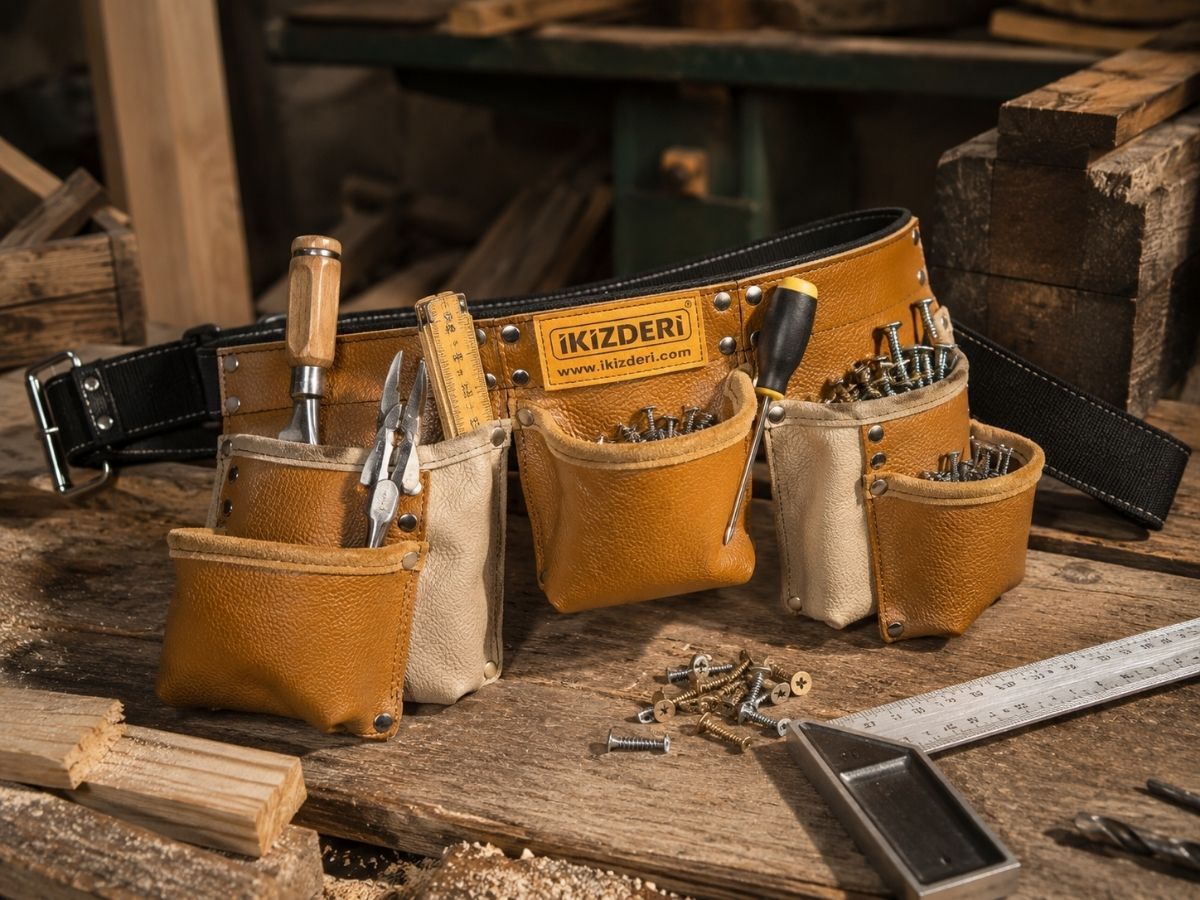
1. A Quality Leather Apron or Tool Belt: Why the Foundation of Everything?
The foundation of a craftsman’s order is a quality leather apron or tool belt. All the other tools only work if there is a sturdy apron to carry them neatly; otherwise they scatter in pockets, get lost or are constantly searched for.
A leather apron or bandolier belt keeps the tools you use most on your waist, within reach. So you do not have to go to the bench or toolbox for every tool; your workflow continues uninterrupted. Genuine leather carries the load of heavy tools for years, does not tear easily on sharp points and molds to your body with use. A fabric belt or cheap apron sags and wears out quickly; quality leather lasts for decades. That is why the first and most important item on our list is a sturdy leather apron on which you will build your whole order. To choose the right apron, see our how to adjust a leather apron size guide.
2. A Tape Measure: Can Any Job Be Done Without Measuring?
A tape measure is the tool almost every craftsman uses most often; no cut, drilled or mounted job is solid without measuring. So the tape measure should always be within reach on your belt.
From carpenter to plumber, from builder to furniture maker, everyone takes measurements many times a day. Carrying the tape in your pocket or in a dedicated slot on your apron saves you from searching for it at every measurement. Choose a tape with a strong metal body and a well-working lock; cheap tapes break quickly and give wrong measurements. Having a fixed place for the tape on your belt is one of a craftsman’s most basic habits. You can find more about reading a tape measure correctly in our how to read a tape measure article.
A tape with a belt clip or a dedicated slot on the apron lets you work without having to remove it and set it aside each time. Rather than measuring alone, being able to immediately mark the value you measured with a pencil — keeping the tape and pencil side by side — is one of a craftsman’s most efficient setups. A tape with a hooked end and a sturdy body, which makes taking long measurements alone easier, saves time in both solo jobs and teamwork.
3. A Marking Pencil: Where Does an Accurate Cut Begin?
A marking pencil is where the accurate cut and assembly begins; a job done without marking the point you measured relies on guesswork. So a carpenter’s pencil or marking pen should always be on the belt.
Taking a measurement alone is not enough; you must transfer that measurement to the material correctly. A flat carpenter’s pencil does not roll and its thick tip leaves a clear mark on wood. On construction sites, a graphite pencil, marker or marking pen is used. Carrying the pencil in the apron’s pencil slot prevents searching for it at every marking. It is a small but critical tool; most measurement errors actually come from wrong or careless marking. So the pencil is a silent but indispensable part of a craftsman’s belt.
4. A Utility Knife: Which Job Is Finished Without Cutting?
A utility knife is a versatile tool used in countless jobs, from opening packaging to cutting insulation, from trimming excess to scoring lines. A sharp utility knife with spare blades should always be on the belt.
Small cutting jobs constantly arise in almost every trade; a rope, a tape, a gasket or a piece of insulation. Constantly looking for a big tool for these is a waste of time. A utility knife with a sturdy body and a locking blade is both safe and practical. Changing the dull blade in time provides both a cleaner cut and prevents accidents. Carrying the utility knife in a separate slot of the apron, with the blade retracted, is safest. Despite its small size, it is one of the tools a craftsman reaches for most.
Keeping spare blades in a small slot of the apron lets you continue without stopping the job when the blade dulls or breaks. Forcing a cut with a dull blade both damages the material and, when the blade slips, causes serious accidents; so changing the blade in time is a safety habit. A utility knife that is retractable and has a lock on the handle minimizes the risk of accidents while carried on the belt or in a pocket.
5. A Multi-Bit Screwdriver: How Many Jobs in One Tool?
A multi-purpose or interchangeable-bit screwdriver handles many screw types in a single tool, reducing the number of tools to carry on the belt. A screwdriver with both Phillips and flat bits is one of a craftsman’s most practical helpers.
Loosening and tightening screws arises in almost every trade; a hinge, a cover, a socket, a panel or furniture. Instead of carrying a separate screwdriver for each bit, a single interchangeable-bit screwdriver saves space and speeds up the work. A screwdriver with a strong, non-slip handle sits comfortably in the hand and transfers force well. Magnetic-bit models make it easier to place the screw without dropping it. Carrying the screwdriver in a sturdy slot of the apron lets you find it immediately even when working in a tight space.
A screwdriver set with interchangeable bits gathers Phillips, flat and hex (Allen) bits on a single handle, eliminating the burden of carrying separate tools. Especially in furniture assembly, appliance service and electrical work, where different screw heads are common, having many bits in one hand is a great convenience. Keeping the bits neatly in a small compartment of the apron lets you find and fit the right bit in seconds and continue the job without stopping.
Workshop · Bulk / Logo Production
Pocketed Leather Aprons for Your Team
Durable, logo leather aprons where all your craftsmen carry their tools neatly. Get a quote now.
6. Pliers and Cutters: What Can Be Done Without Gripping?
Pliers and cutters are the extension of a craftsman’s hand in gripping, bending, cutting and pulling jobs. Pliers that grip, cut and bend where the hand cannot reach are among the tools that must be on the belt.
Pliers are indispensable for cutting a wire, holding a nut, pulling a nail or bending a sheet. Combination (lineman’s) pliers are the most preferred because they do both gripping and cutting in one. Pliers with strong jaws and insulated handles are both safe and long-lasting. For those doing electrical work, an insulated handle is especially important. Carrying the pliers in the apron’s side slot keeps them within reach despite their weight. In every job requiring gripping power, pliers are one of the tools a craftsman trusts most.
7. A Small Flashlight or Headlamp: Can You Work in the Dark?
A small flashlight or headlamp is indispensable when working in dark spots like behind a cabinet, in an attic, inside a panel or under a vehicle. A job done without seeing well is both slow and error-prone.
Most places craftsmen work are not well lit; behind a cabinet, in a utility shaft or under an engine is dark. A small, rechargeable flashlight or a headlamp that leaves the hands free provides clear vision in these spots. Magnetic or clip-on models fix the light in place, letting you dedicate both hands to the work. Light is an often-overlooked piece of equipment that directly affects the quality of the work. Carrying a small flashlight in the apron’s pocket prevents you from having to stop the job in a dark corner.
A small, rechargeable flashlight with a strong beam is both long-lasting and always ready. A headlamp, especially in assembly and repair jobs where both hands are full, provides great convenience by casting light exactly where you look. Good lighting increases not only visibility but also the quality of the work; a cut or assembly done in dim light is often faulty. So a small light source has a far more critical place on a craftsman’s belt than it appears.
8. A Slot for Nails, Screws and Anchors: Where Should Materials Sit?
Small materials like nails, screws and anchors should sit in separate slots or compartments of the apron; when these materials are scattered, they get lost and are constantly searched for. Bandolier-belt nail aprons are designed exactly for this.
A craftsman constantly uses nails, screws or anchors while working; throwing them into a pocket leads to disorder and loss. The apron’s separate compartments keep materials of different sizes organized and let you find the right one when you reach in. Especially for carpenters and builders who work a lot with nails and screws, a compartmented nail apron is a great convenience. We explained which anchor to use where in our types of wall anchors article. Carrying materials neatly both speeds up the work and reduces constantly bending to pick up materials.
9. Work Gloves: Who Protects the Hands?
Work gloves protect a craftsman’s most valuable tool — their hands — against sharp edges, friction, heat and chemicals. A pair of gloves carried on the belt or in an easily reachable slot of the apron is put on immediately when needed.
The hands are the most important equipment that lets a craftsman do their job; an injury means days of lost work. When working with sharp sheet metal, rough material, a hot part or chemicals, suitable work gloves prevent serious accidents. Depending on the job, leather, cut-resistant or chemical-resistant gloves should be chosen. Carrying the gloves on the belt or apron lets you put them on immediately instead of searching for them. Most work accidents actually stem from a simple protective item not being at hand; so gloves are the silent protector on a craftsman’s belt.
Gloves need not be worn for every job; for fine work and precise assembly, a bare hand is more controlled. But when working with sharp, rough or hot material, the gloves must be immediately reachable. So it is best to place the gloves not at the bottom of a bag, but in an easily reached slot or the waist area of the apron. Renewing worn gloves in time is also important; a torn or thinned glove, despite the sense of security it gives, does not provide real protection. Using the right glove for the right job keeps a craftsman’s hands healthy for years.
10. A Small Notebook or Phone Slot: Will You Keep It in Your Head?
A small notebook or a dedicated slot for the phone is needed to record measurements, material lists and notes. A measurement one tries to keep in one’s head is often remembered wrong.
A craftsman deals with many measurements, materials and details throughout the day; trying to keep them in one’s head is error-prone. A small notebook and pencil, or the phone’s notes app, records this information safely. Having a separate, protected slot for the phone on the apron prevents the phone from being damaged by dust and impact. For writing down measurements, making material lists and showing photos to the customer, the phone is now a work tool. So a phone or note slot should also be considered in a modern master apron; though it seems a small detail, it completes the order of the work.
Carry on the Belt or in the Bag: Which Is More Efficient?
Carrying the most-used tools on the belt and the rarely-used ones in the bag is the most efficient order. Tools carried on the belt come to your hand in seconds; for tools in the bag, you have to stop and search. The table below compares the two methods.
| Criterion | Tool Bag | Leather Apron / Belt |
|---|---|---|
| Access speed | Slow, stop and search | Instant, within reach |
| Freedom of movement | Fixed, must be carried | On you, comes with you |
| Order | Can get mixed up | Each tool in its slot |
| Suitable tools | Heavy, rarely used | Frequently used, small |
As the table shows, the two complement each other; heavy and rarely-used tools stay in the bag, while the most-used ones should be carried on the belt. The common secret of craftsmen who work fast and orderly is separating these two correctly. And the foundation of everything carried on the belt is again a sturdy, pocketed leather apron.
What Holds These 10 Things Together?
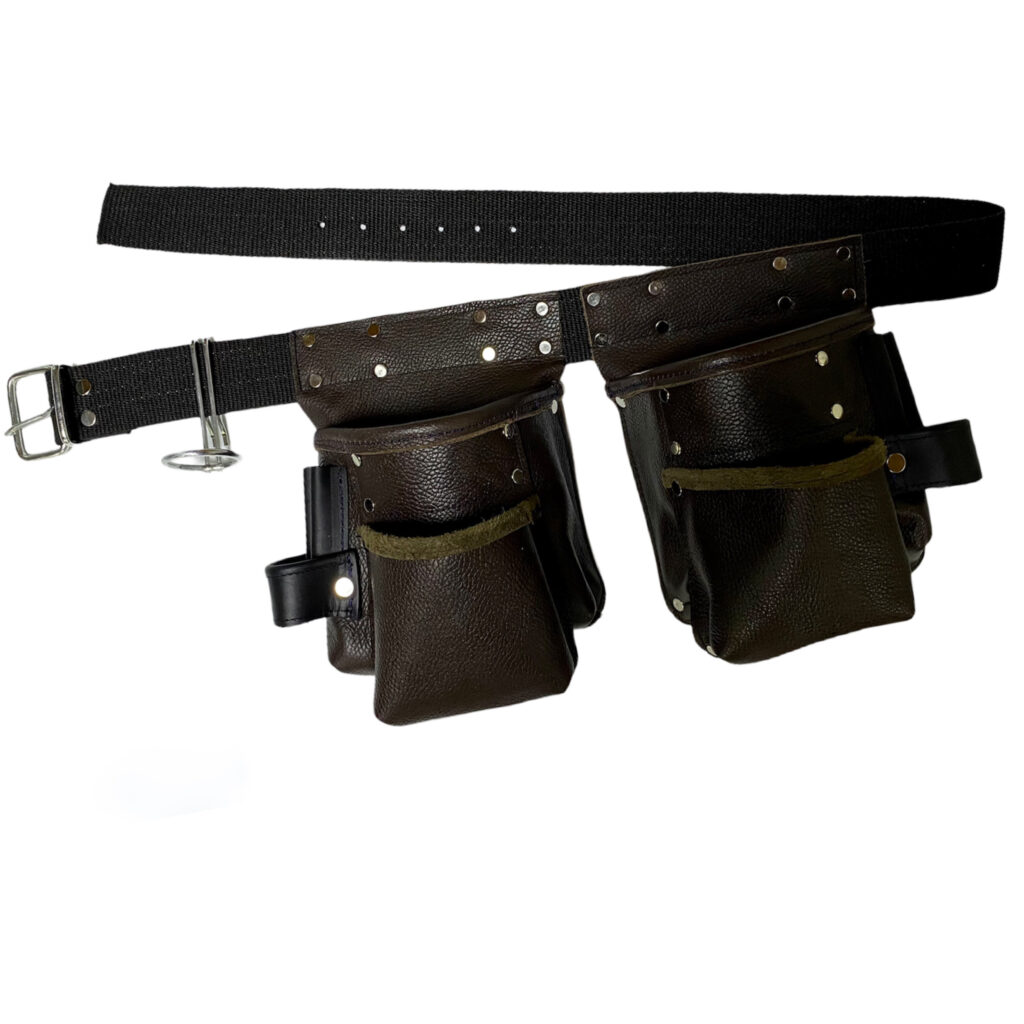
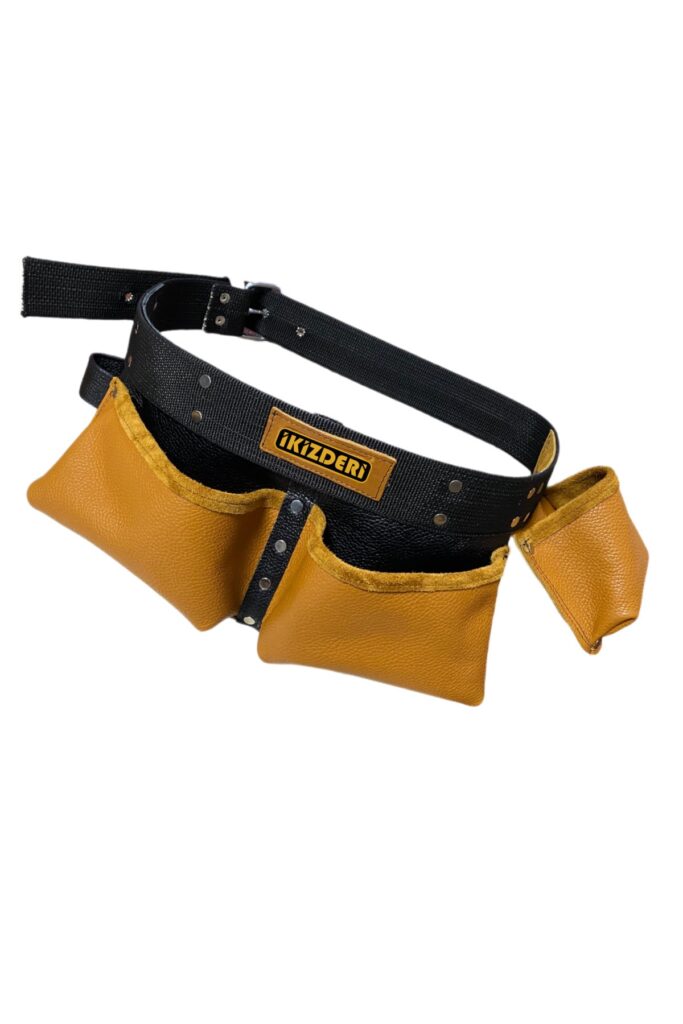
What holds these 10 things together, organized and within reach, is a quality leather apron or tool belt. However good the tools are, without a sturdy order to carry them they remain scattered. A leather apron turns every item on this list into a system.
A good craftsman has not only good tools but a good order. A craftsman with a pocketed leather apron on their belt keeps the tape, pencil, pliers, utility knife and materials always in the same place; so with muscle memory they find the right tool even without looking. This order both speeds up the work and reduces fatigue, because constantly bending to search for tools wastes time and energy. A quality genuine leather apron lasts for years, molds to you with use and makes your work easier every day. So the most important thing a craftsman should have on their belt is actually the leather apron that holds all the others together.
Conclusion: An Organized Craftsman Works Fast and Safe
The 10 things a craftsman should have on their belt are: a quality leather apron, a tape measure, a marking pencil, a utility knife, a multi-bit screwdriver, pliers, a flashlight, a material slot, work gloves and a note/phone slot. And what holds them all together is a sturdy, pocketed leather apron. A craftsman who carries their tools neatly on the belt works faster, more orderly and more safely.
We produce pocketed, durable and logo genuine leather aprons for craftsmen and teams. If you would like to choose an apron for yourself or your team, you can message us on WhatsApp right away, and review all models at the İkizderi shop.