
 İkizderi
 Leather apron sizing — how do you choose the size and adjust it? How comfortable and efficient a leather work apron will be is often determined by its size and fit as much as, or even more than, the leather or the number of pockets. An apron that does not fit right puts weight on your neck, loosens at the waist and tires your back by the end of the day. A well-adjusted apron, on the other hand, almost disappears on you and lets you work comfortably all day. In this guide we explain step by step how to choose a leather apron size, how to adjust the neck and waist straps, and the tricks that increase comfort. By the end, you will be able to adjust your apron perfectly to yourself.
Why Does Size Matter in a Leather Apron?
Size and fit in a leather apron directly determine comfort and work efficiency. A well-fitting apron distributes the weight evenly across the shoulders and waist; the wrong size loads a single point, leading to fatigue and, over time, pain.
A craftsman carries the apron all day, often full of tools. If the apron is too big it sags, restricts movement and puts pockets in the wrong place; if too small it constricts and does not close fully. The right size and fit transfer the apron’s weight to the right points, providing both comfort and safe work. The secret to working all day without fatigue often lies not in an expensive apron but in a well-adjusted one. That is why, when choosing a leather apron, you should look not only at the model and pocket count but also at size and adjustability.
How Do You Choose a Leather Apron Size?
Leather apron size is chosen by your height, your waist circumference and how wide an area you will use the apron to cover. Most work aprons fit a wide size range with adjustable straps, but the body length still matters.
The apron’s body length should not hang much below the knee when tied at the waist and should not restrict your movement. The waist circumference should be enough for the waist band to grip comfortably and stay firm. Most leather work aprons fit different sizes thanks to adjustable neck and waist straps, which makes a single size fit a wide range of users. Still, if you have a very large or very slim build, it is best to check the product’s size range before buying.
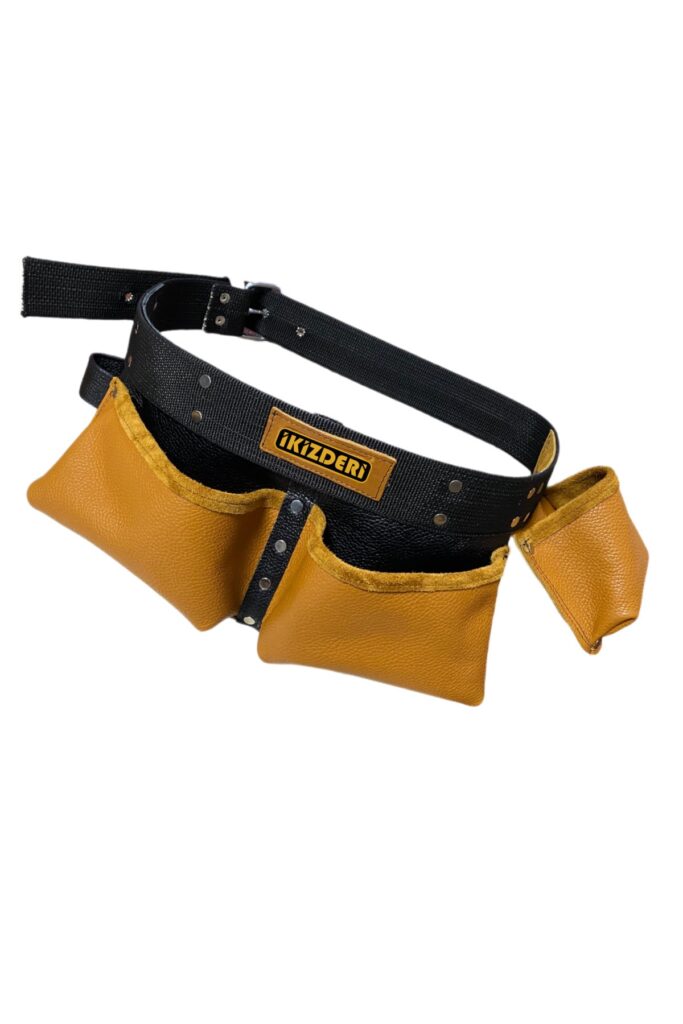
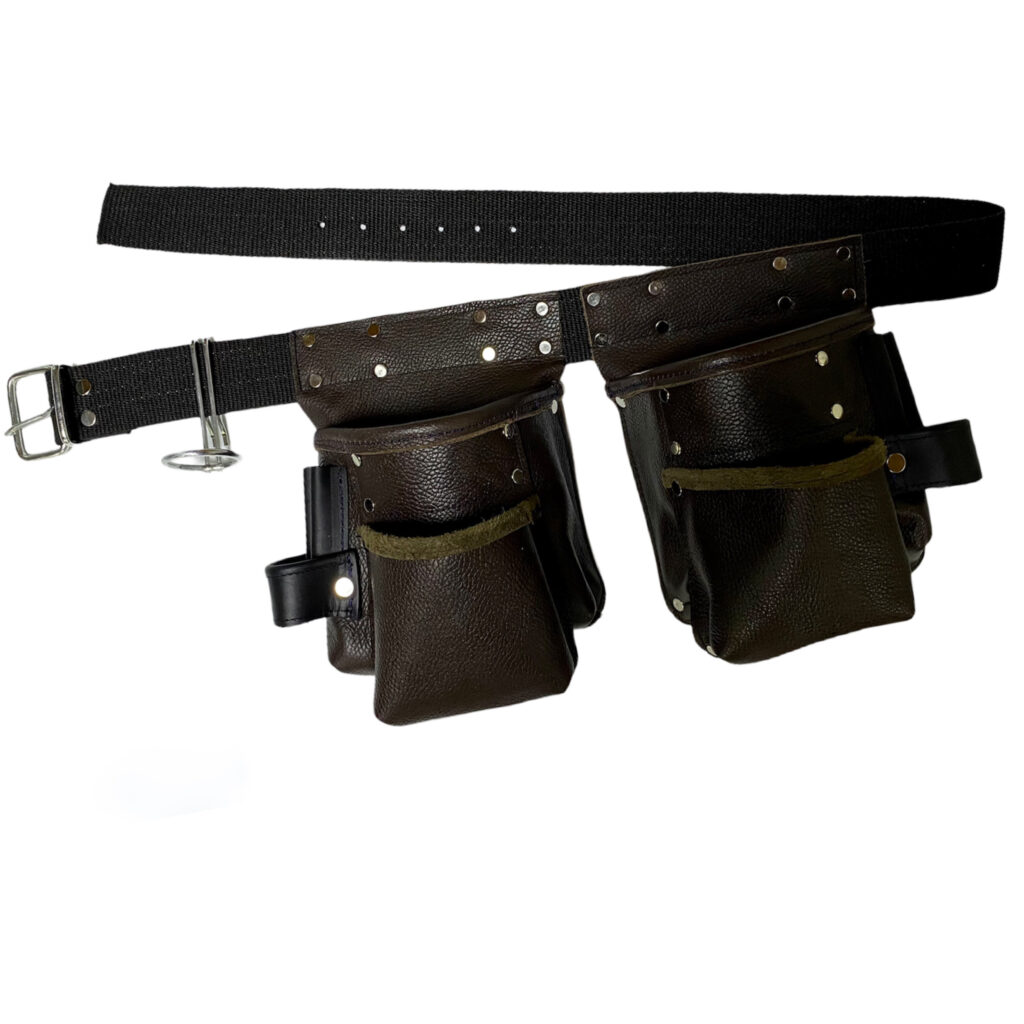
How Do You Adjust the Neck Strap?
The neck strap carries the weight of the upper part of the apron and determines the chest height. The strap should be adjusted so the apron fully covers your chest but does not tighten your neck; too loose a strap makes the apron sag, too tight a strap presses on the neck.
When adjusting the neck strap, put the apron on and make sure the chest area reaches up to the upper part of your abdomen. If the strap is too long, the apron sags and the pockets stay low; if too short, the apron gathers up and tires the neck. The right adjustment keeps the apron flat and balanced on your chest. Adjustable buckle or ring straps let you make this adjustment in minutes. The ideal is a balance where the apron’s weight rests more on the waist than the neck.
How Do You Adjust the Waist Strap (Belt)?
The waist strap is the part that carries the main weight of the apron and should be adjusted to sit exactly on the waist. The waist band should be tight enough to keep the apron stable but comfortable enough not to hinder your breathing and bending.
Adjust the waist strap so the apron’s pockets are at your hip level and at a height your hand reaches easily. Too loose a waist band slides the apron down and makes it swing; too tight a band squeezes the waist and is uncomfortable. Palaska (wide) belt aprons are more comfortable in long work because they distribute the weight over a wider area of the waist. When the waist adjustment is right, the apron’s weight rests evenly on the waist and hips, reducing the load on the back.
How Do You Wear a Leather Apron Correctly?
A leather apron is worn by first putting the neck strap over your head and then tying the waist band; the weight balance is set by the tightness of the waist band. A correctly worn apron shares its weight evenly between the neck and the waist.
First put the apron over your head and place the neck strap, then wrap the waist band around from the back and fasten it at the front or side. After tying the waist band, bend and straighten slightly; if the apron stays in place and the pockets are at the right height, the adjustment is right. If the pockets are too low, shorten the straps; if too high, loosen them. A correctly worn apron stays on you all day without discomfort and gives quick access to your tools.
How Do You Achieve Weight Balance in a Leather Apron?
Weight balance is achieved by distributing the apron’s load evenly between the neck, waist and hips. Filling the pockets in a balanced way and adjusting the straps correctly prevents the apron from loading to one side.
If all the apron’s weight rests on the neck, the neck and shoulders tire quickly; if all of it rests on the waist, the waist aches. The ideal balance is to transfer most of the weight to the waist and some to the neck. Placing heavy tools symmetrically in the pockets also keeps the balance; putting all the heavy tools in one pocket pulls the apron to one side. Palaska-belt and wide-strap aprons make it easier to set this balance. A well-distributed weight is the key to working all day without fatigue.
What Do You Do If the Leather Apron Is Too Big or Small?
Since most leather work aprons have adjustable straps, when the apron comes too big or too small, the first thing to do is adjust the straps. If strap adjustment is not enough, the apron’s body size really is not suitable.
If the apron is too big, bring it closer to your body by shortening the neck and waist straps; the pockets and waist band will come to the right alignment. If it is too small, loosen the straps; if the body is still tight, you may need a larger size. Leather aprons soften and stretch a little with use and fit the body better; that is why it is normal for them to feel a bit stiff in the first days. Still, if the apron does not close fully or seriously restricts movement, you need to check the right size range.
What Should a Leather Apron Strap Be Like?
A good leather apron strap should be wide enough to spread the weight over a large area, adjustable and firmly riveted. A thin, weak strap causes pain in the shoulder and neck; a wide, quality strap carries the load comfortably.
The width of the strap directly affects the pressure on the shoulder; a narrow strap puts the same weight on a small area and hurts, while a wide strap spreads the load. The strap being adjustable lets you adapt the apron to different people and job types. The strap-to-body connection being reinforced with rivets keeps this most-stressed point sound for years. On palaska-type wide-belt aprons, the waist strap is kept wide with the same logic. A quality strap is one of the invisible but most decisive parts of comfort.
What Is the Difference Between a Leather Apron and Coveralls or Workwear?
A leather apron is equipment worn over workwear whose main function is to carry tools and protect the front of the body; coveralls or workwear are garments that cover the whole body. The apron does not replace clothing but complements it.
While coveralls or work trousers protect the body and clothing, a leather apron both protects the front of the body against nails, sawdust and friction and carries tools organized at waist level. That is why, when choosing an apron size, the clothing to be worn underneath is also taken into account; if thick clothing will be worn in winter, it is important for the apron to be adjustable a bit wider. When chosen in the right size, the apron fits comfortably over clothing in every season. Together, they provide both protection and efficient work.
Does a Leather Apron Fit the Body Over Time?
Yes; a genuine leather apron softens with use and takes shape to the user’s body. A leather apron that stands a bit stiff in the first days stretches within a few weeks and gains a comfort unique to you.
Because genuine leather is a living material, it softens over time with body heat, movement and use. This is one of the best features of leather products: a new apron stands a little stiff in the first days but forms exactly to you as you use it. To speed up this natural softening, it is enough to use the apron regularly and condition it occasionally with leather cream. You can find all the ways to soften leather in our how to soften leather guide. Over time, your apron turns almost into a working piece that belongs to you.
What Are the Common Fit Problems and Their Solutions?
Most comfort problems with an apron actually come from a simple adjustment error and are easily solved with the right strap adjustment. The table below shows the most common fit problems, their causes and solutions.
| Symptom | Cause | Solution |
|---|---|---|
| Apron sags | Neck/waist strap too loose | Shorten the straps |
| Neck hurts | Weight rests on the neck | Tighten waist band, load the waist |
| Pockets too low | Straps left long | Shorten the neck strap |
| Apron pulls to one side | Heavy tool in one pocket | Distribute tools symmetrically |
| Waist squeezes | Waist band too tight | Loosen the band one notch |
As you can see, almost all of these problems are solved without changing the apron, just by adjusting the straps and pockets. An uncomfortable apron is often a wrongly adjusted apron.
How Do You Adjust a Leather Apron for Heavy Work?
When working with heavy tools, the apron should be adjusted to transfer the weight to the waist and hips and, if possible, supported with a wide palaska belt. In heavy loads, it is very important that too much load does not rest on the neck strap.
If you carry heavy tools like a hammer, large pliers or a drill, adjust the waist band firmly and load most of the weight on the waist; the neck strap should only keep the apron upright, not carry the load. A wide palaska belt spreads the weight over a wider area of the waist, so it protects the waist and reduces fatigue in heavy work. Carrying heavy tools in the pockets closest to the waist also lightens the load by shortening the moment arm. The right adjustment for heavy work is the most important detail that protects your back health all day.
How Should Apron Pockets Be Organized for Comfort?
Pockets should be organized so the most-used tools are in the easiest-to-reach place. Heavy tools are kept close to the waist, frequently used ones at hand level, and small parts in separate small pockets.
Pocket layout directly affects both comfort and work speed. Putting the tool you reach for most (for example a tape measure or hammer) on your dominant-hand side saves you searching every time. Throwing small parts (nails, screws, bits) into the same pocket as large tools causes both losing them and unbalancing the apron. We explain in detail how to organize pockets by your job in our how to organize a nail apron guide. An organized apron lets you work both more balanced and faster.
How Tight Should a Leather Apron Be Tied?
A leather apron should be tied tight enough to stay in place but comfortable enough not to hinder your breathing, bending and free movement. Neither too loose nor too tight; the right tightness is the point where the apron stays without swinging or squeezing.
If you can comfortably slide two fingers under the band after tying the waist band, the tightness is usually ideal. Too tight a band squeezes the waist, makes breathing harder and causes discomfort by the end of the day; too loose a band slides the apron down and makes it swing. The right tightness keeps the apron in place when you bend but does not squeeze you. Once you find this balance, it becomes easy to set the same adjustment every time you wear the apron. A comfortable but stable connection is the key to long working hours.
What Are the Most Common Mistakes When Choosing a Leather Apron Size?
The most common mistakes are using the apron without adjusting the straps at all, loading all the weight onto the neck, choosing too big or too small a size, and filling the pockets unevenly. These mistakes reduce comfort and cause fatigue by the end of the day.
- Not adjusting the strap: Using it at the factory setting leaves the apron misaligned; always adjust it to yourself.
- Loading the neck: Putting all the load on the neck strap tires the neck and shoulder; shift the weight to the waist.
- Wrong size: Too big an apron sags, too small an apron constricts; check the body size.
- Unbalanced pockets: Putting heavy tools in one pocket pulls the apron to one side; distribute symmetrically.
- Impatience: Do not decide before using it for a few weeks until the leather softens and fits.
Most of these mistakes are prevented by adjusting the straps to yourself and distributing the weight evenly when you first put the apron on. A correctly adjusted ordinary apron can be more comfortable than even the most expensive wrongly adjusted one.
Is Leather Apron Size Different for Men and Women?
Most leather work aprons are designed unisex and, thanks to adjustable straps, fit both men and women. What matters is not gender but that the apron is adjusted correctly and fits the body.
Adjustable neck and waist straps let the apron fit different body types, so the same apron, when adjusted correctly, suits a wide range of users. Although height, waist circumference and preferred apron height vary from person to person, an adjustable apron largely tolerates these differences. Women users may prefer the apron with a slightly shorter strap and men with a longer strap; this is entirely about comfort. In the end, the deciding factor is that the apron sits comfortably and in balance on you.
What Are Extra Tips That Increase Comfort?
To increase comfort in a leather apron, it helps to check the straps regularly, carry heavy tools close to the waist and, when needed, prefer a wide palaska belt. Small adjustments make a big difference all day.
When you use the apron for a long time, the straps may loosen a little; checking the adjustment occasionally preserves comfort. Carrying heavy tools (hammer, large pliers) in pockets close to the waist reduces the load by shortening the weight arm. If you constantly carry heavy loads, a palaska-belt apron that spreads the weight over a wide area protects your waist. Also, not filling the pockets far beyond their capacity is important for both the apron’s life and your comfort. These small habits are the secret to using the apron comfortably all day.
Conclusion: The Right Size and Fit Are the Basis of Comfort
The right size and fit in a leather apron start with adjusting the straps to yourself, balancing the weight between the waist and neck, and making the apron fit your body. A correctly adjusted apron stays on you all day without tiring you and gives quick access to your tools.
Remember; the best apron is not the most expensive one but the one that fits you best and is adjusted correctly. When you take a few minutes to adjust the straps to your body, you will see how different and comfortable the same apron feels. You can review the leather nail apron models with adjustable straps that fit the body comfortably and all the İkizderi leather work equipment we make entirely from genuine leather in our workshop in Gerede, Bolu.